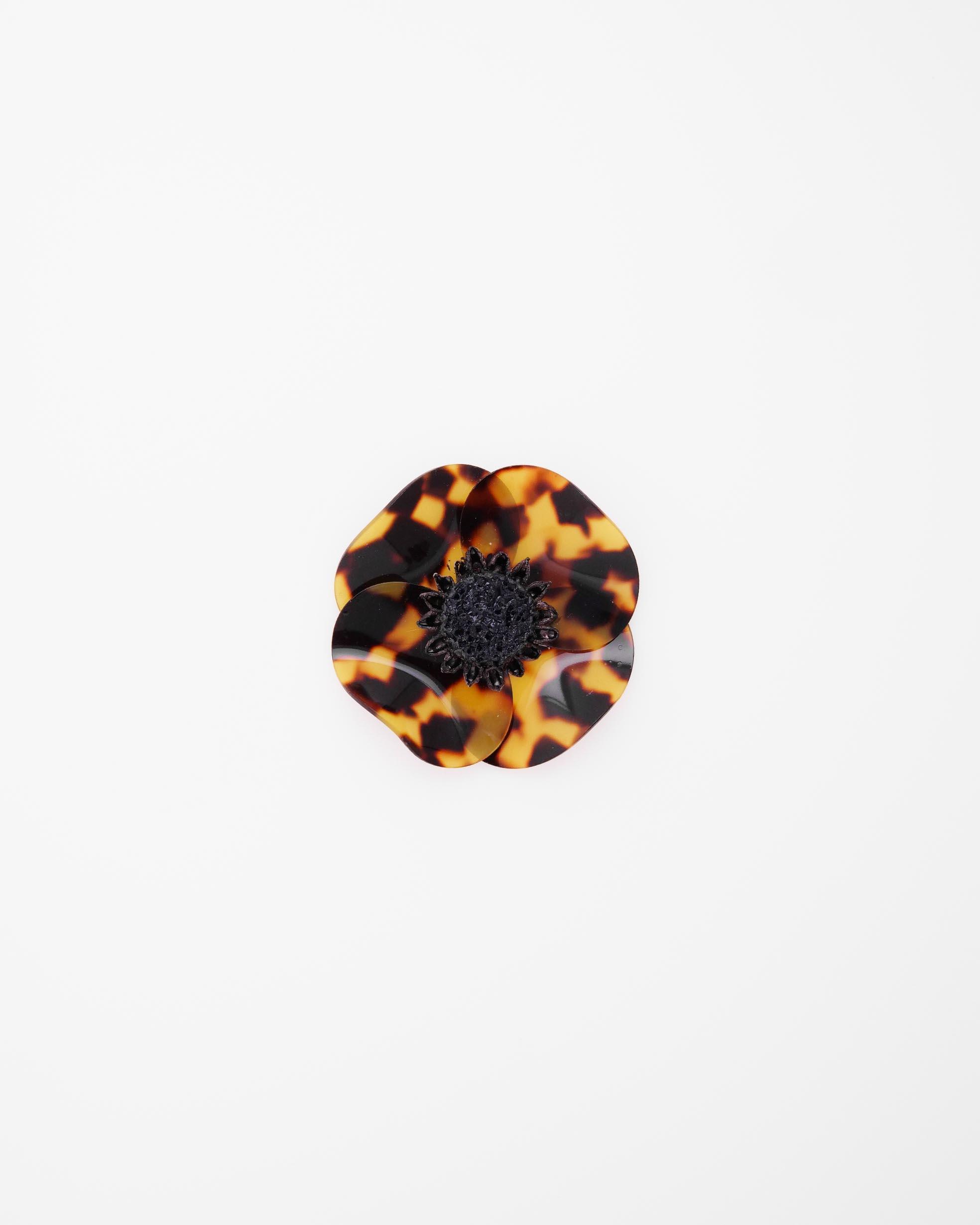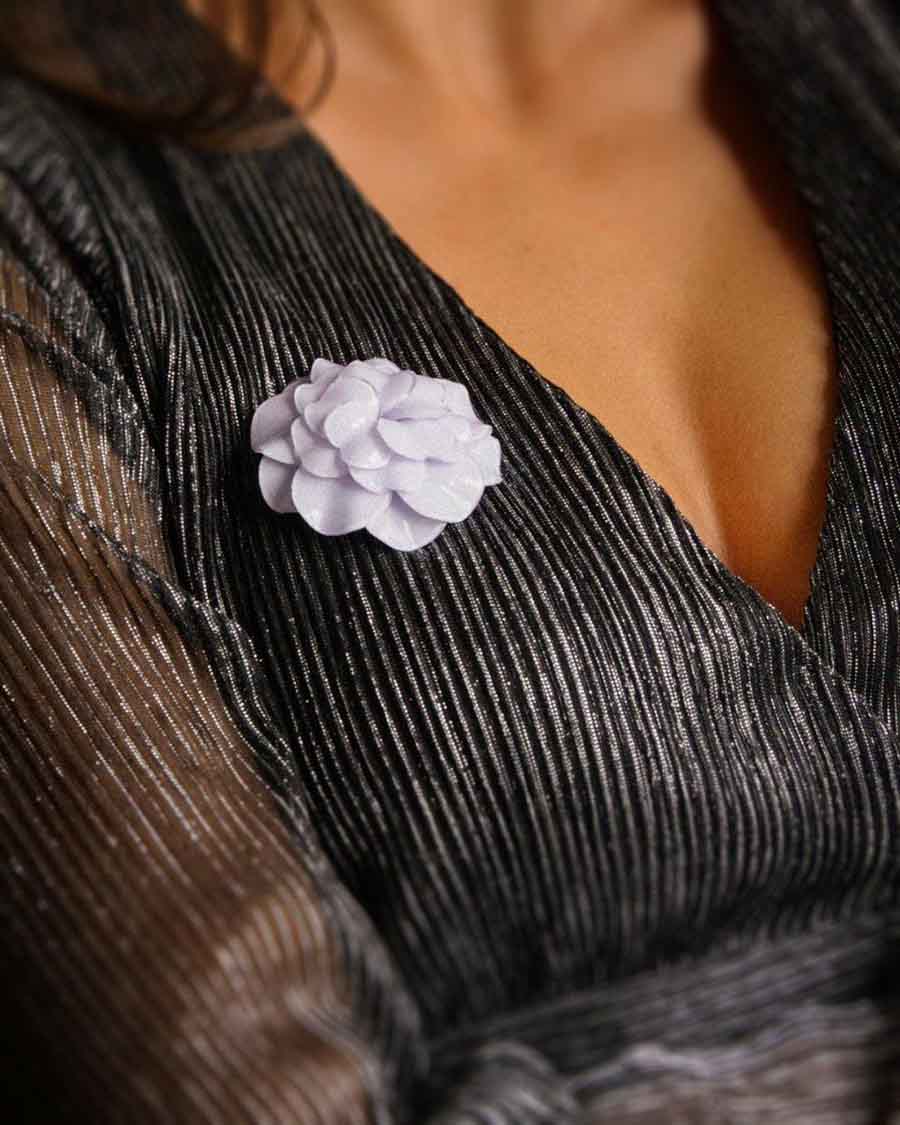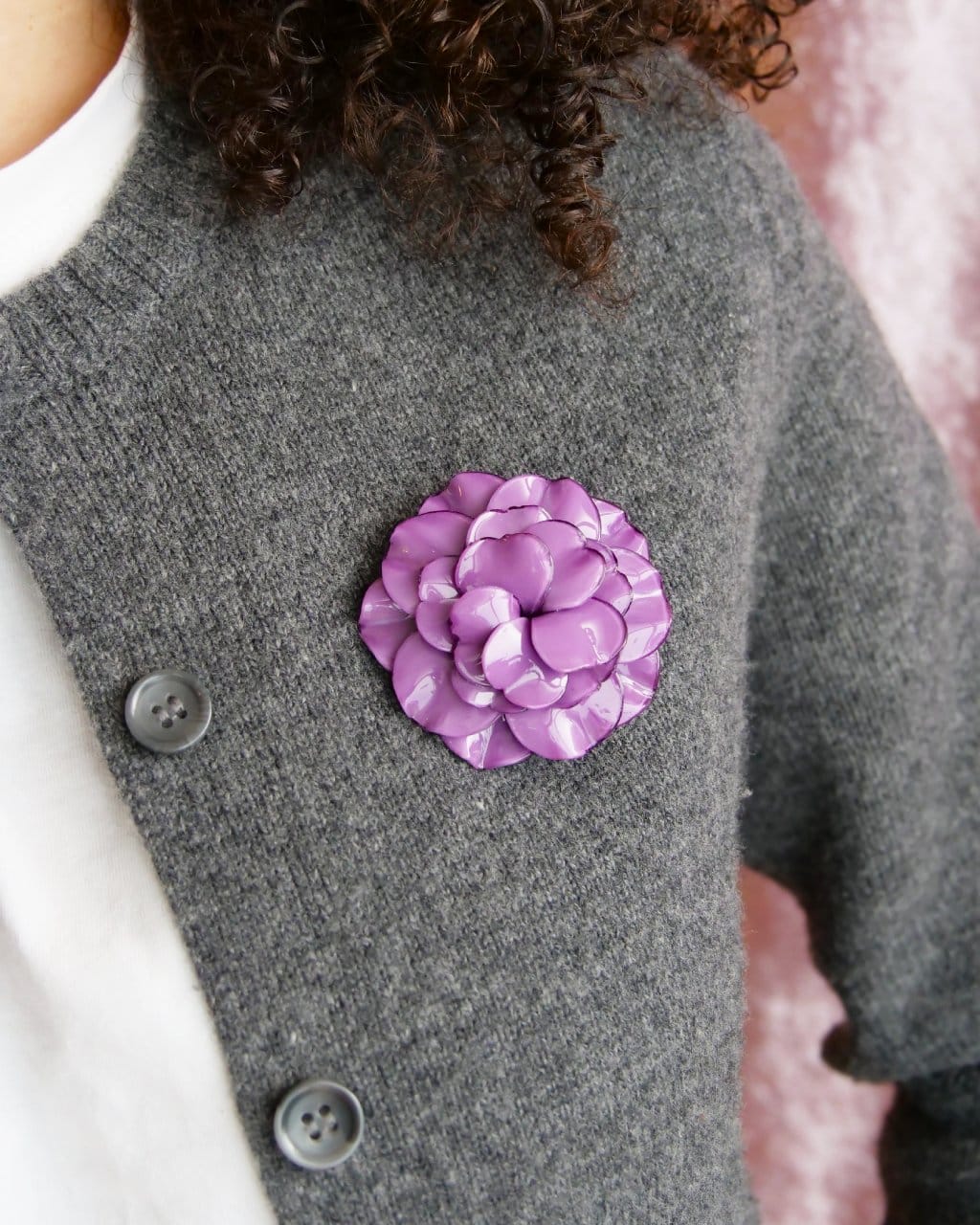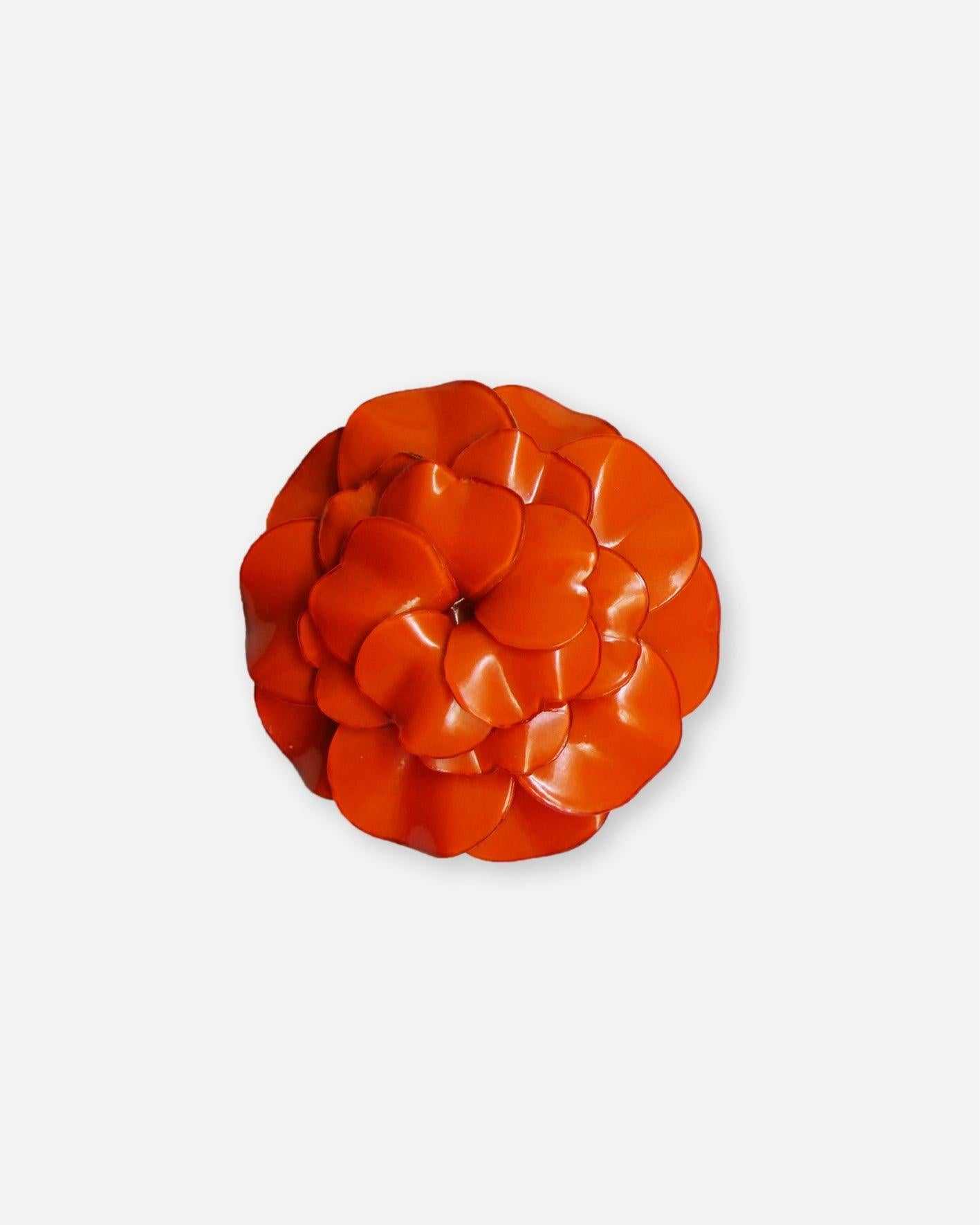




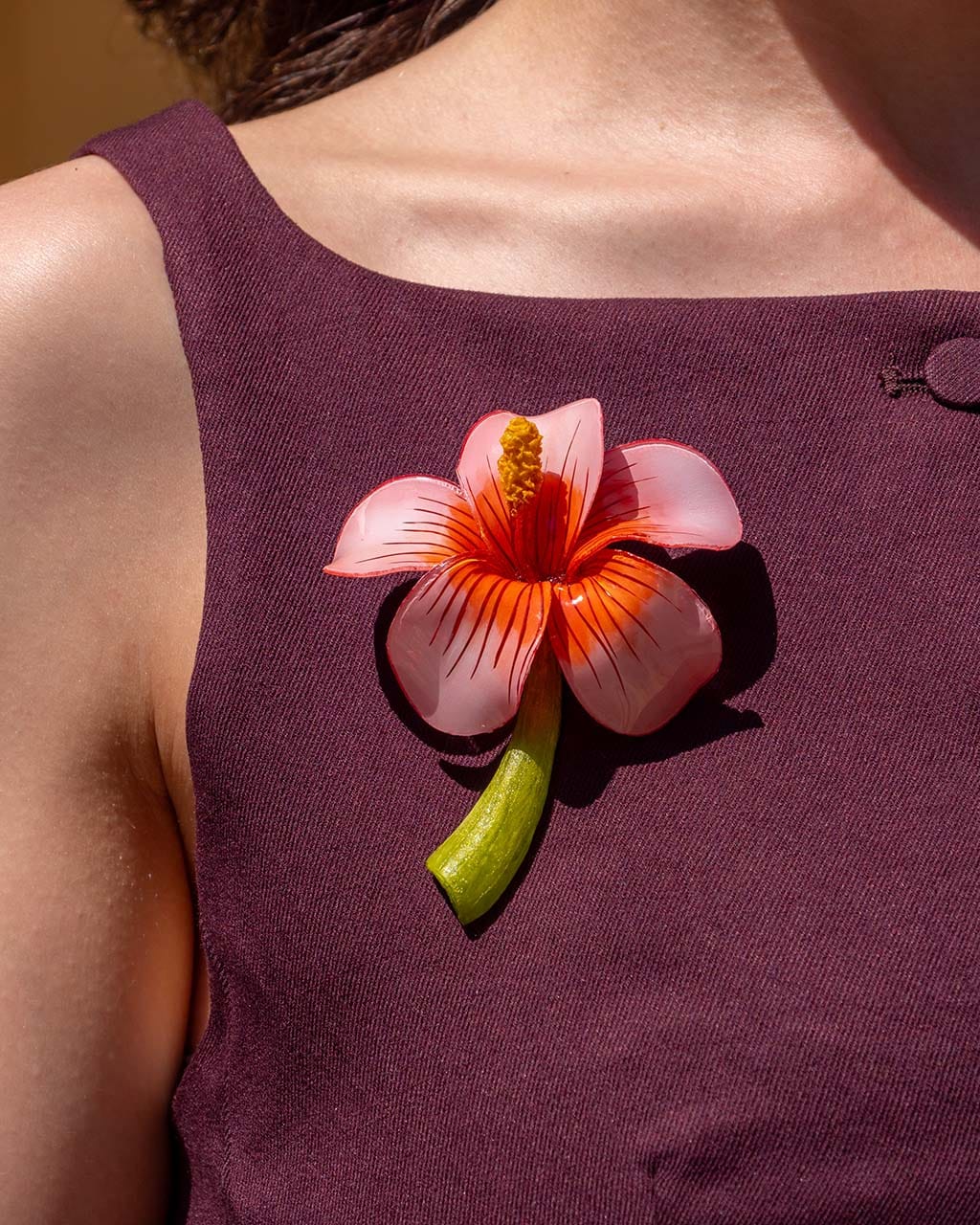


Fashion jewelry is not cleaned in the same way as gold jewelry. And two pieces of fashion jewelry are not cleaned in the same way. What saves a silver chain can destroy a resin piece.
This guide provides the method for each material, the five most common damaging mistakes, and the daily care routine. We have been handcrafting jewelry in Rennes since 1992, and we repair it. We are therefore well-placed to advise you on the best practices to adopt.
Table of Contents
- Golden Rule
- Cleaning by Material
- The 5 Mistakes That Damage Fashion Jewelry
- Daily Care: The Order of Steps
- Proper Jewelry Storage
- When to Repair Rather Than Clean
- Frequently Asked Questions
1. Golden Rule
Always start with the gentlest action. A dry microfiber cloth, used dry. If that's not enough, go up one notch, but only one notch, and only if the material allows it.
You can't save jewelry that has been attacked by a solvent. You can almost always save jewelry that hasn't been cleaned enough.
2. Cleaning by Material
Summary Table
| Material | Dry cloth | Damp cloth | Soapy water | Specific product | To avoid |
|---|---|---|---|---|---|
| Emaline (enameled resin) | Yes | No | No | No | Water, alcohol, solvents, acetone |
| Resin | Yes | Occasionally | No | No | Alcohol, acetone, heat |
| Gold plated | Yes | No | No | No | Silver polishing cloth, abrasives |
| Gilded brass, gilded metal | Yes | No | No | No | Acidic products, vinegar |
| 925 Silver | Yes | Yes | Yes, briefly | Impregnated silver cloth | Prolonged baths, toothpaste |
| Stainless steel | Yes | Yes | Yes | No | Abrasive sponge, bleach |
| Pearls, mother-of-pearl, stones | Yes | Yes, very little | No | No | Ultrasonics, steam, products |

The Emaline Material
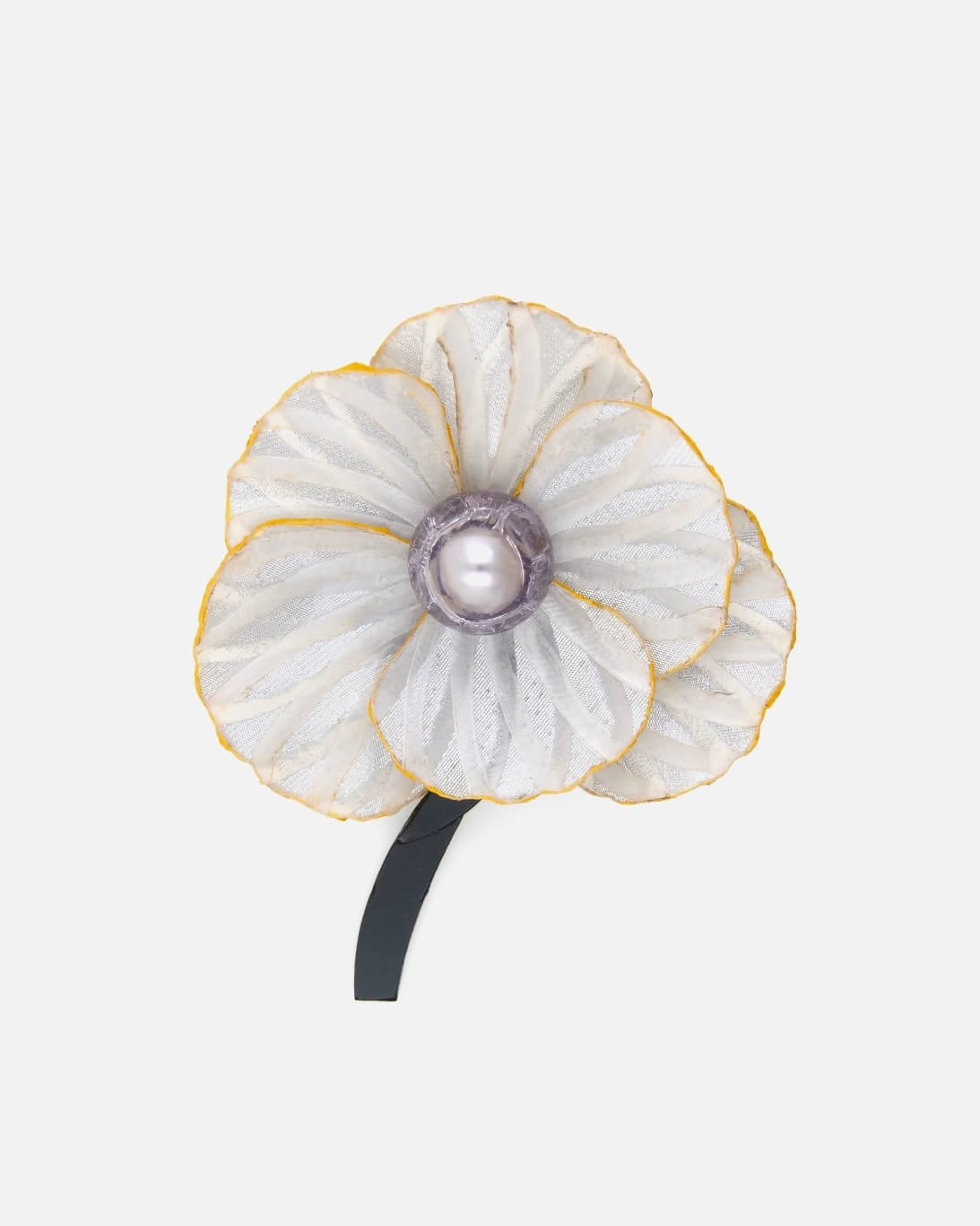
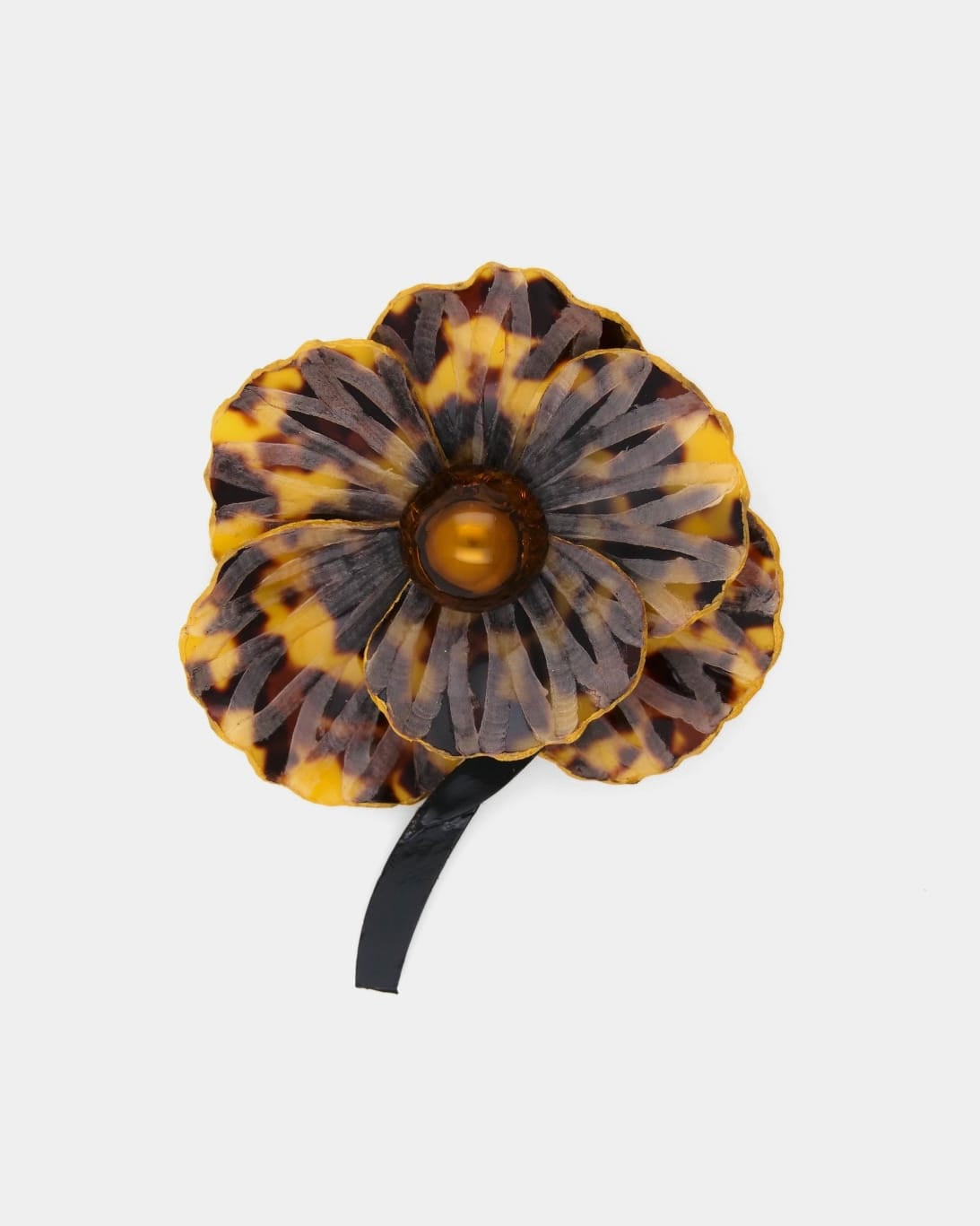
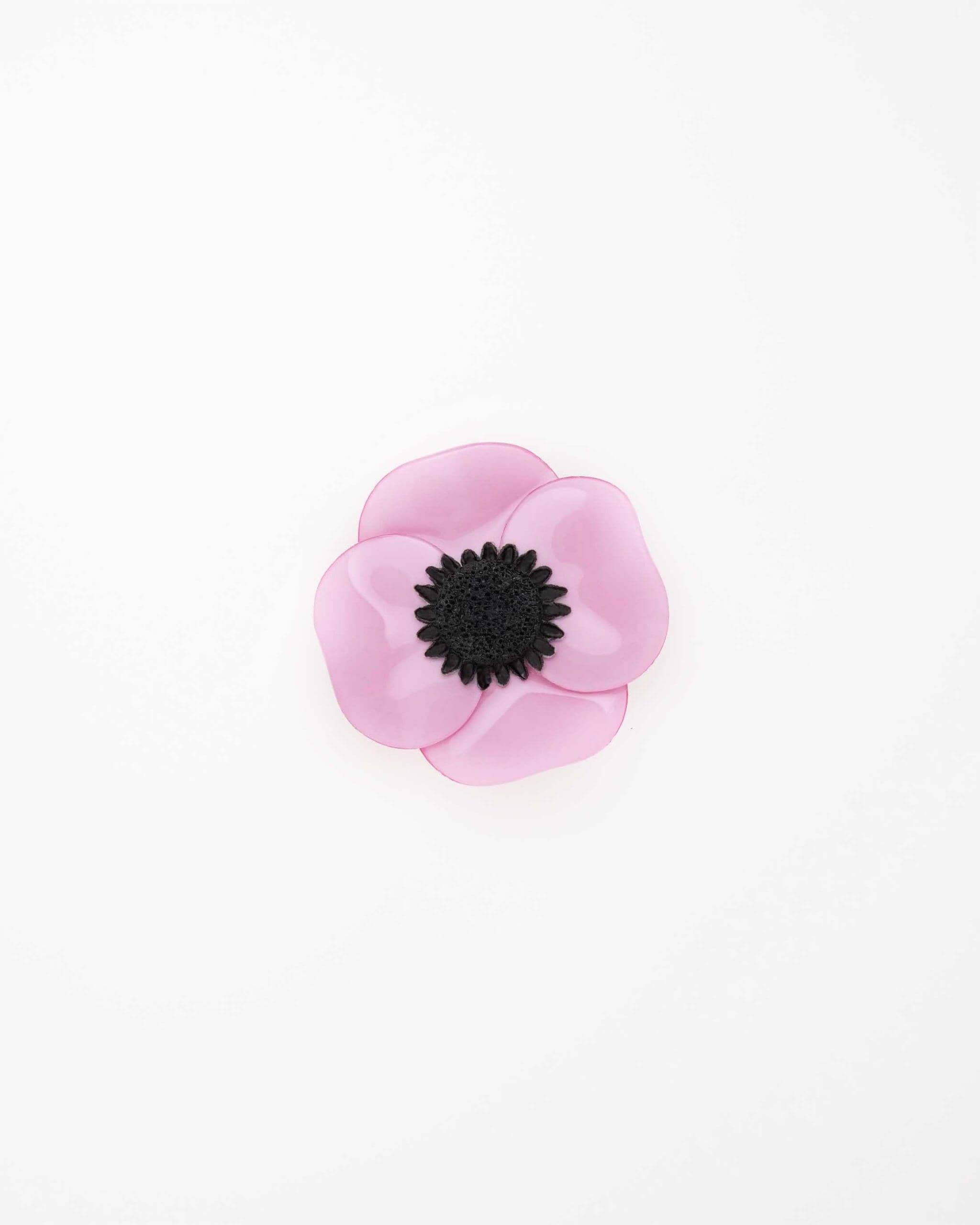
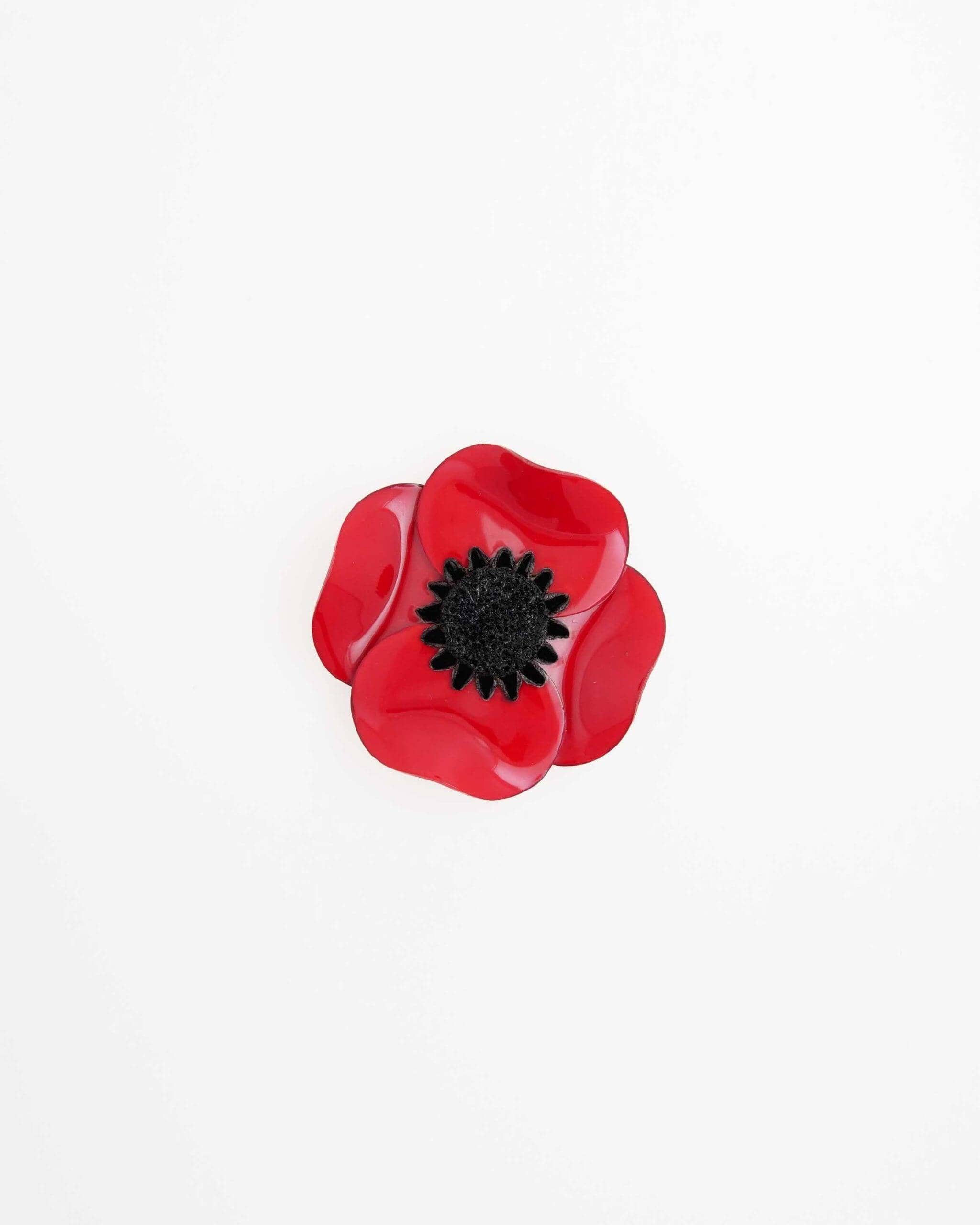
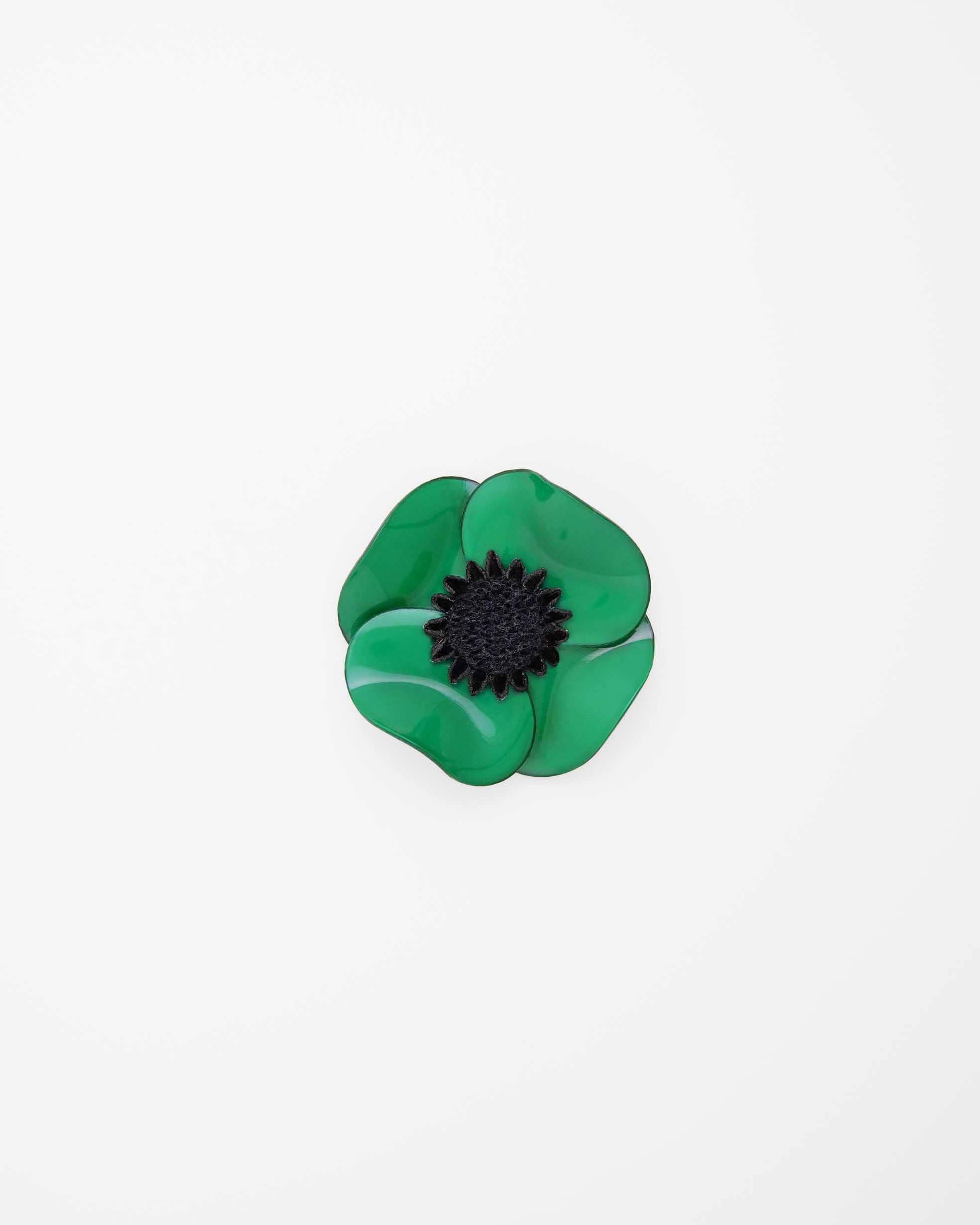
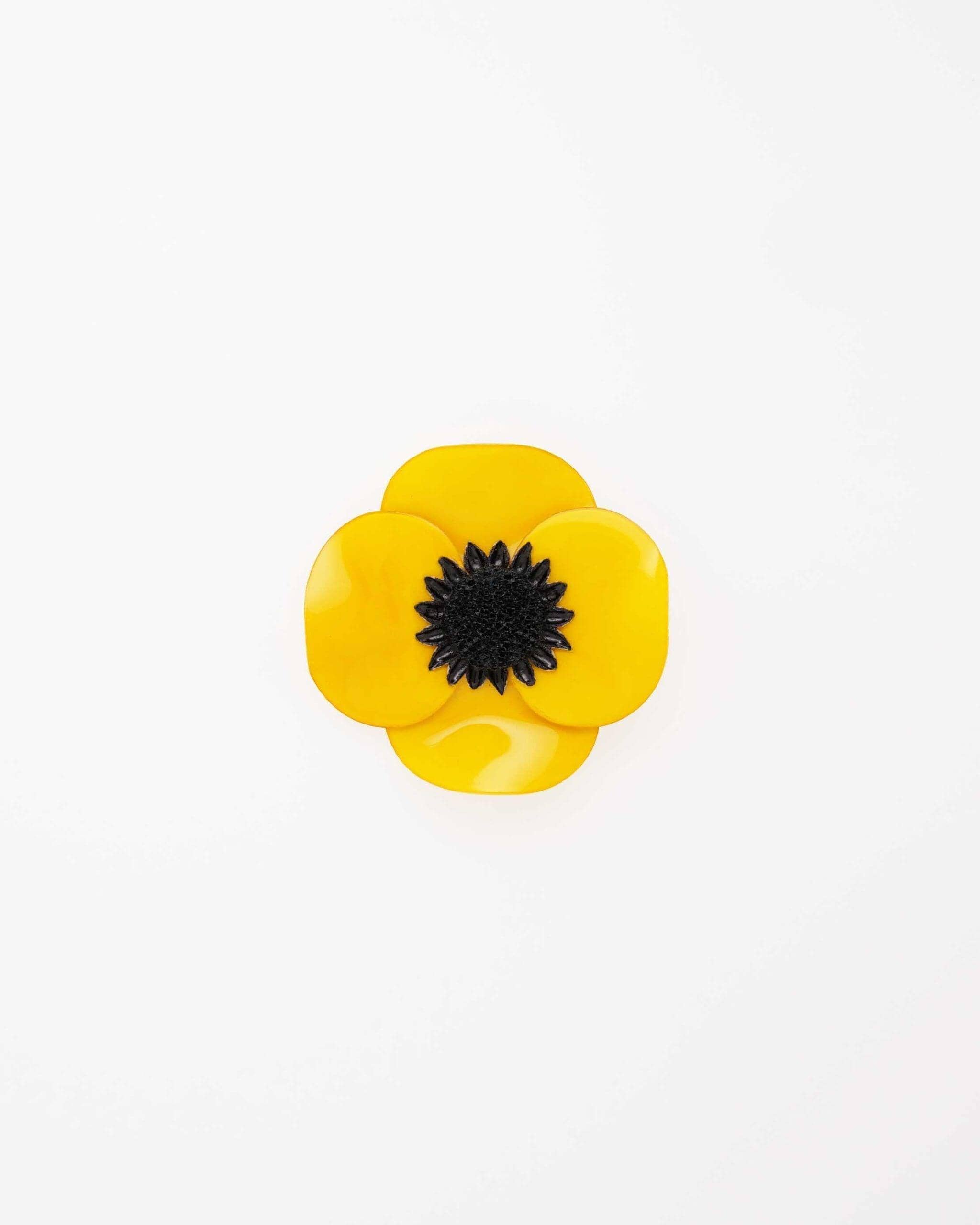
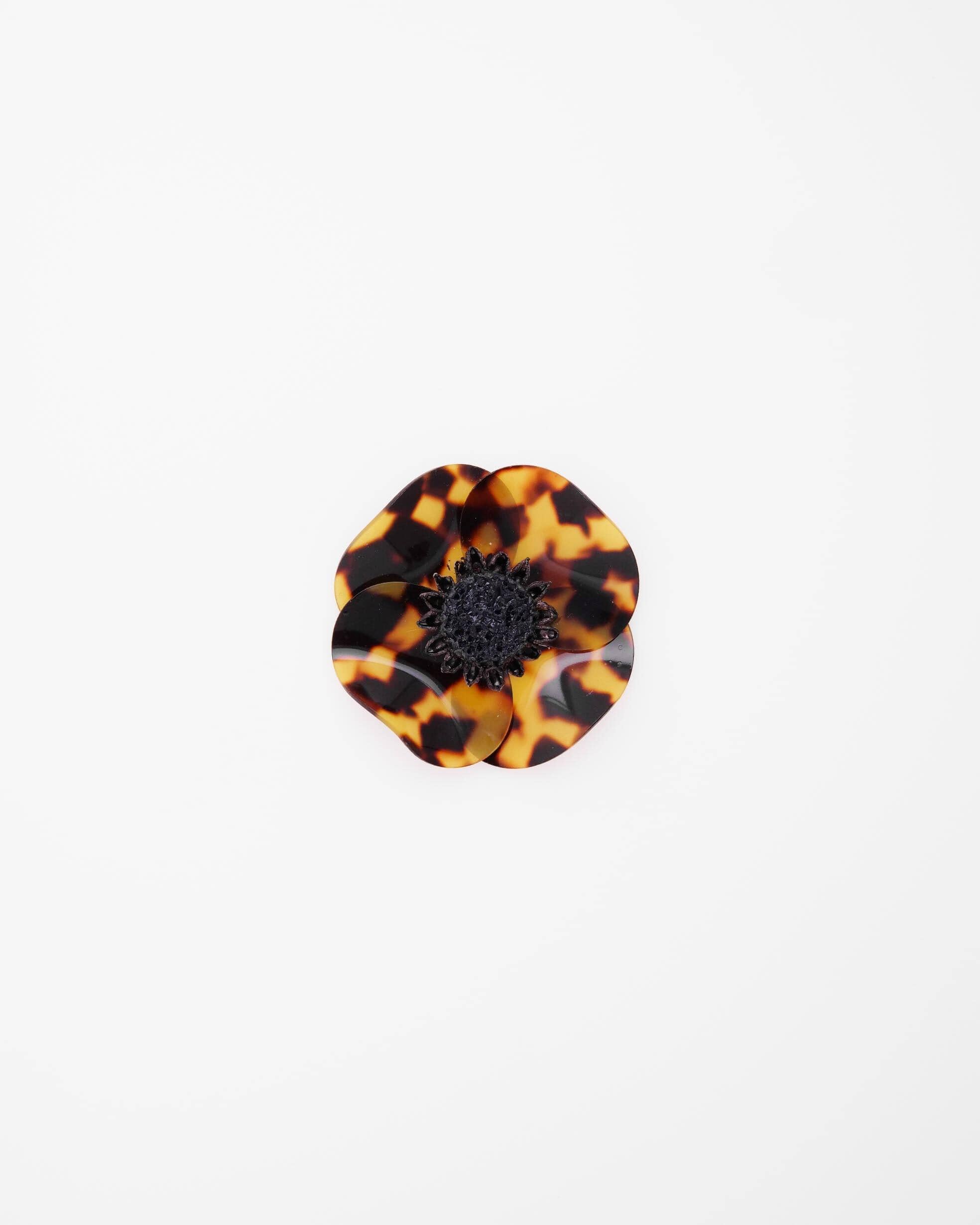
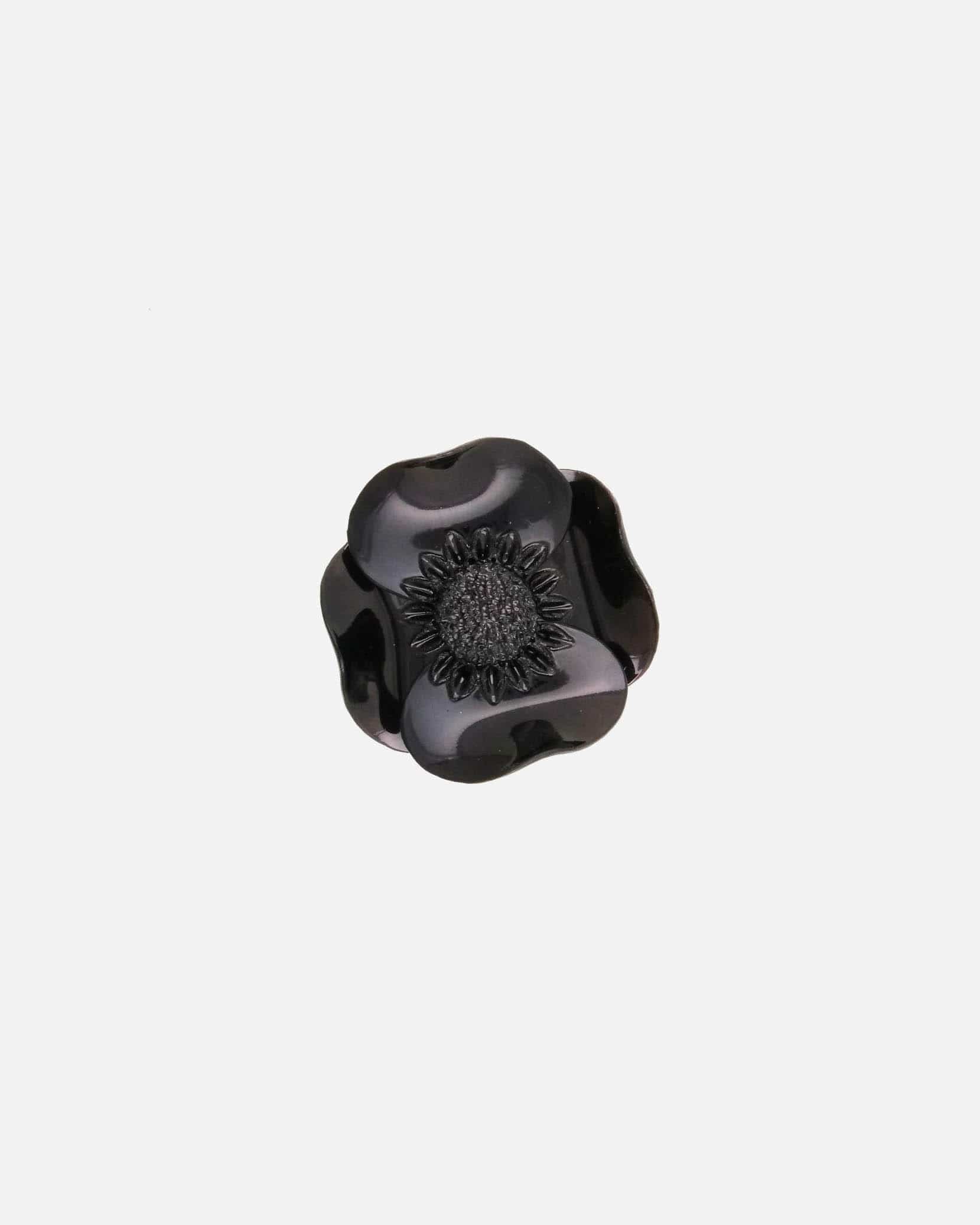
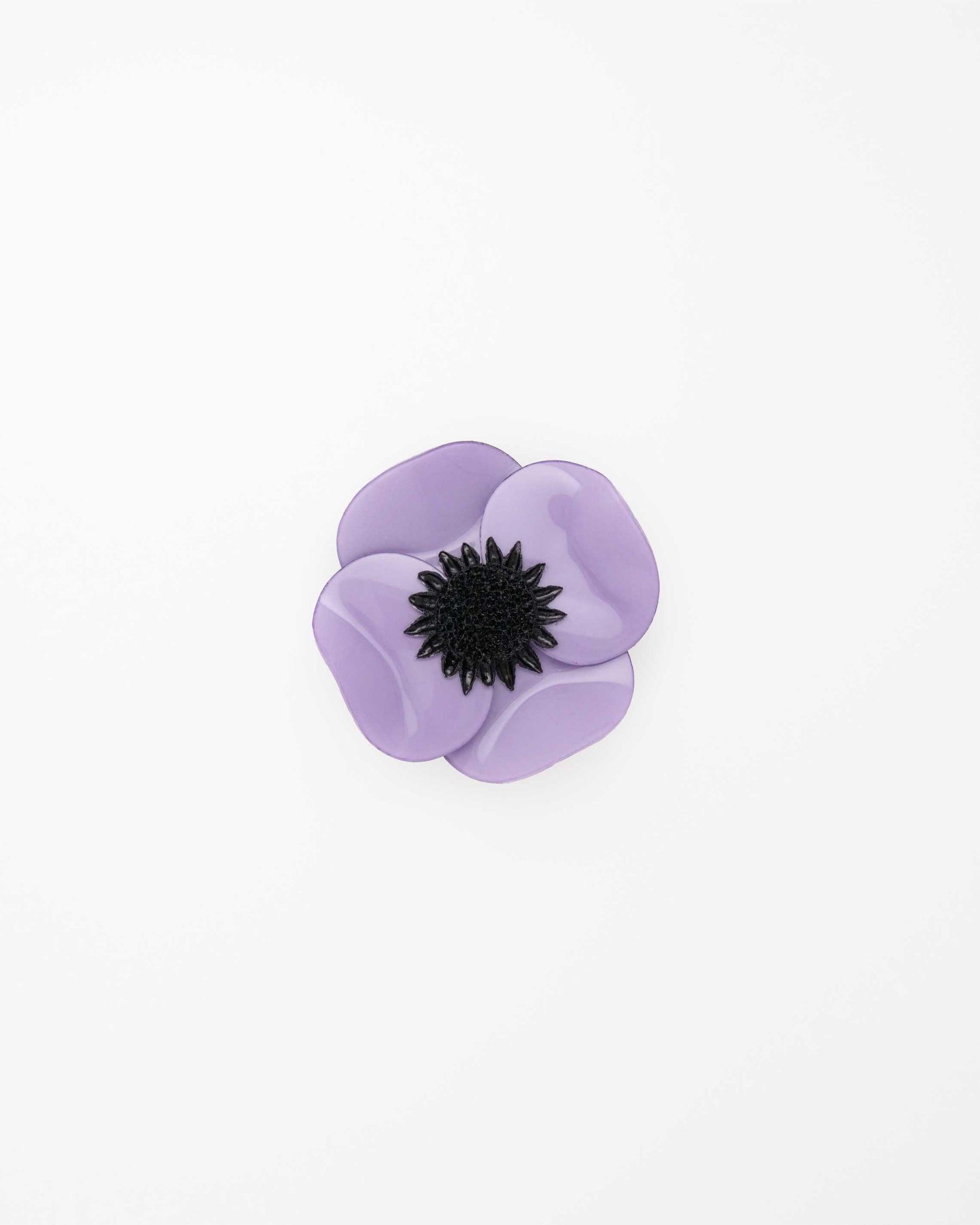
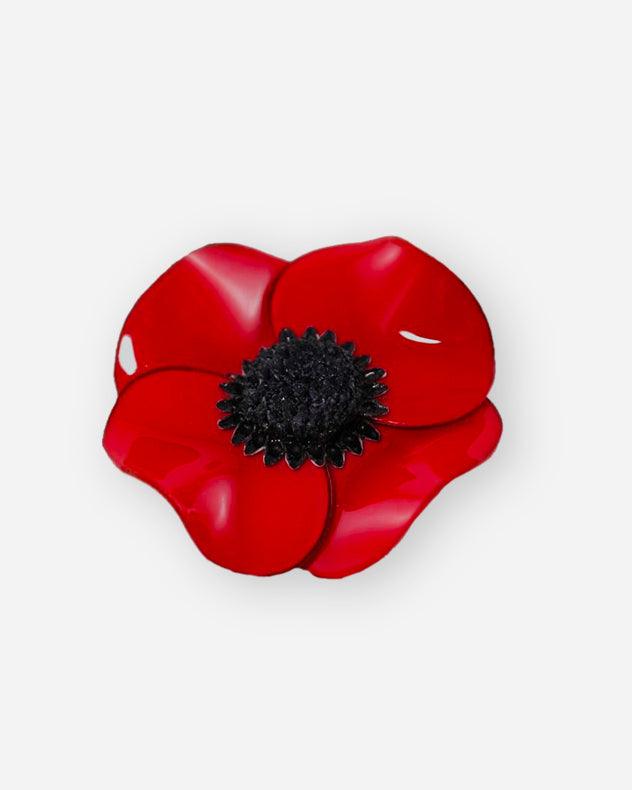
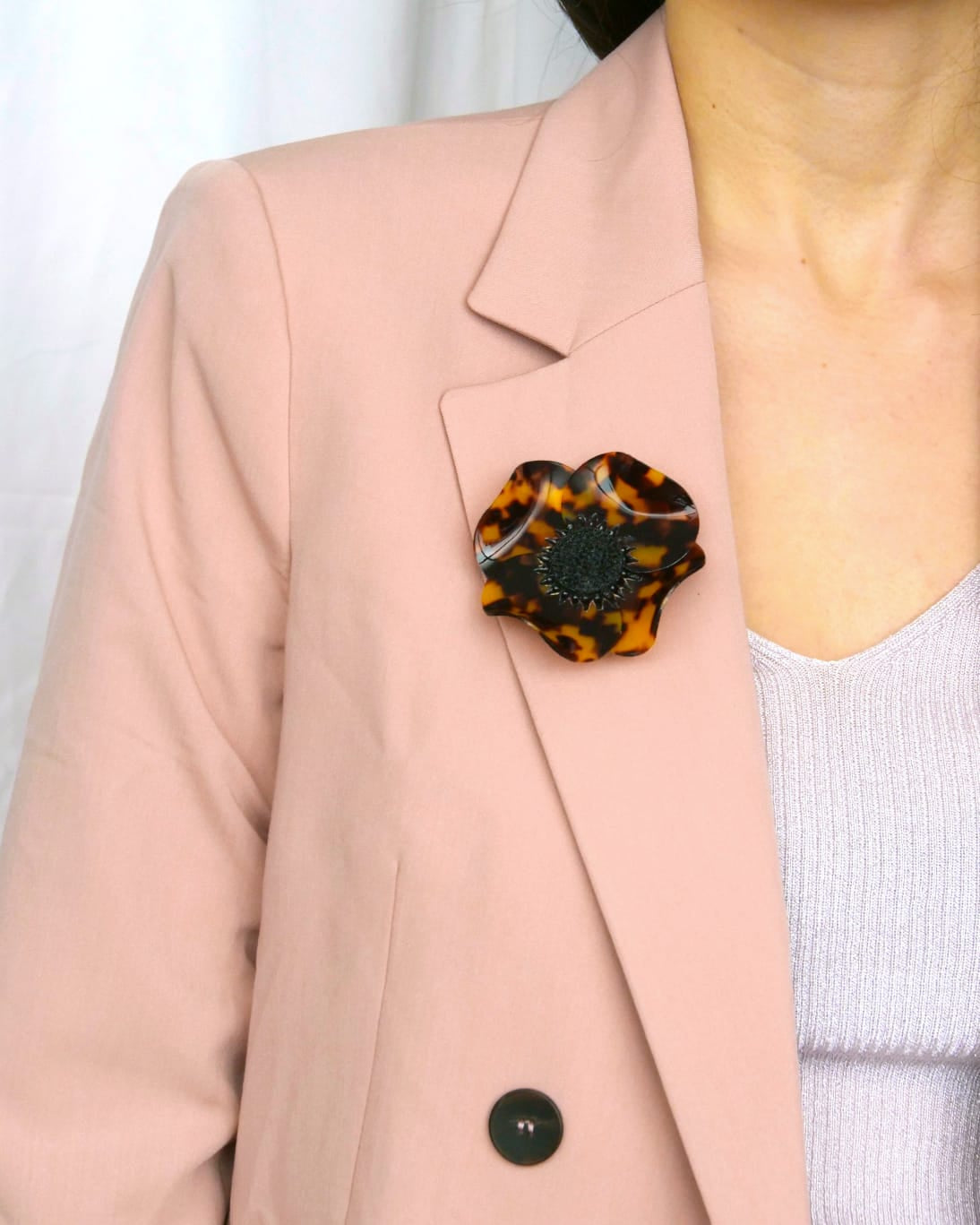
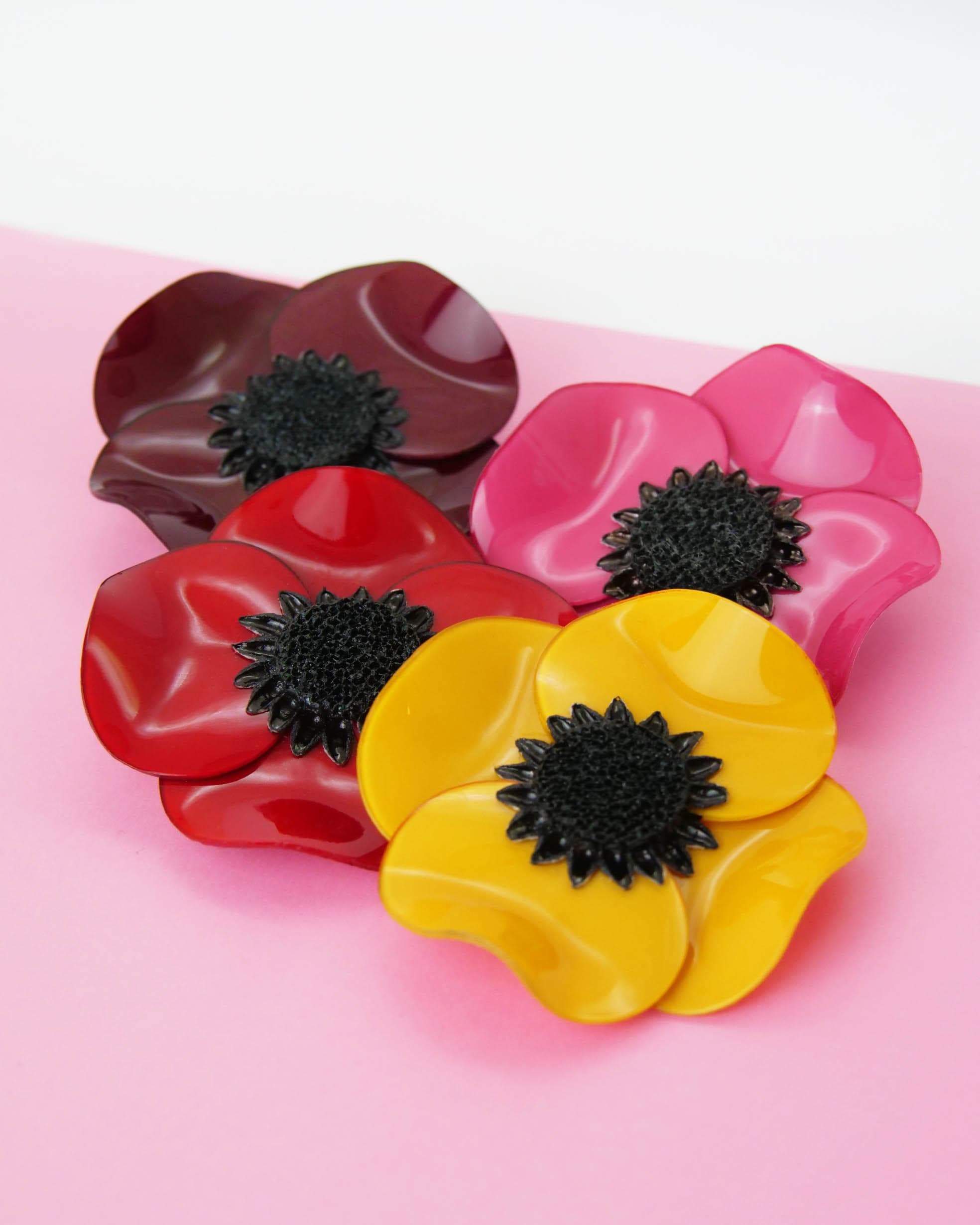
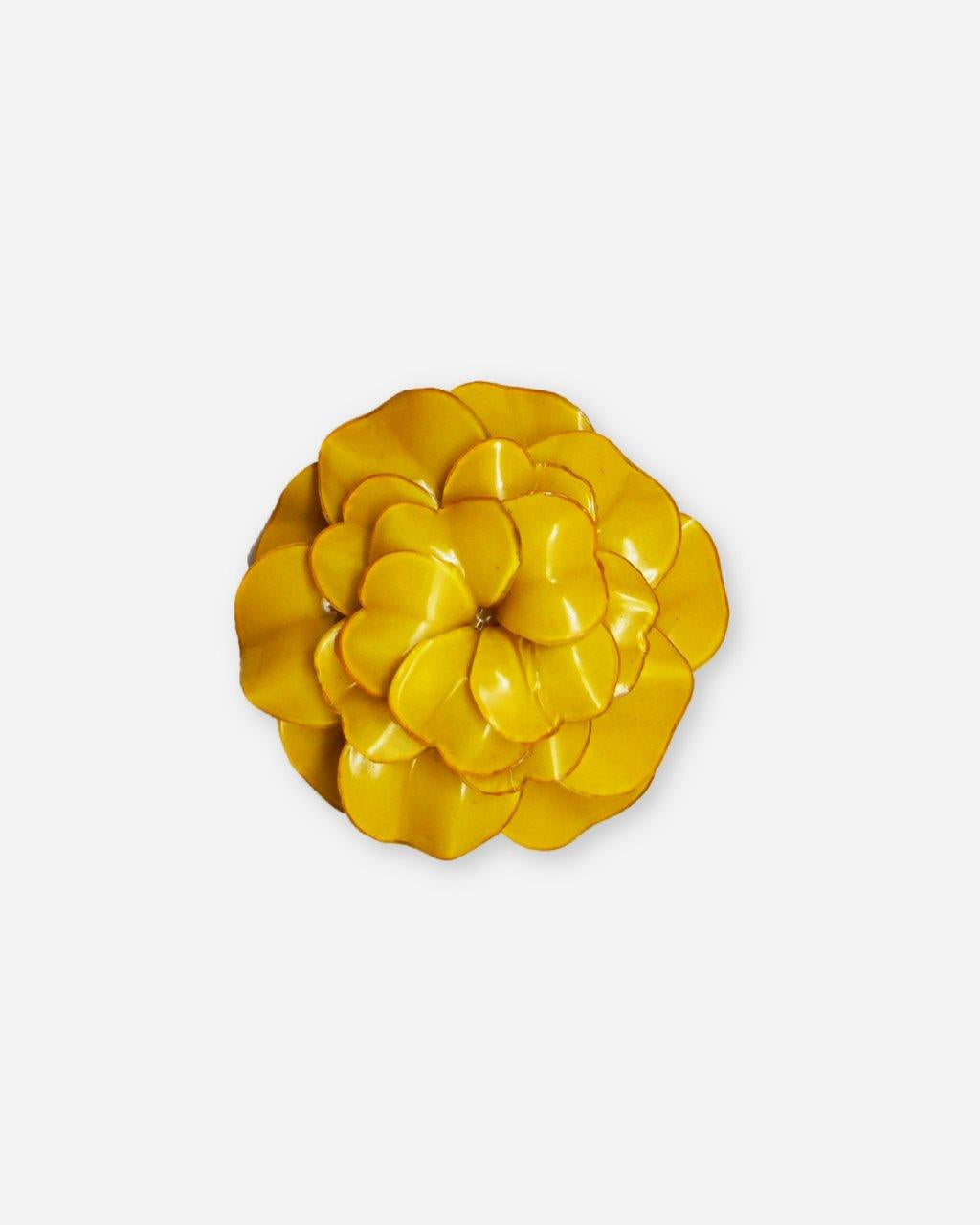
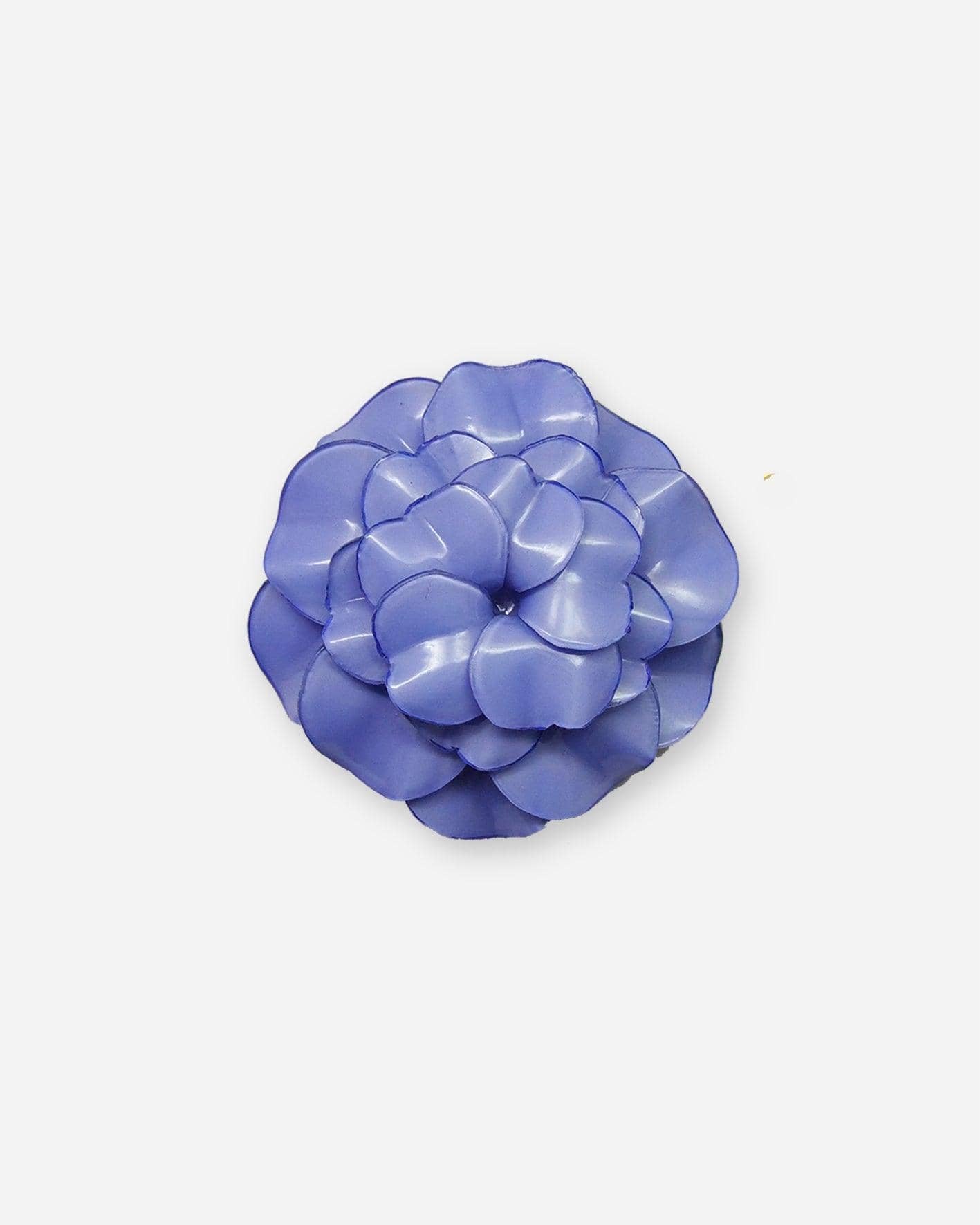
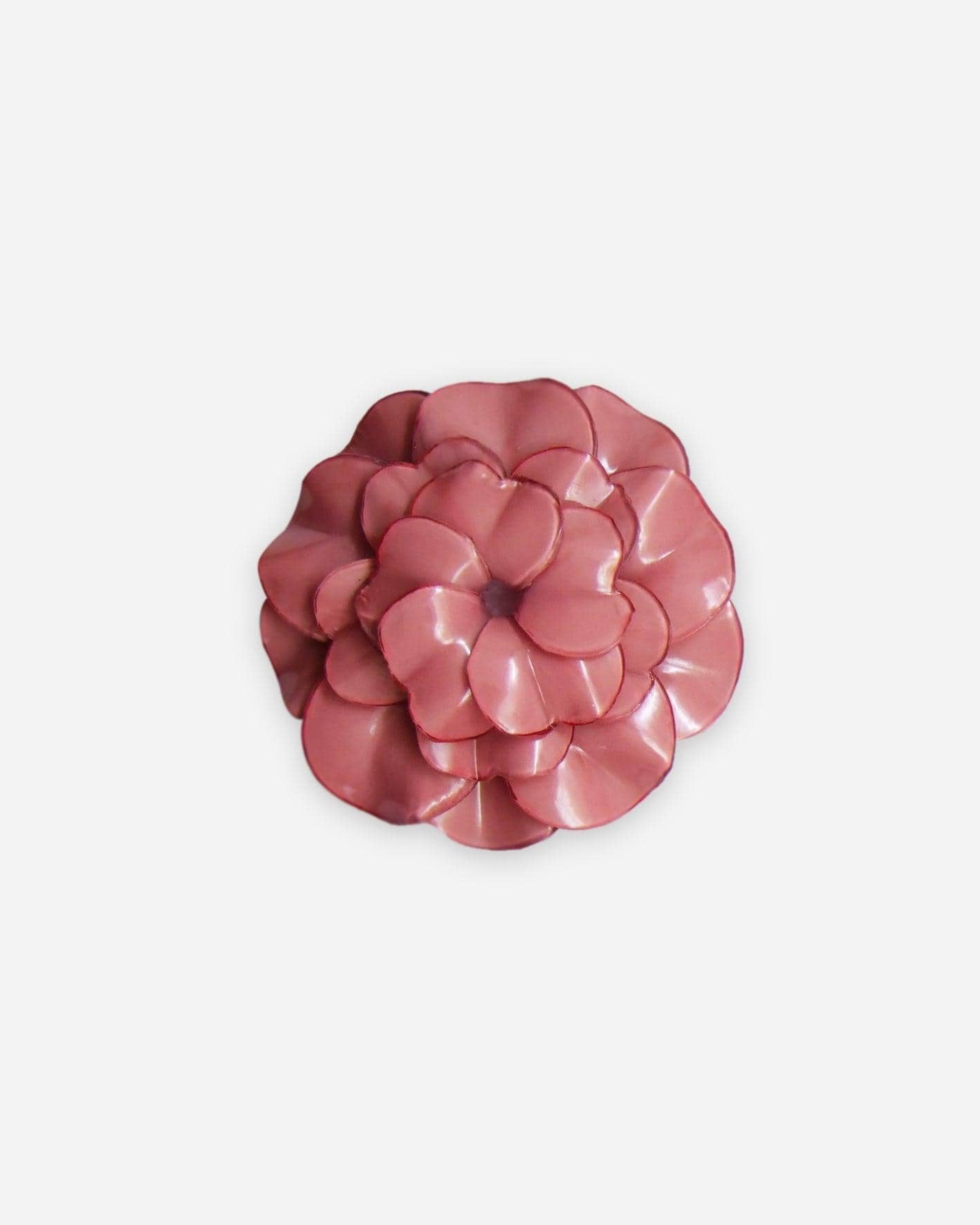
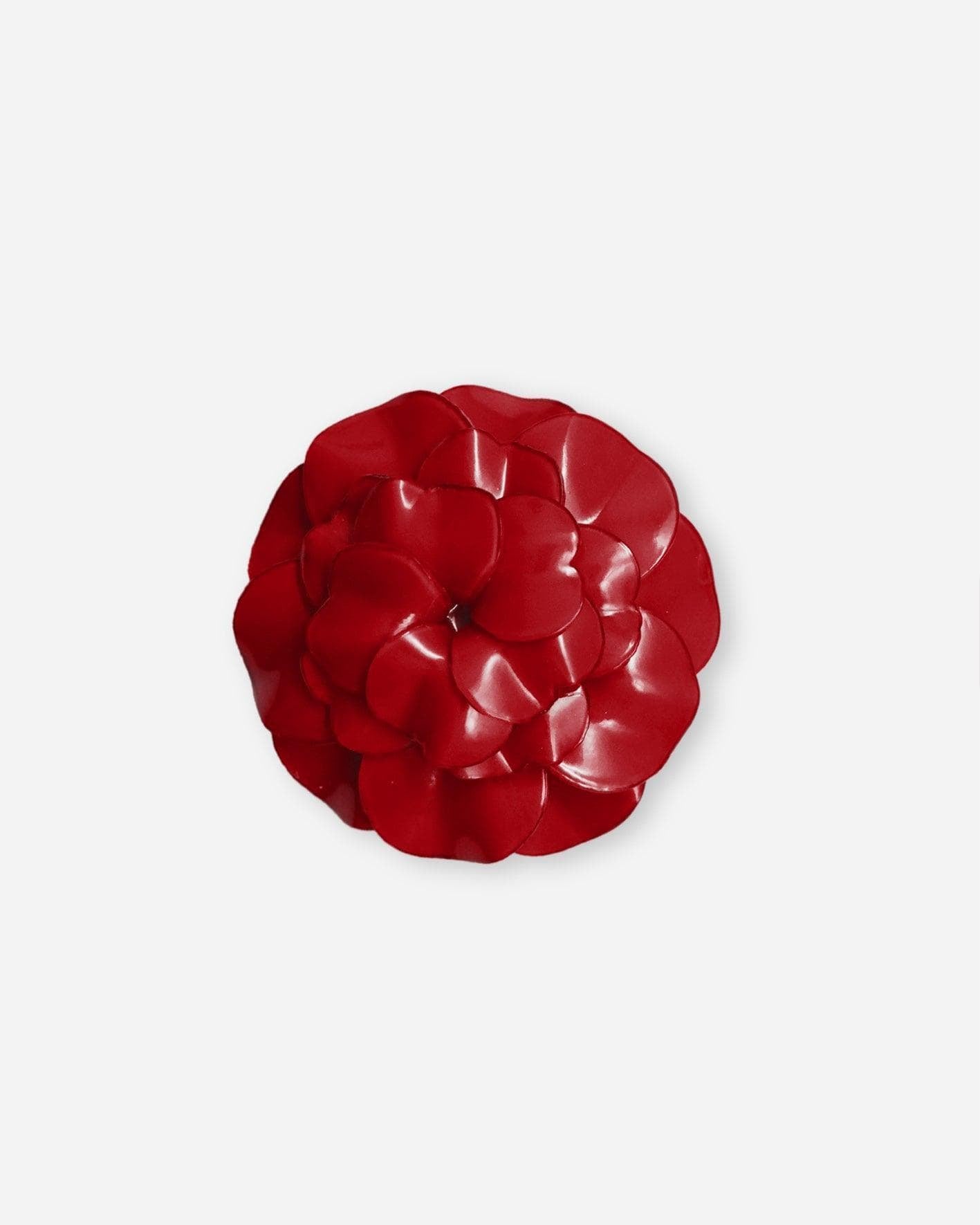
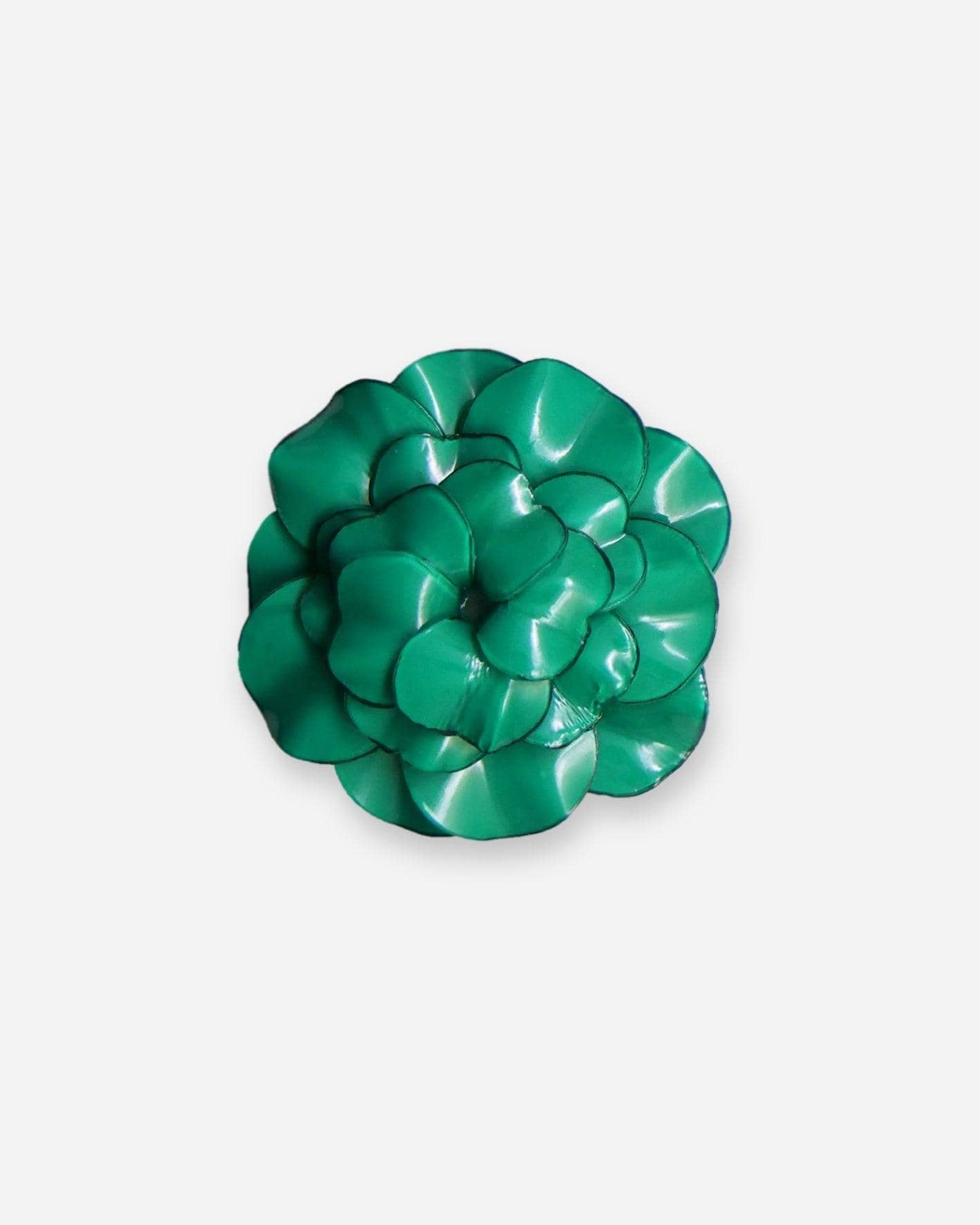
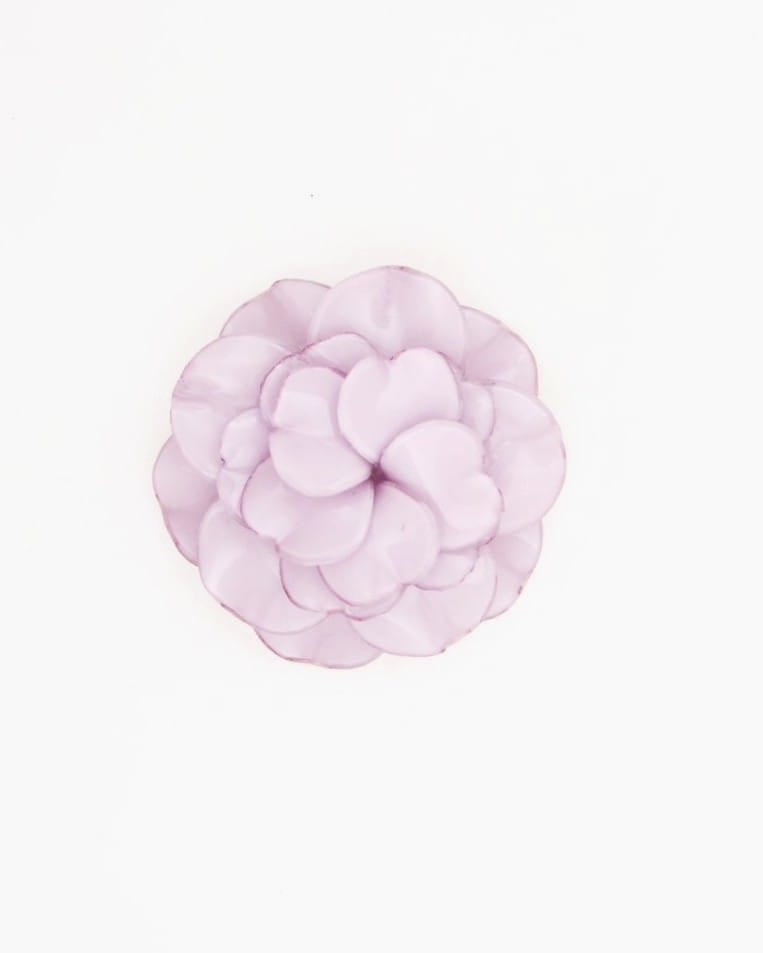
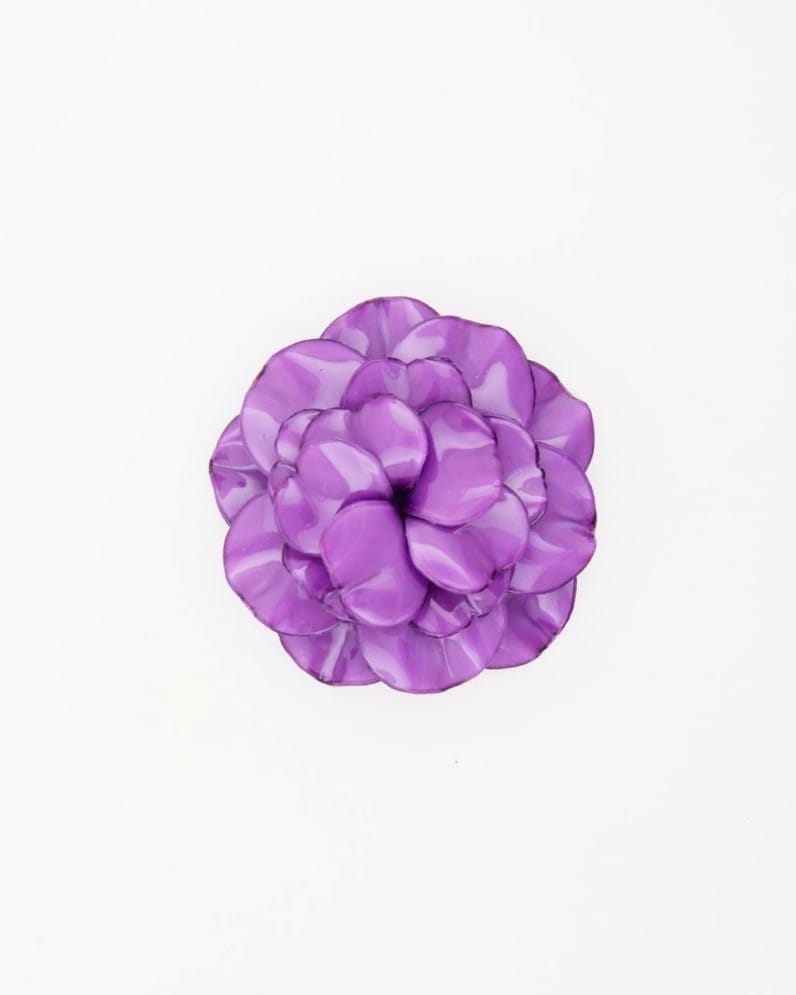
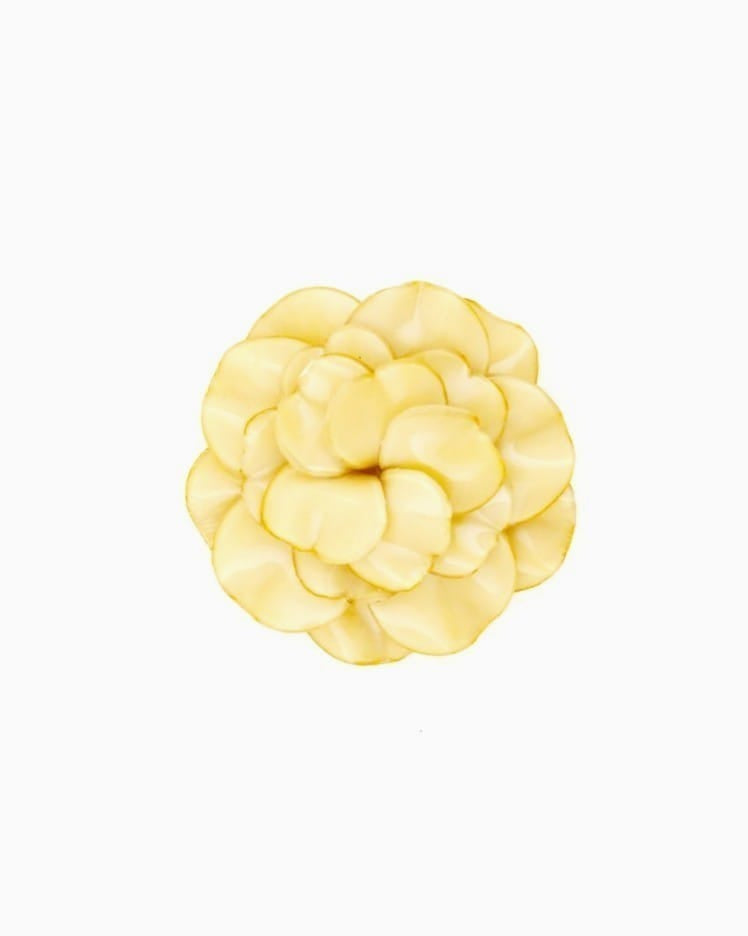
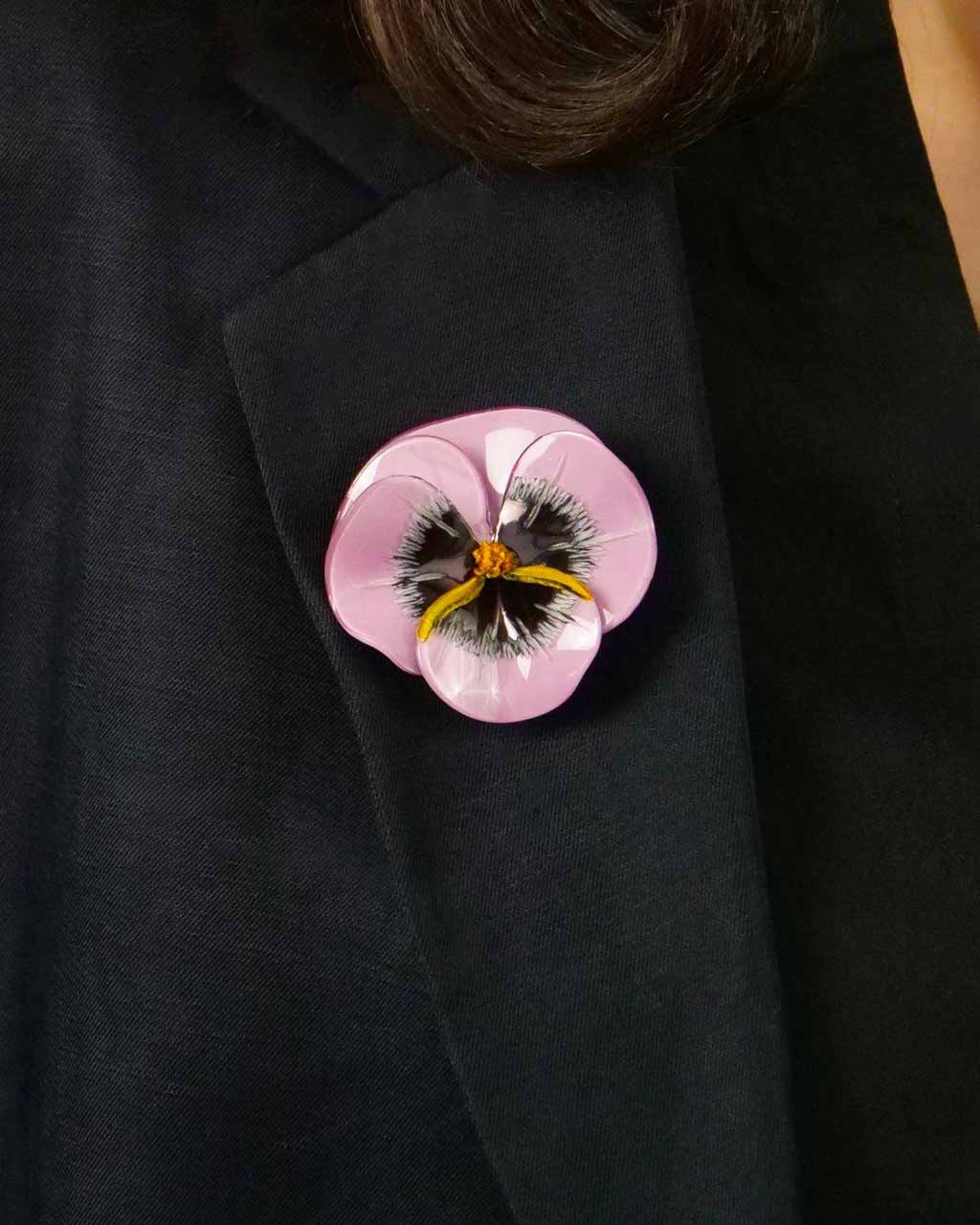
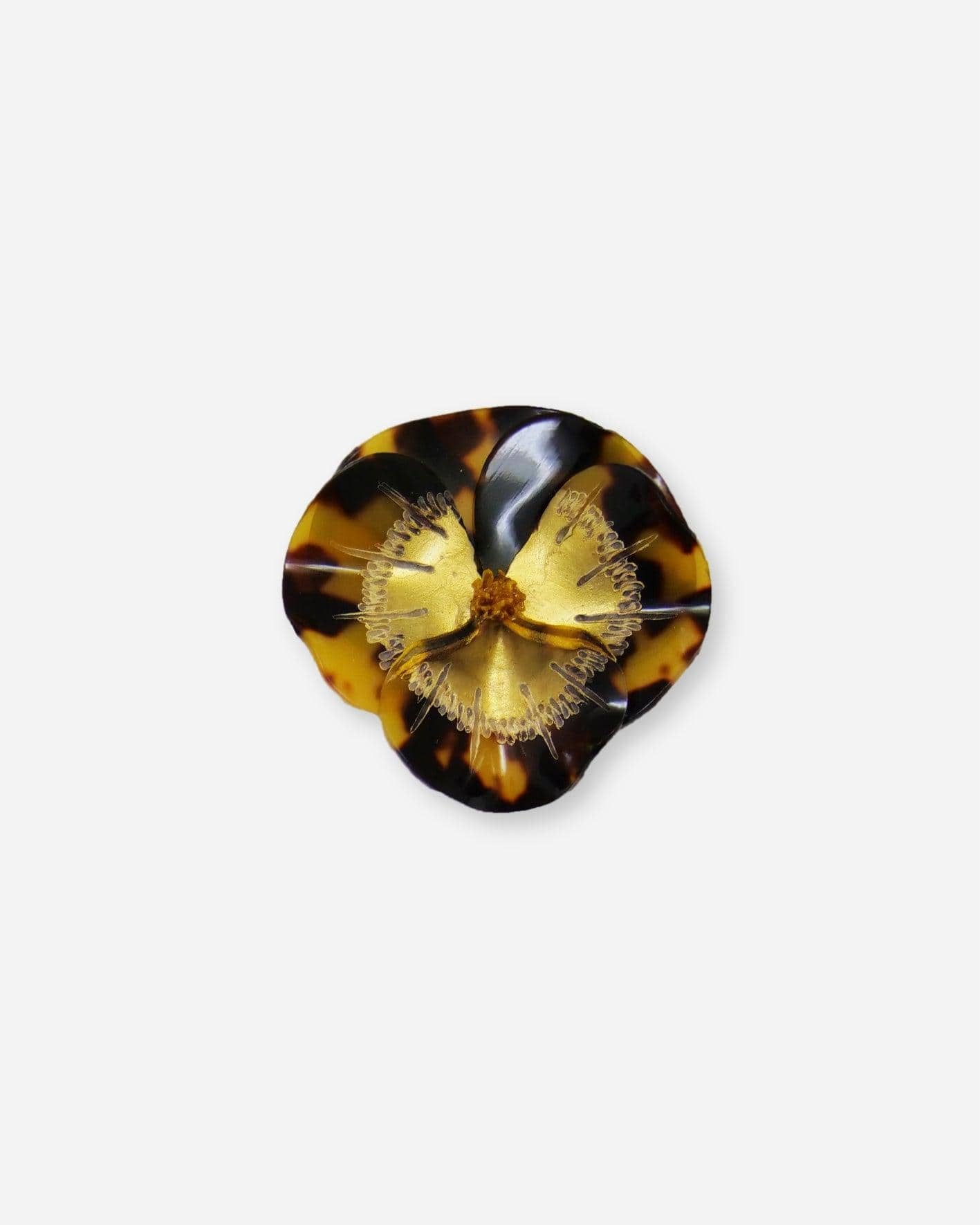
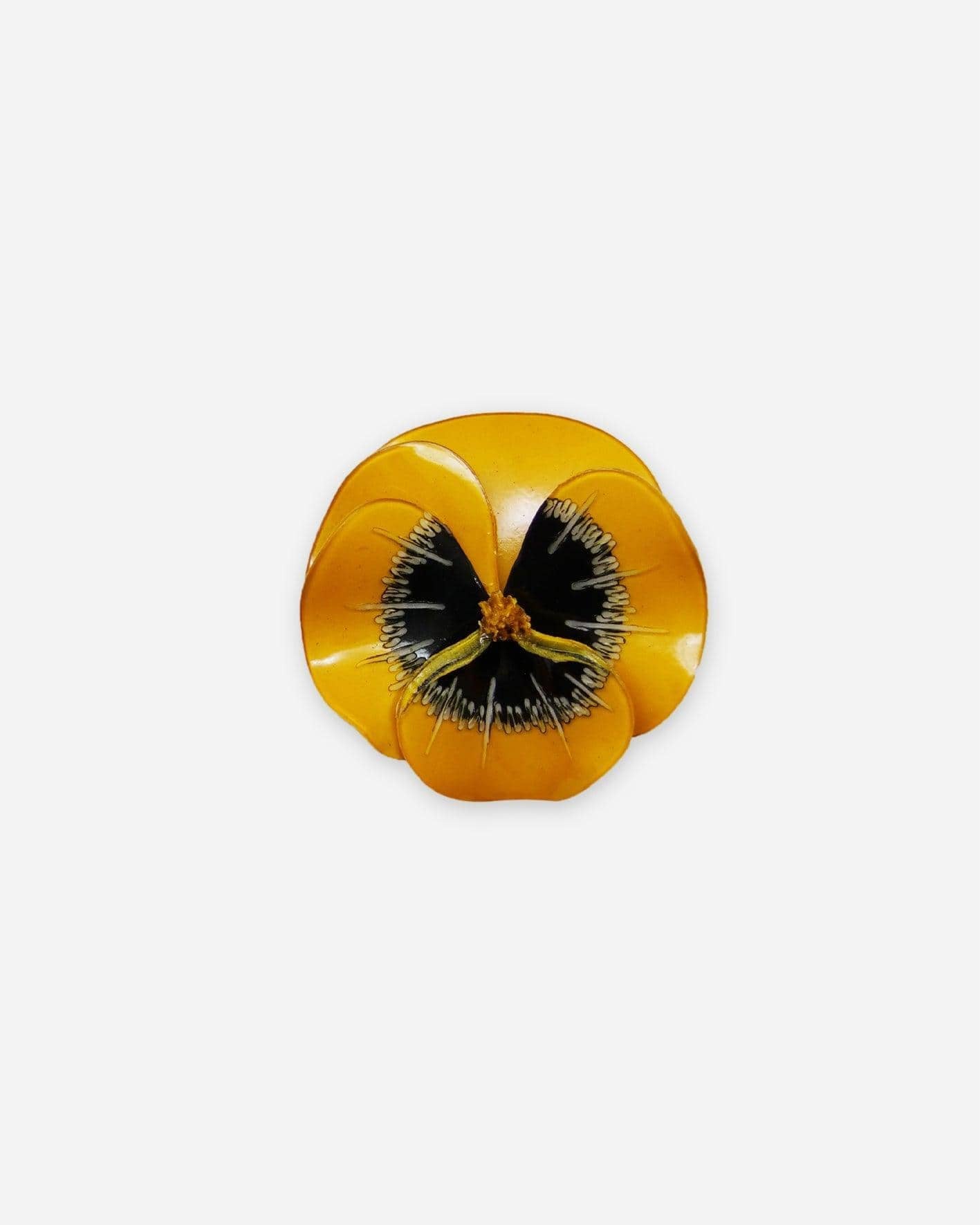
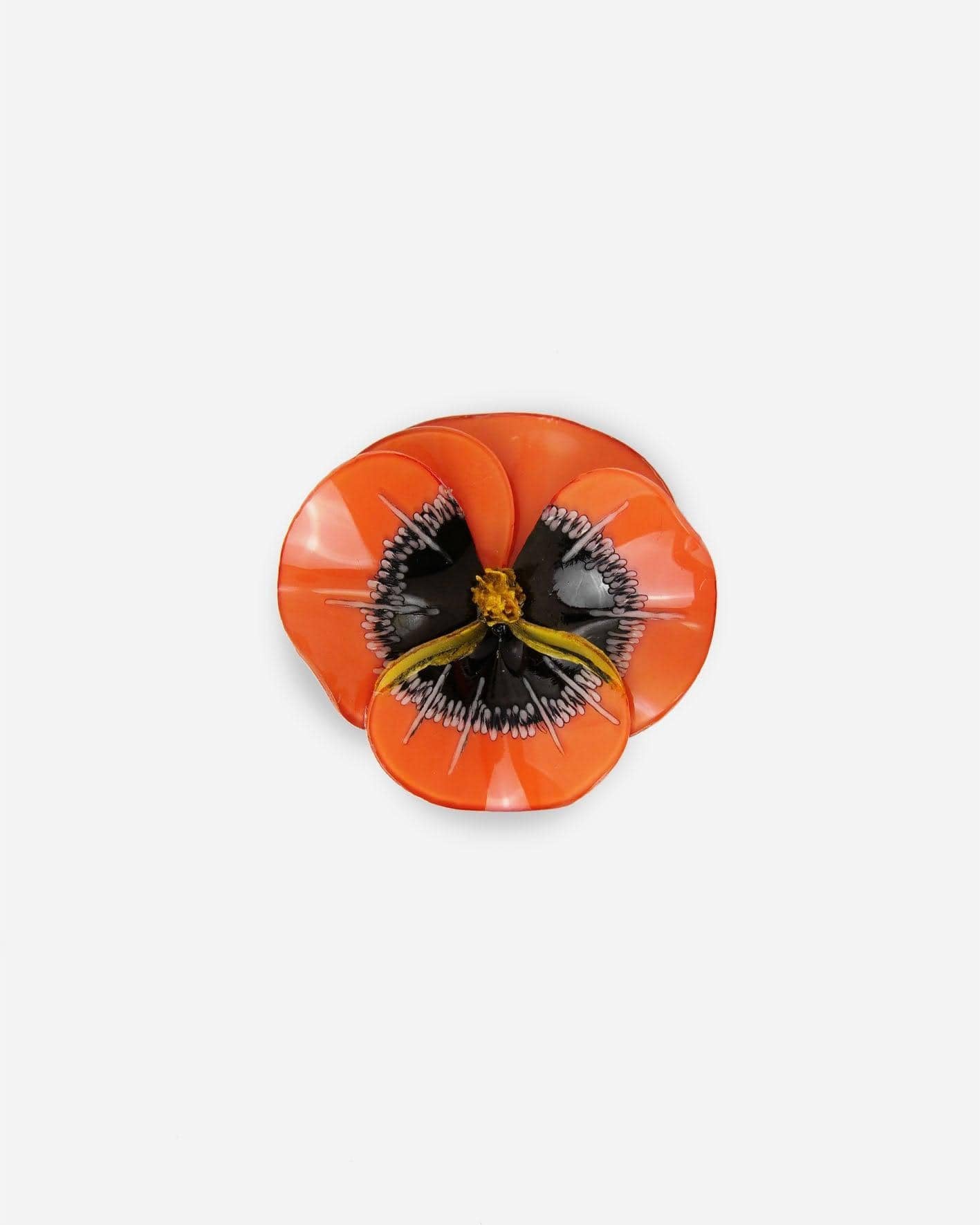
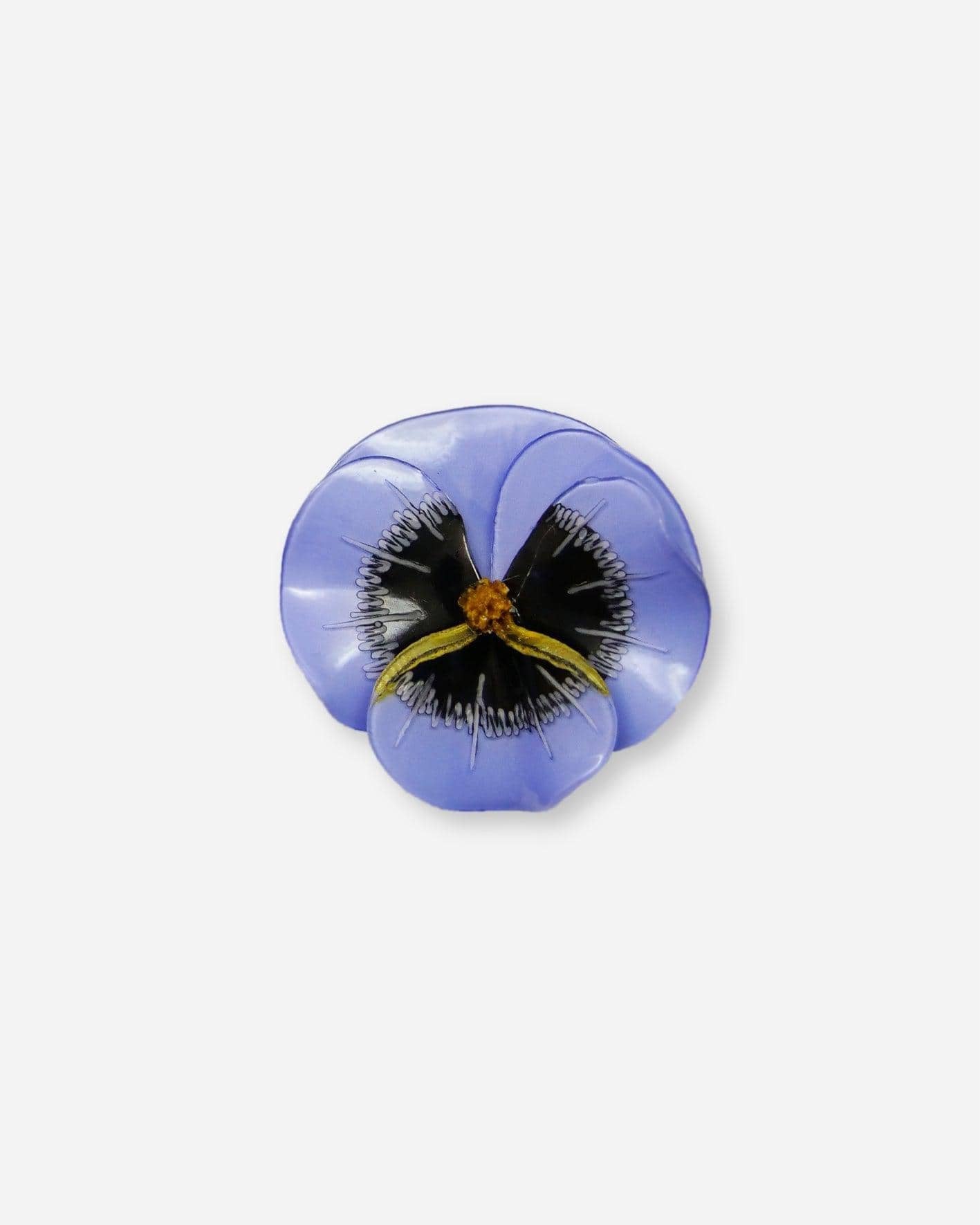
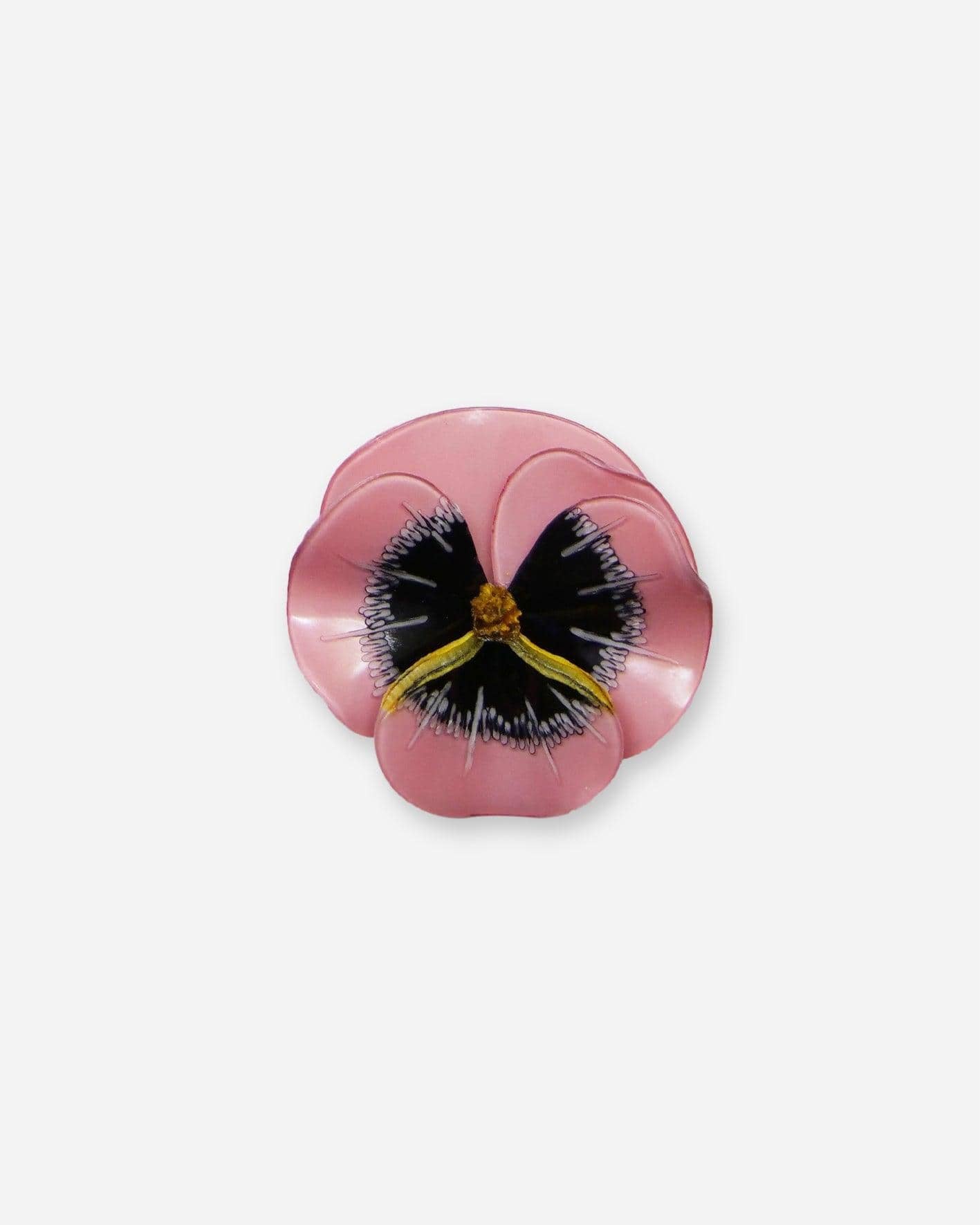
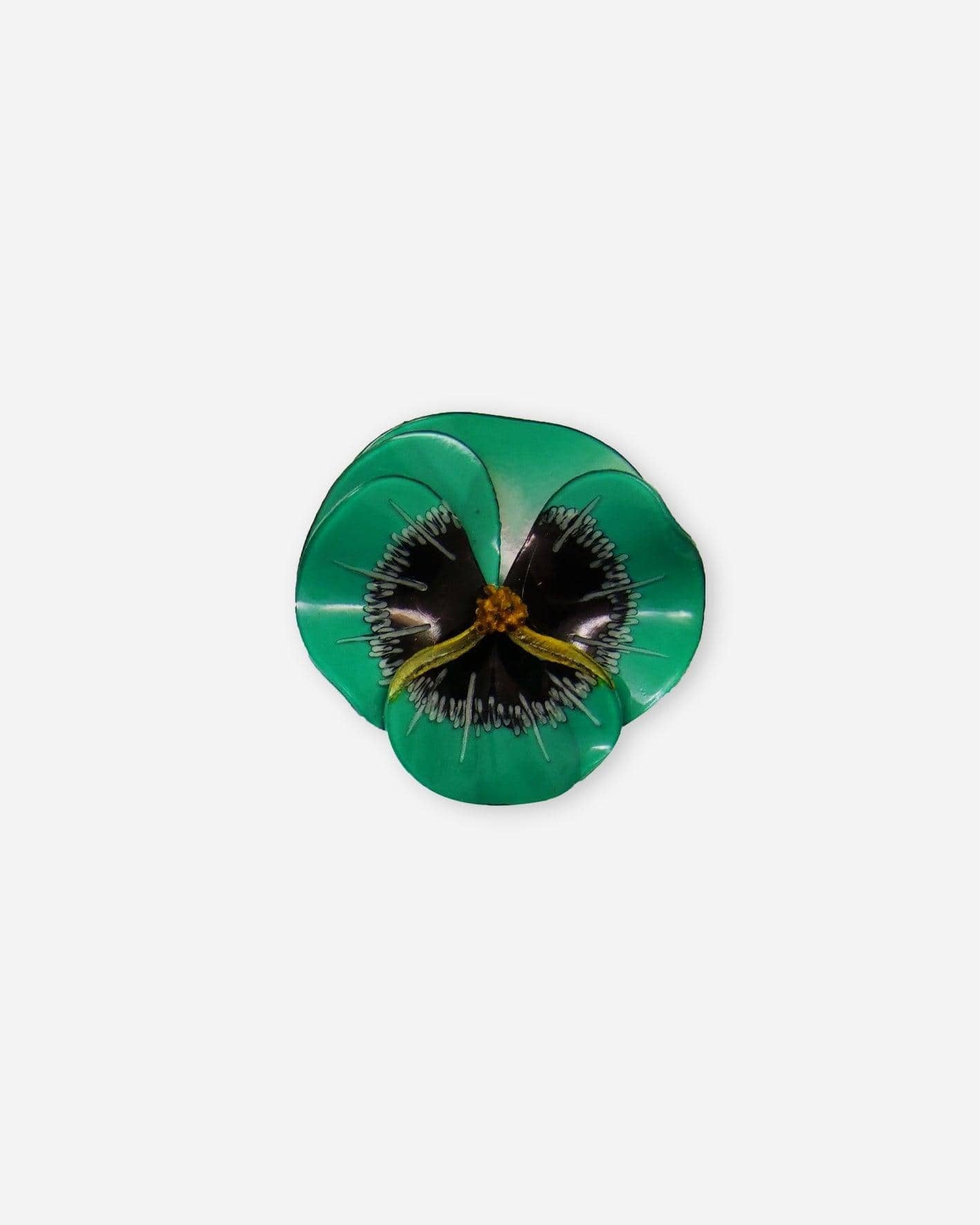
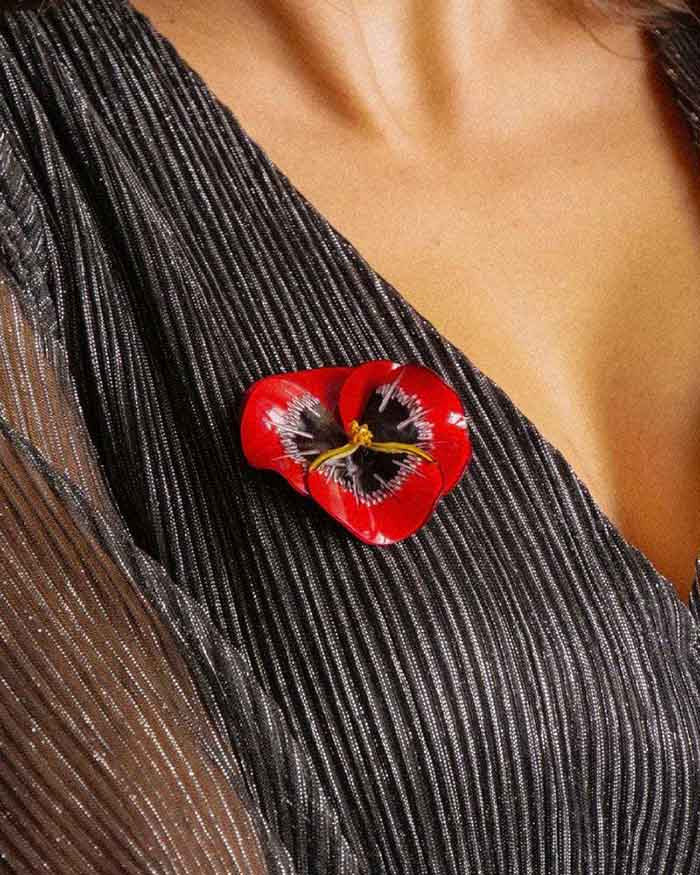
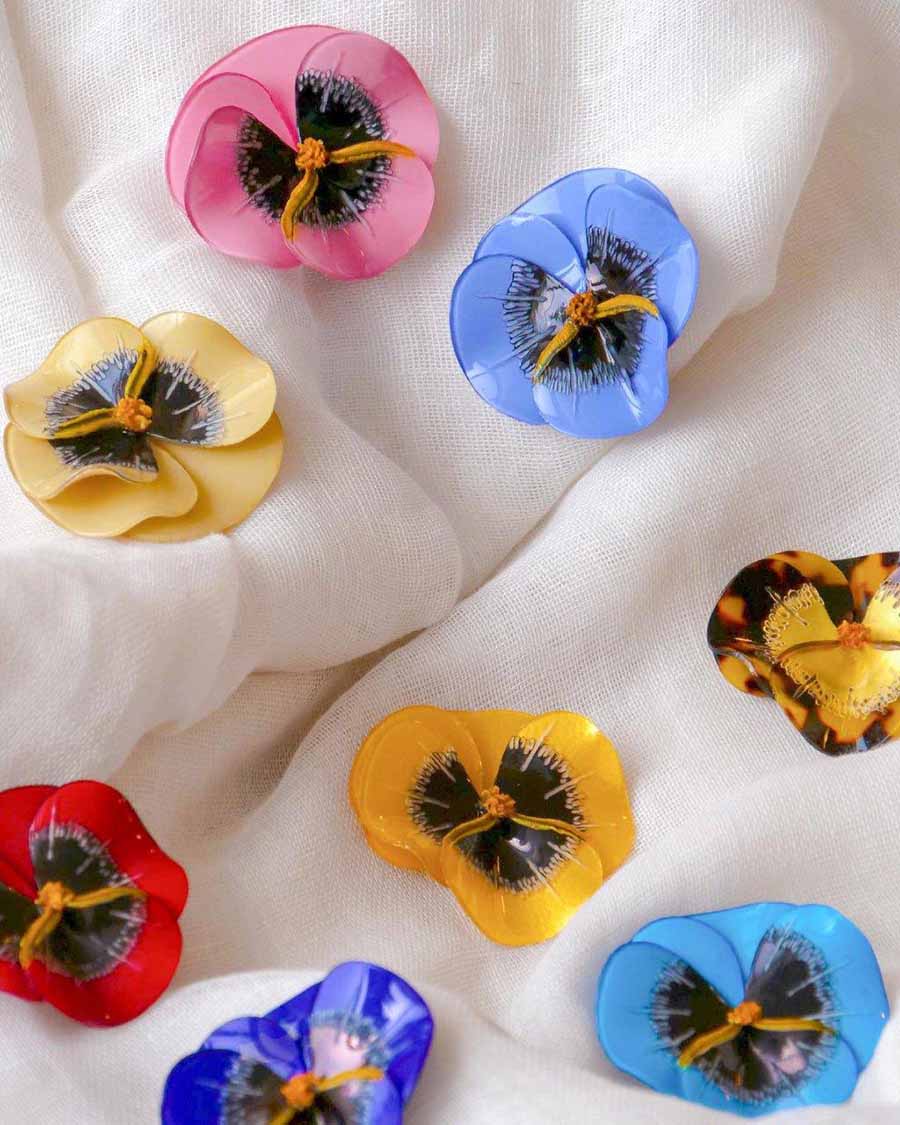
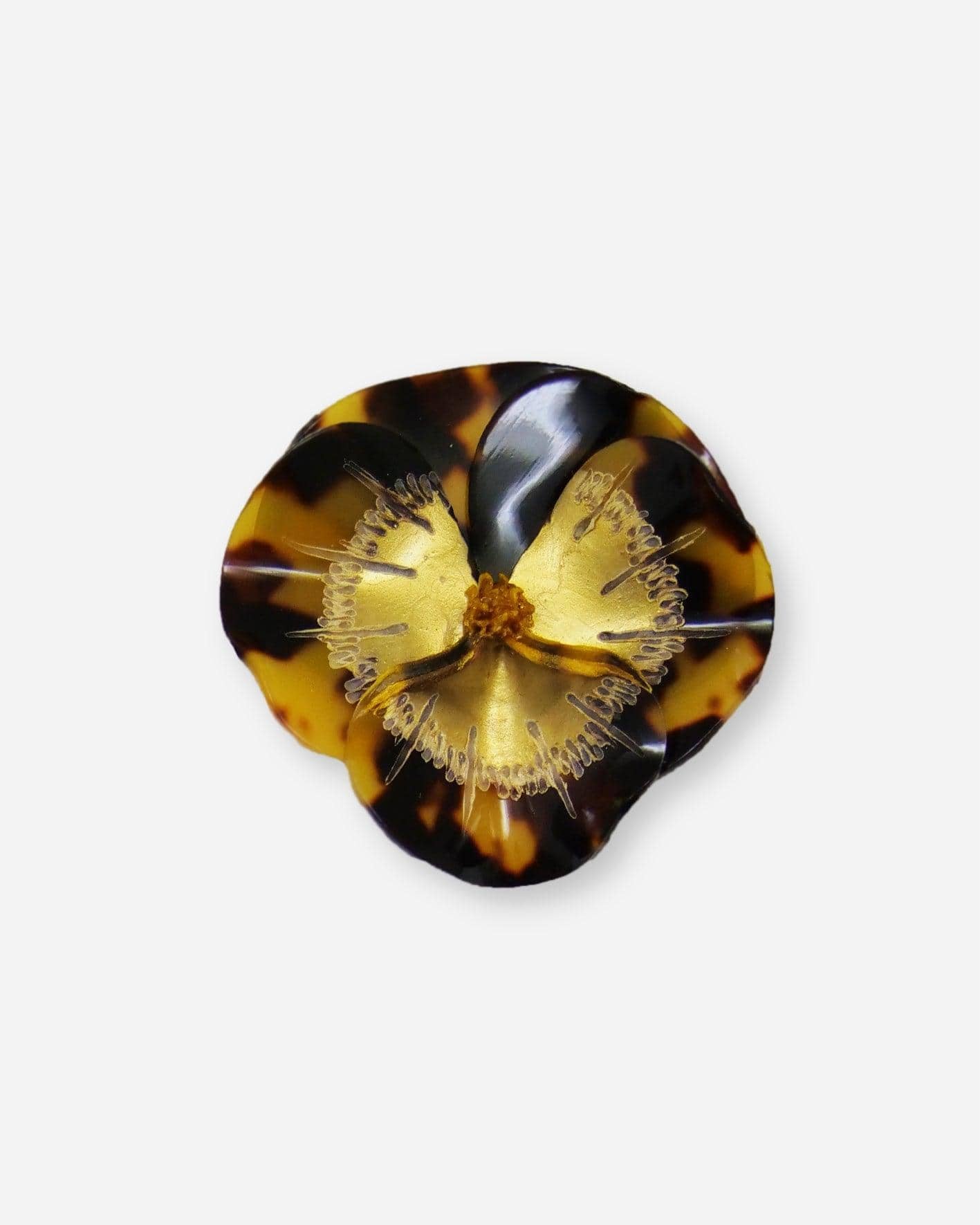
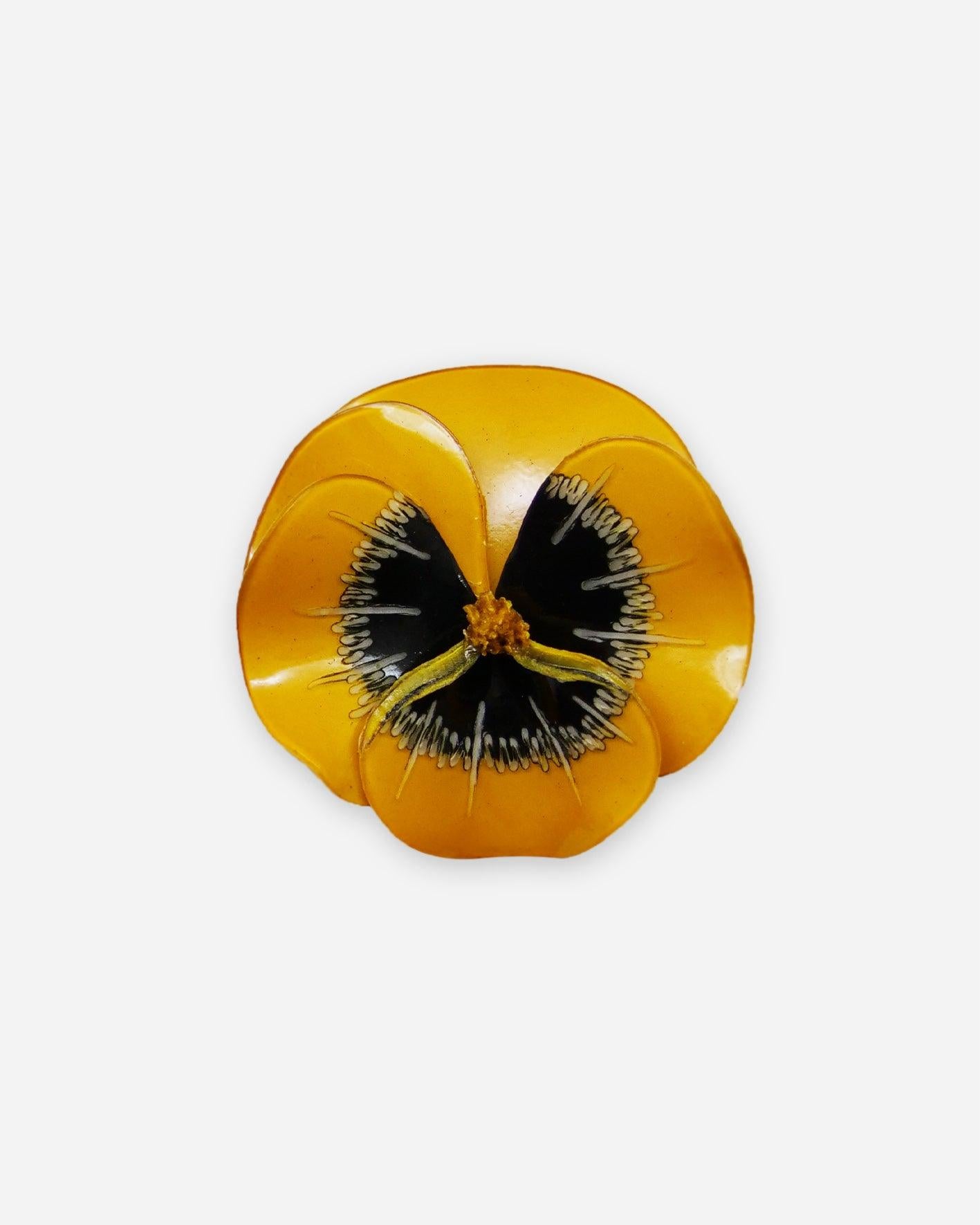
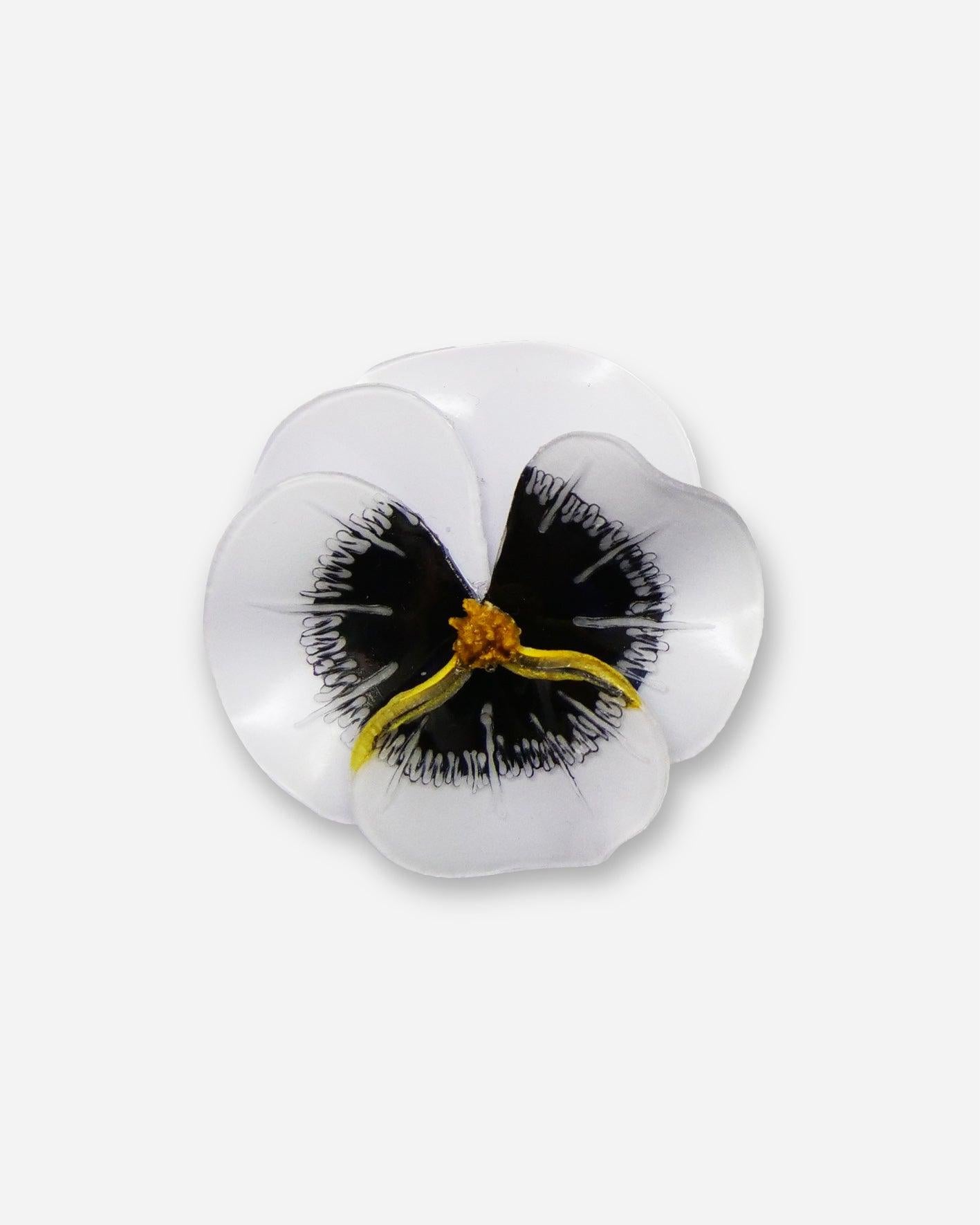
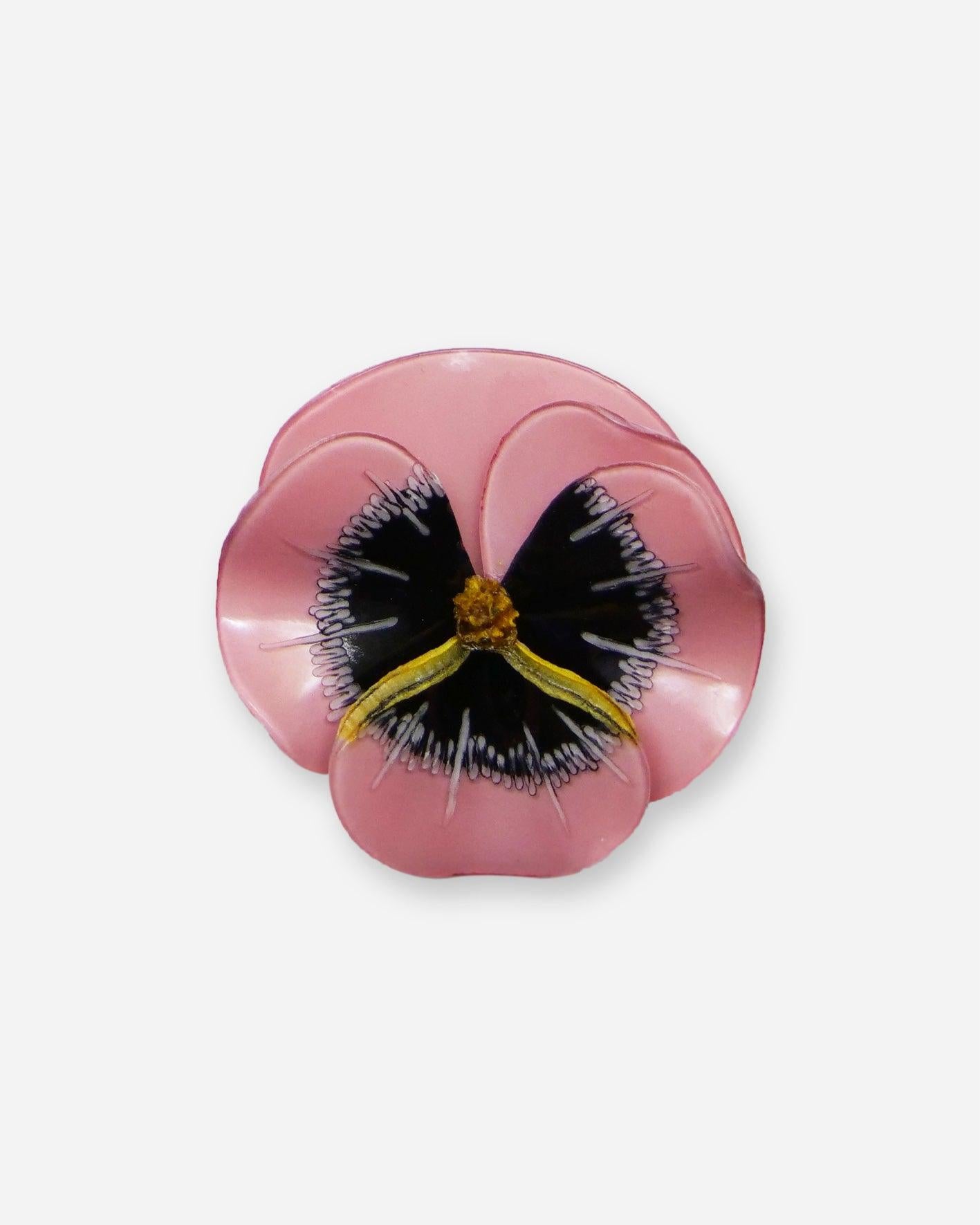
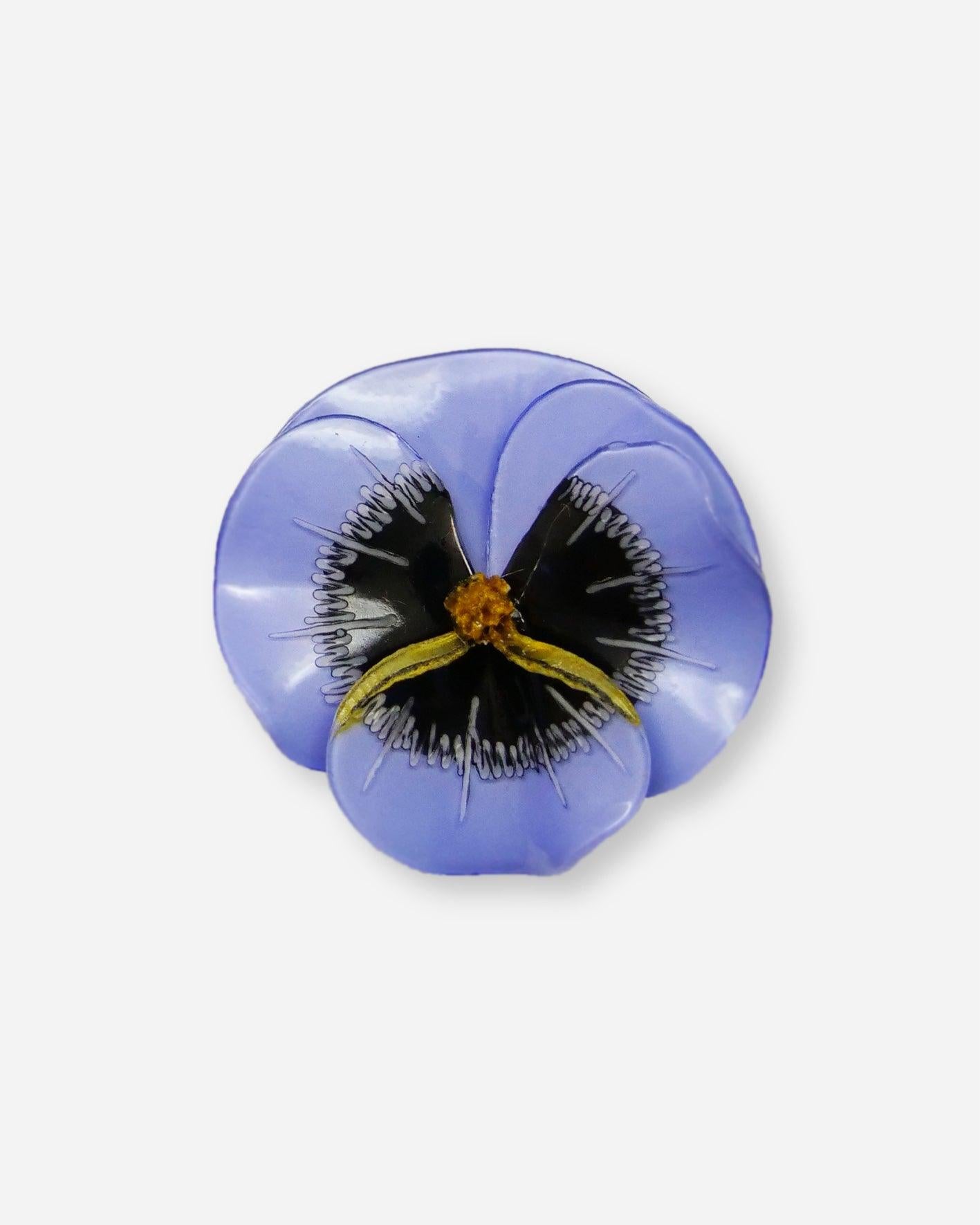
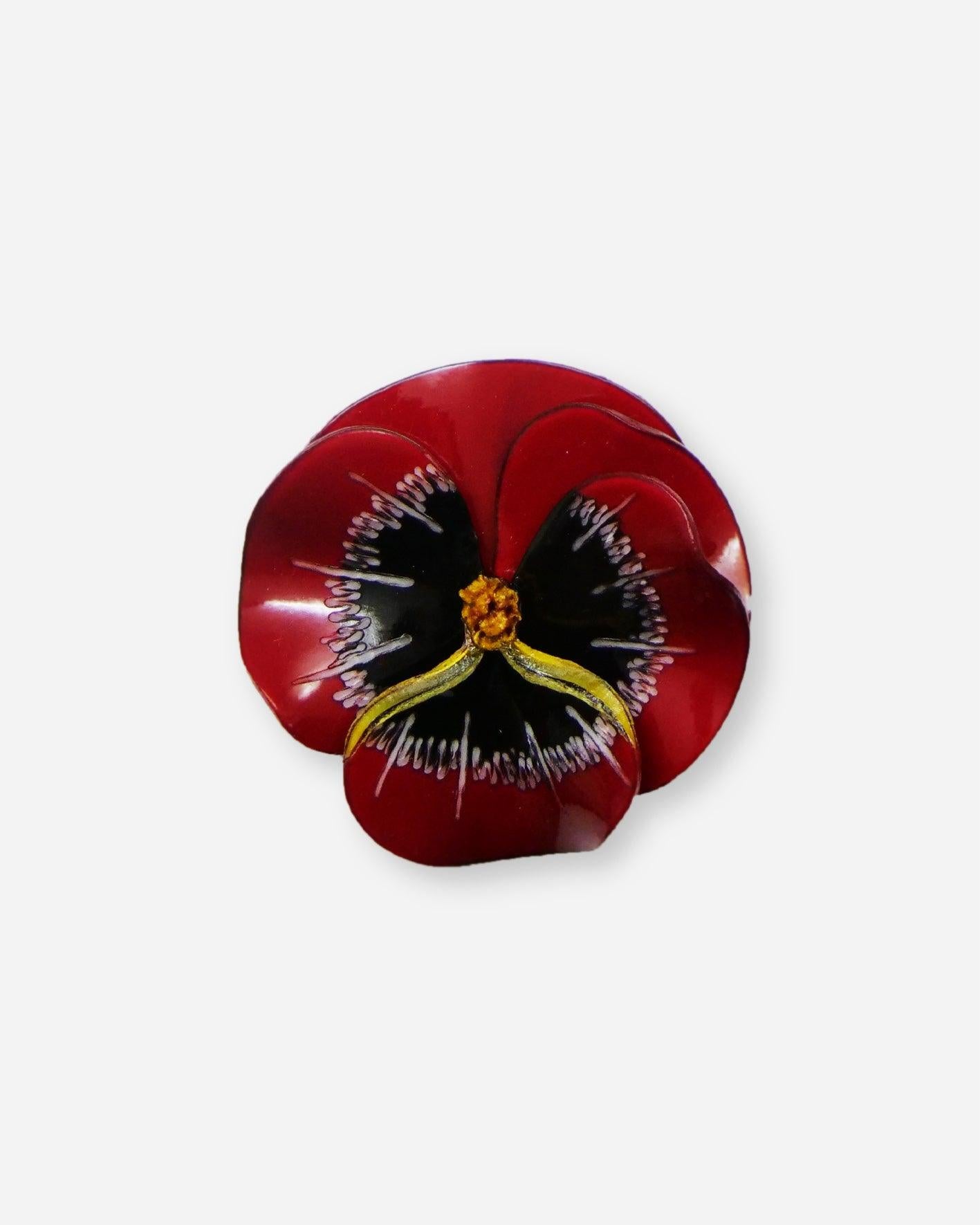
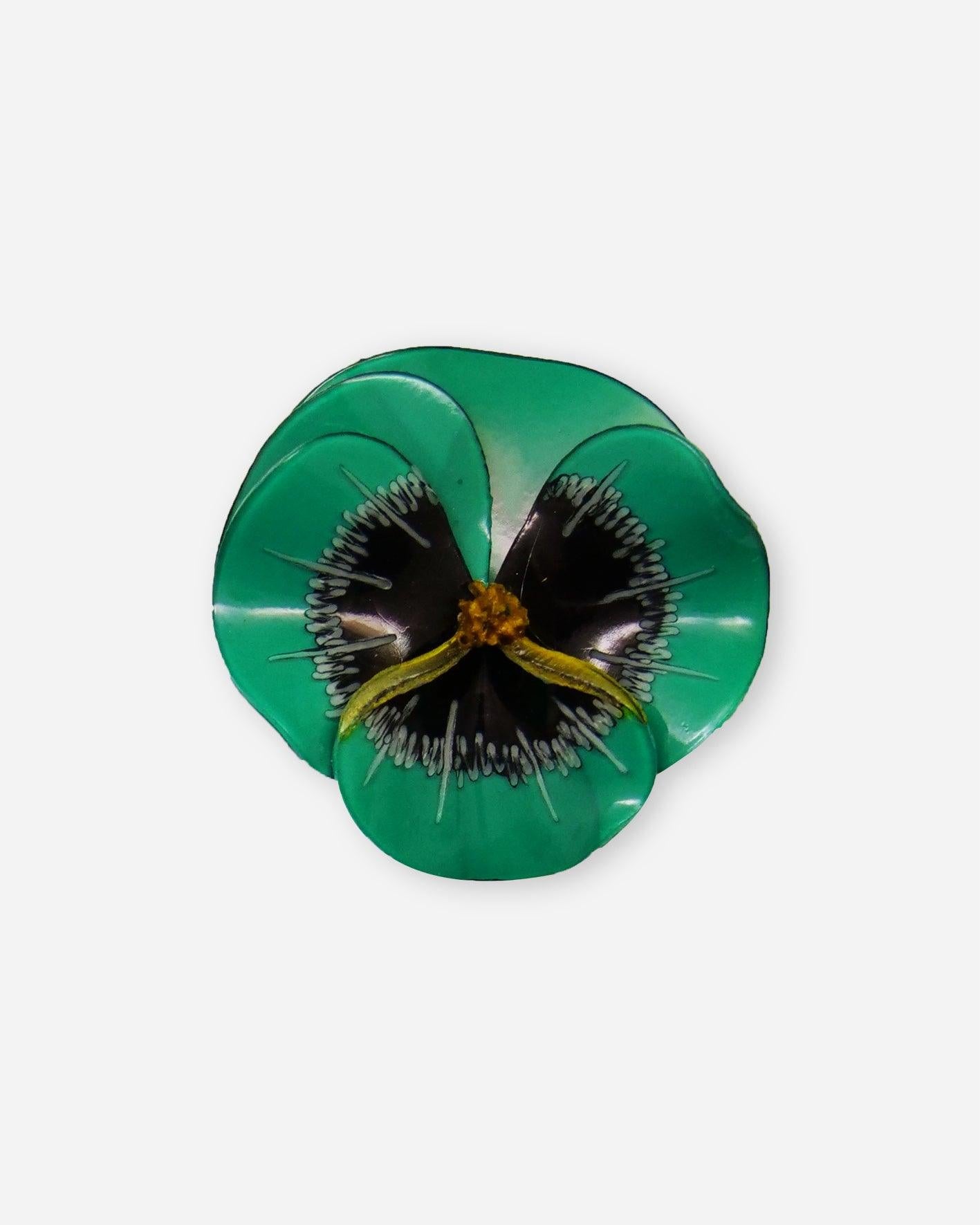
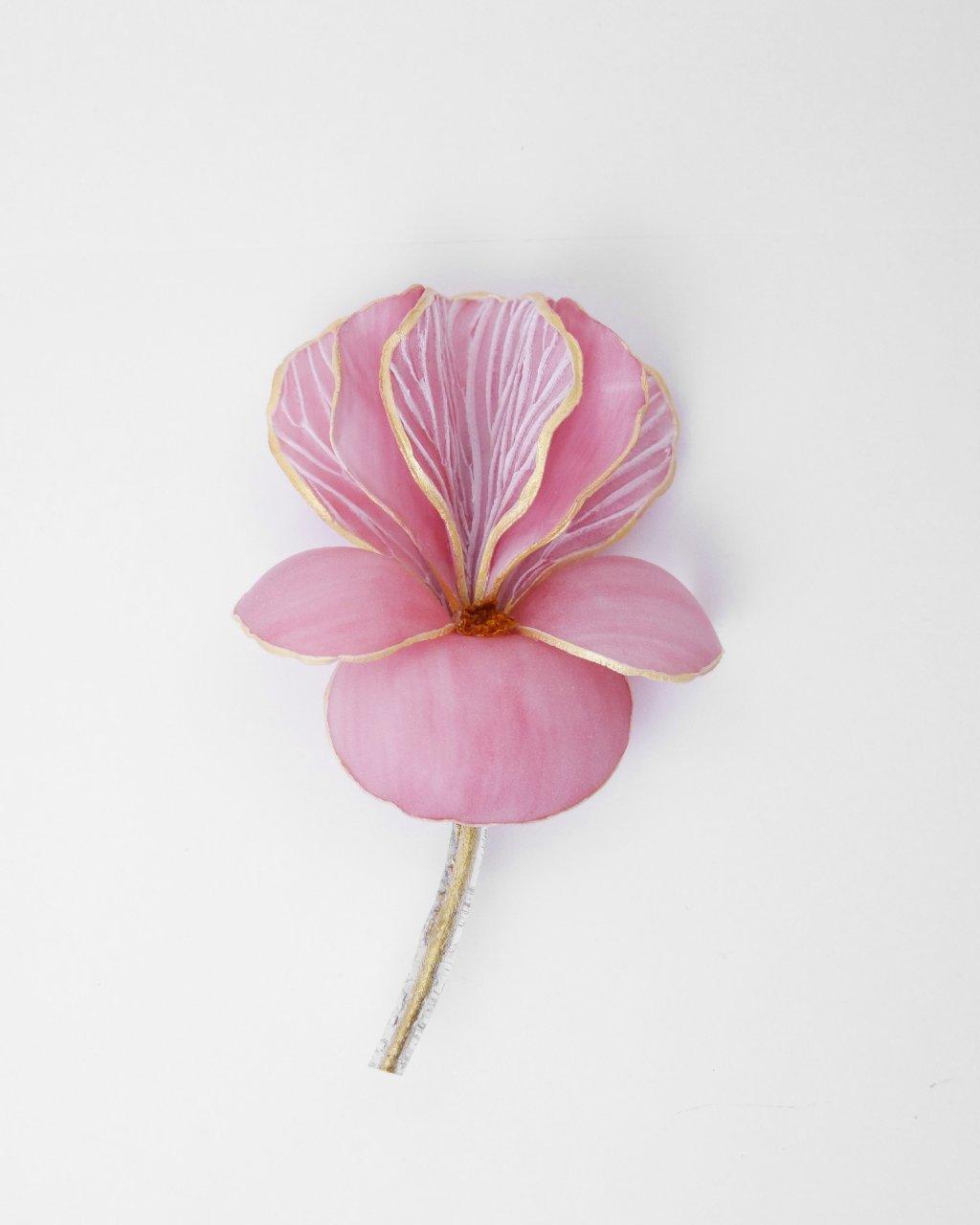
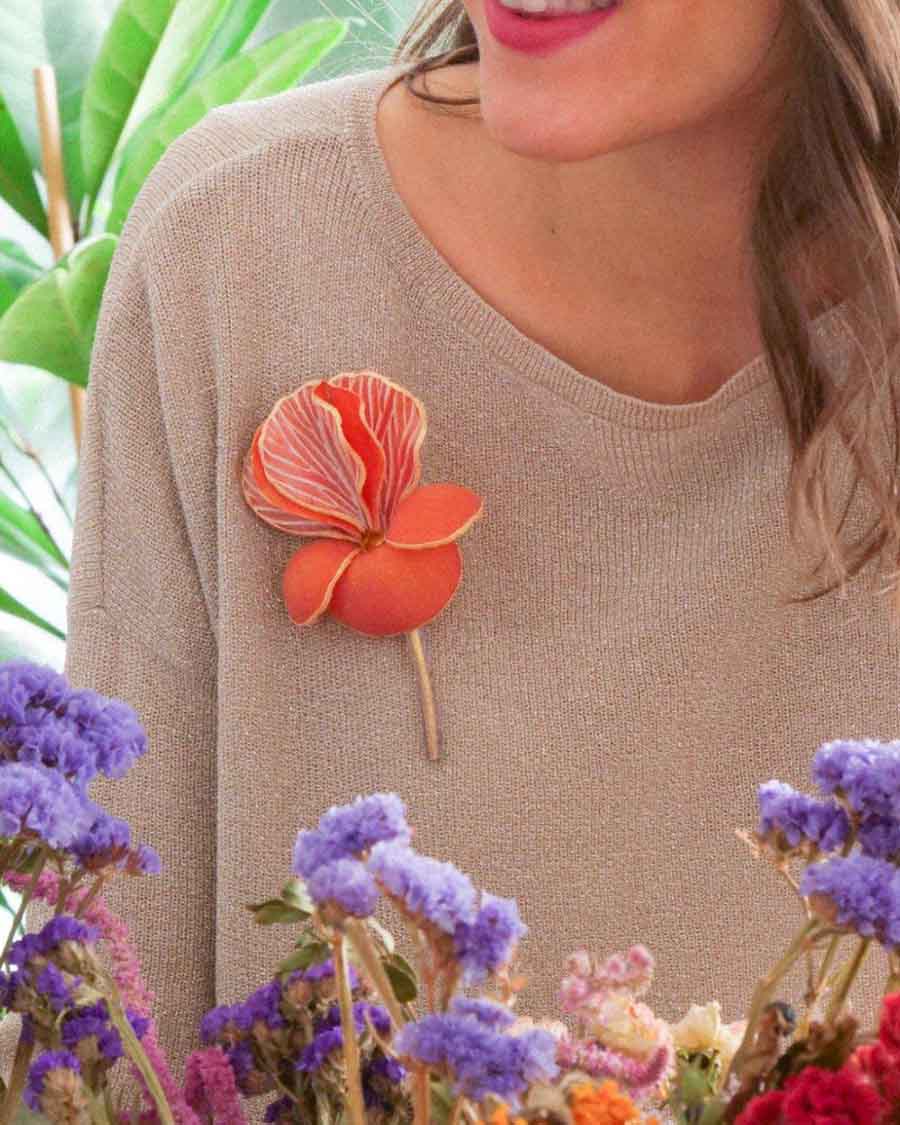
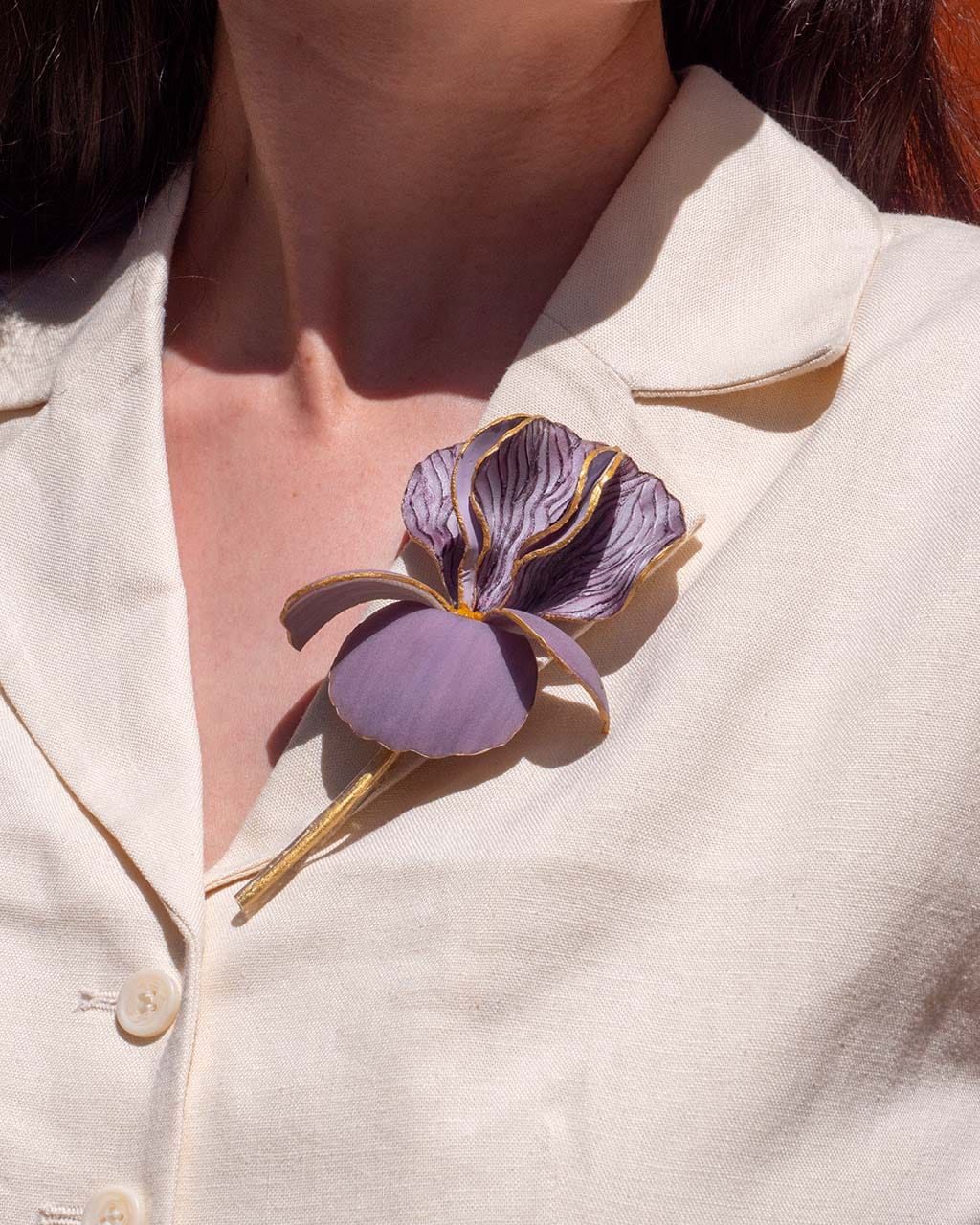
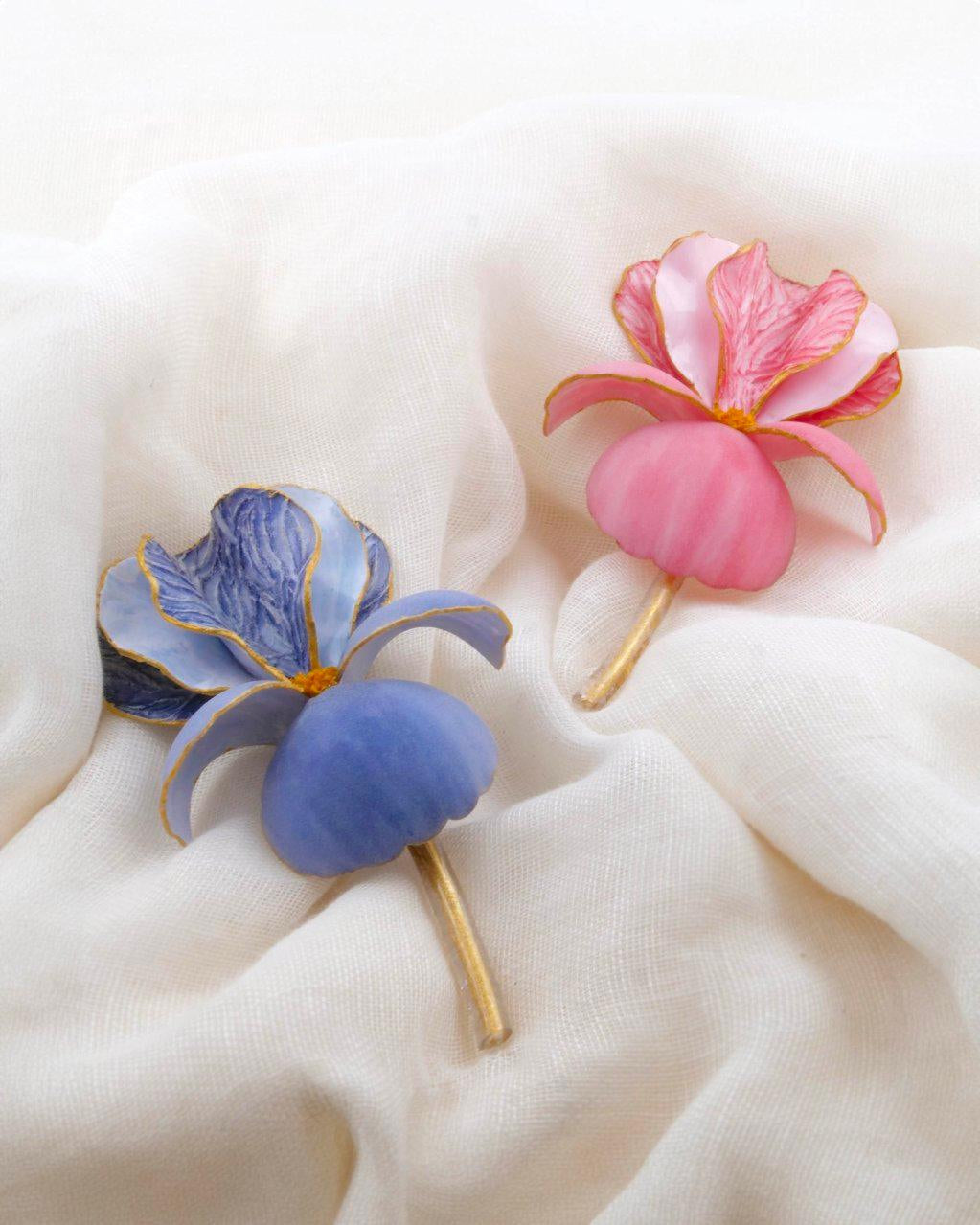
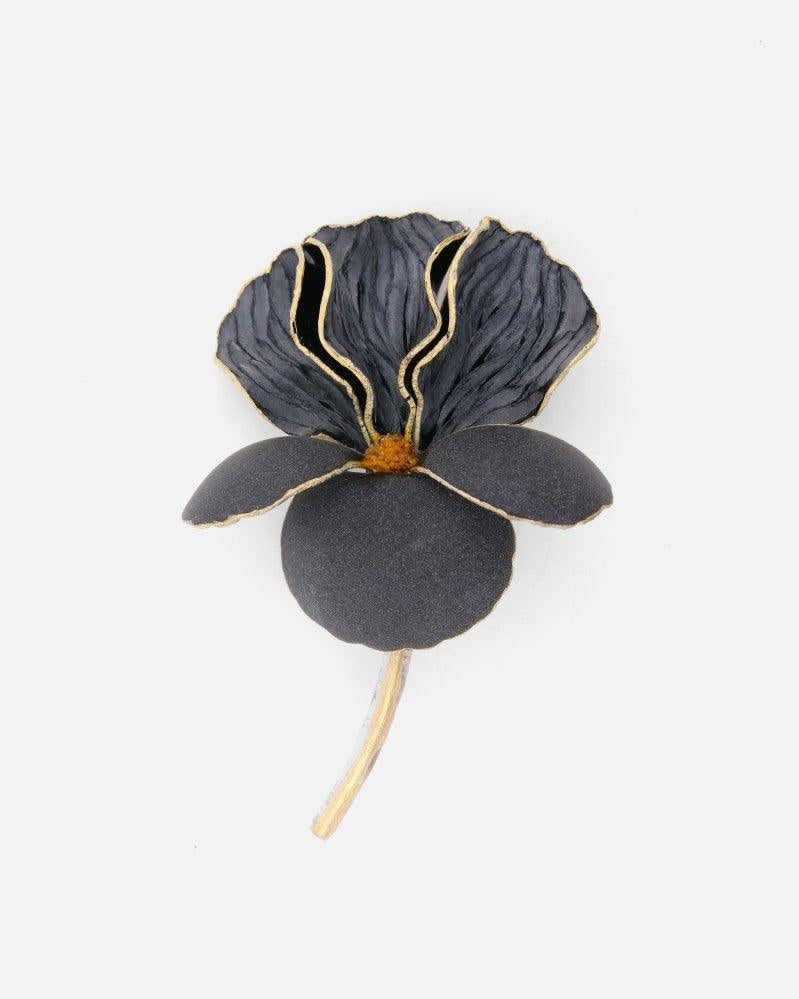
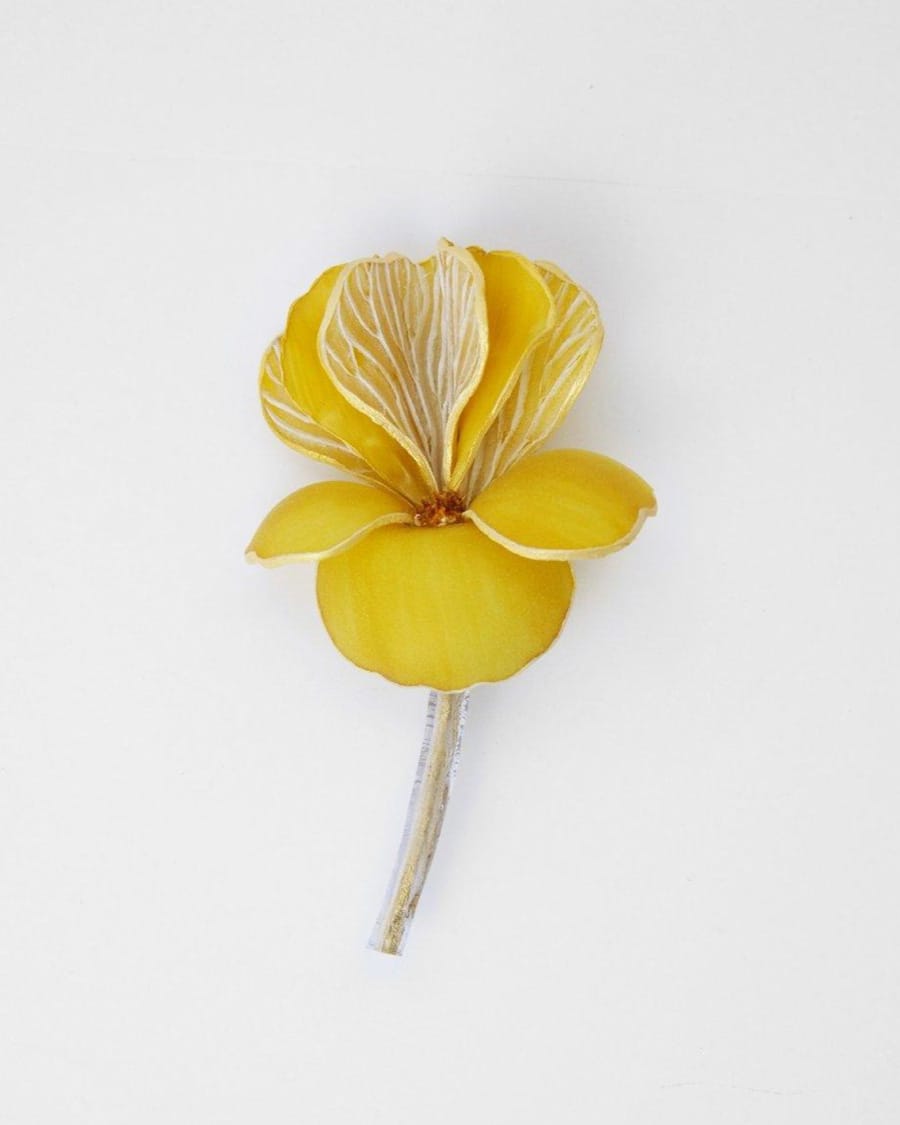
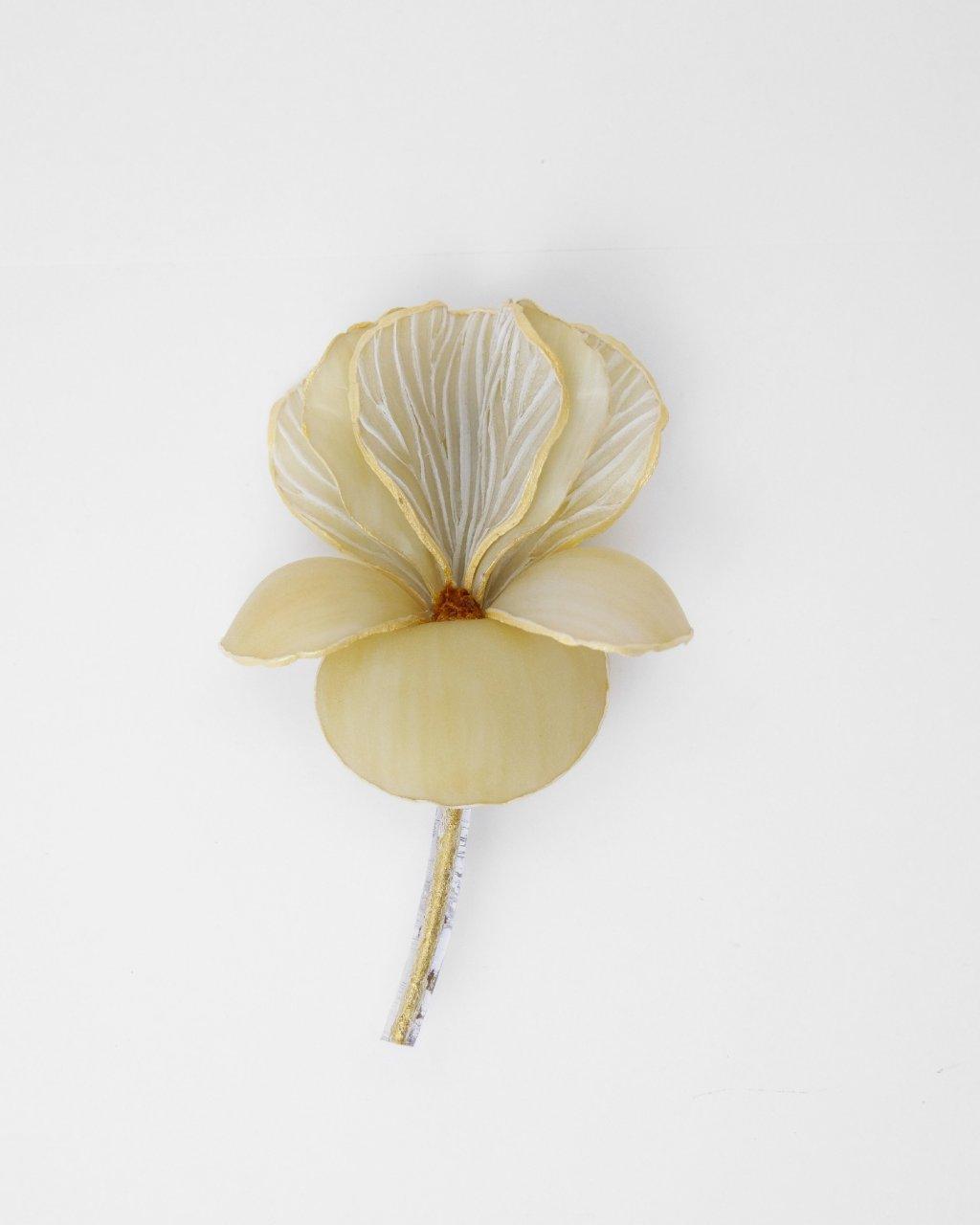
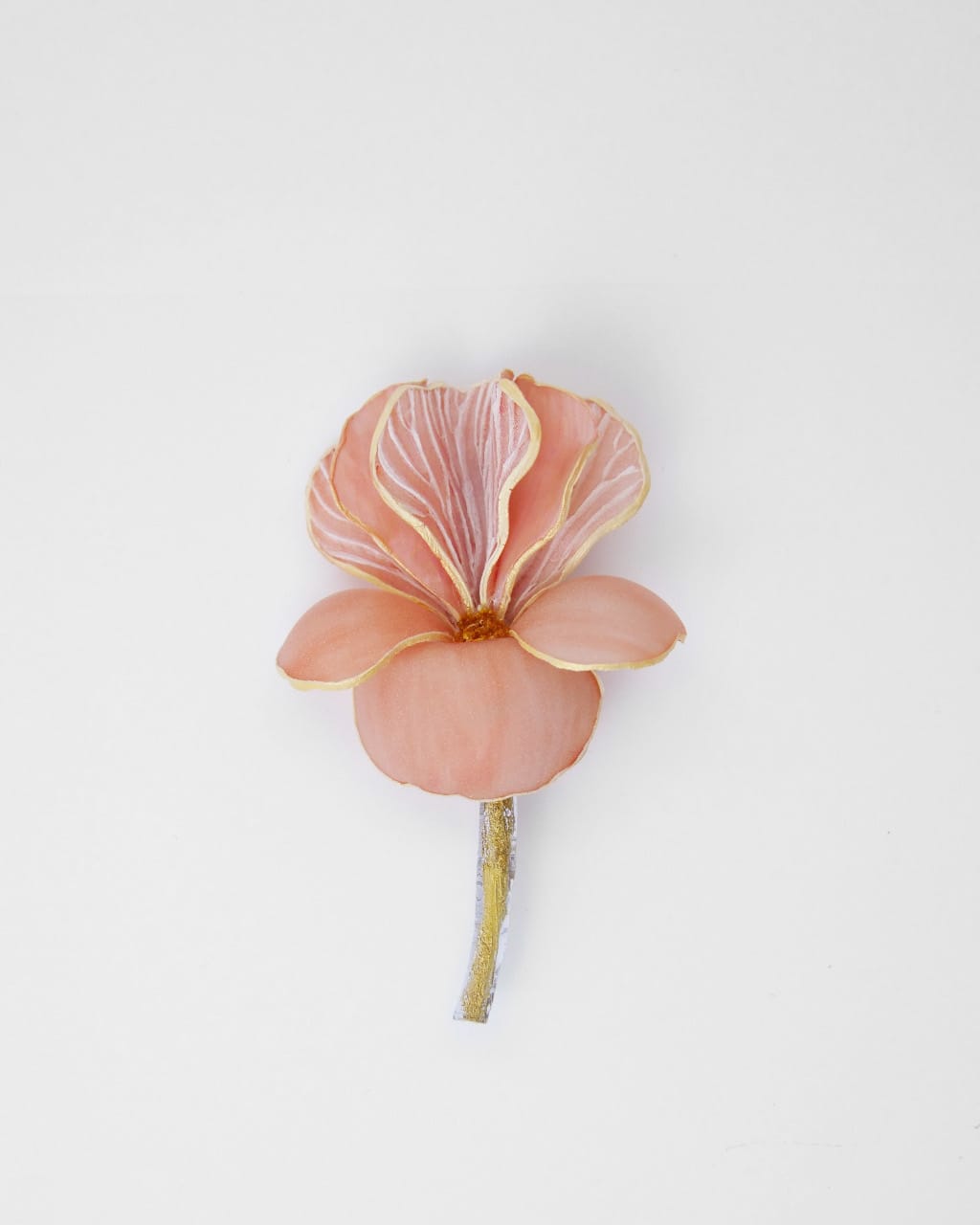
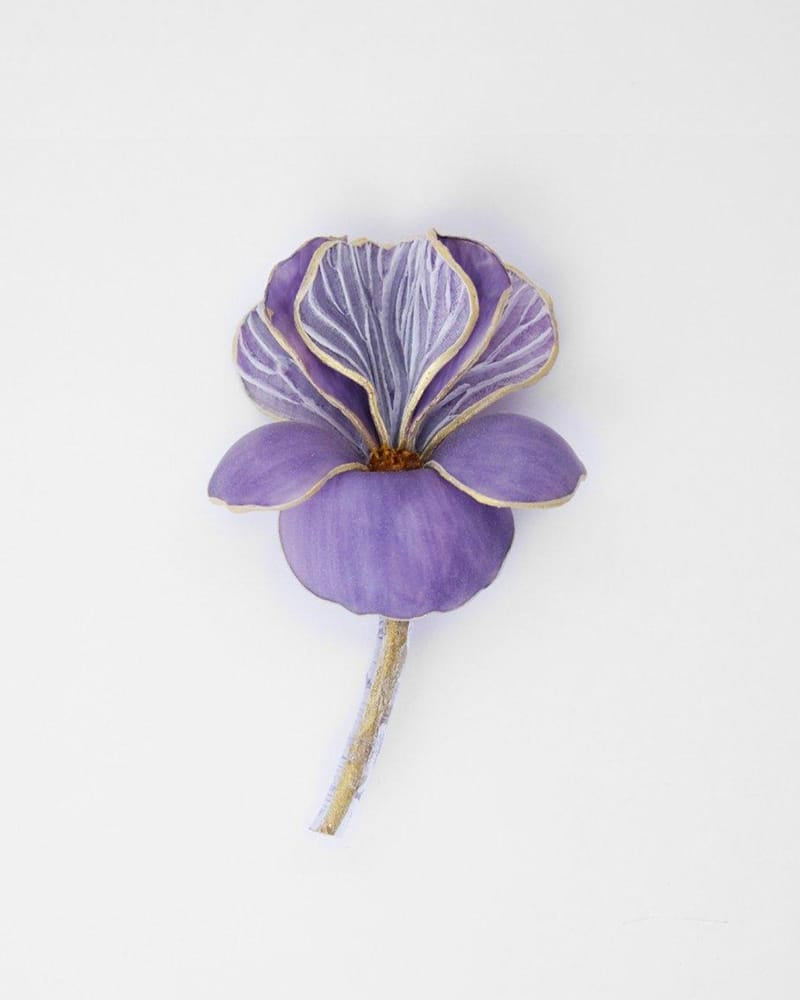
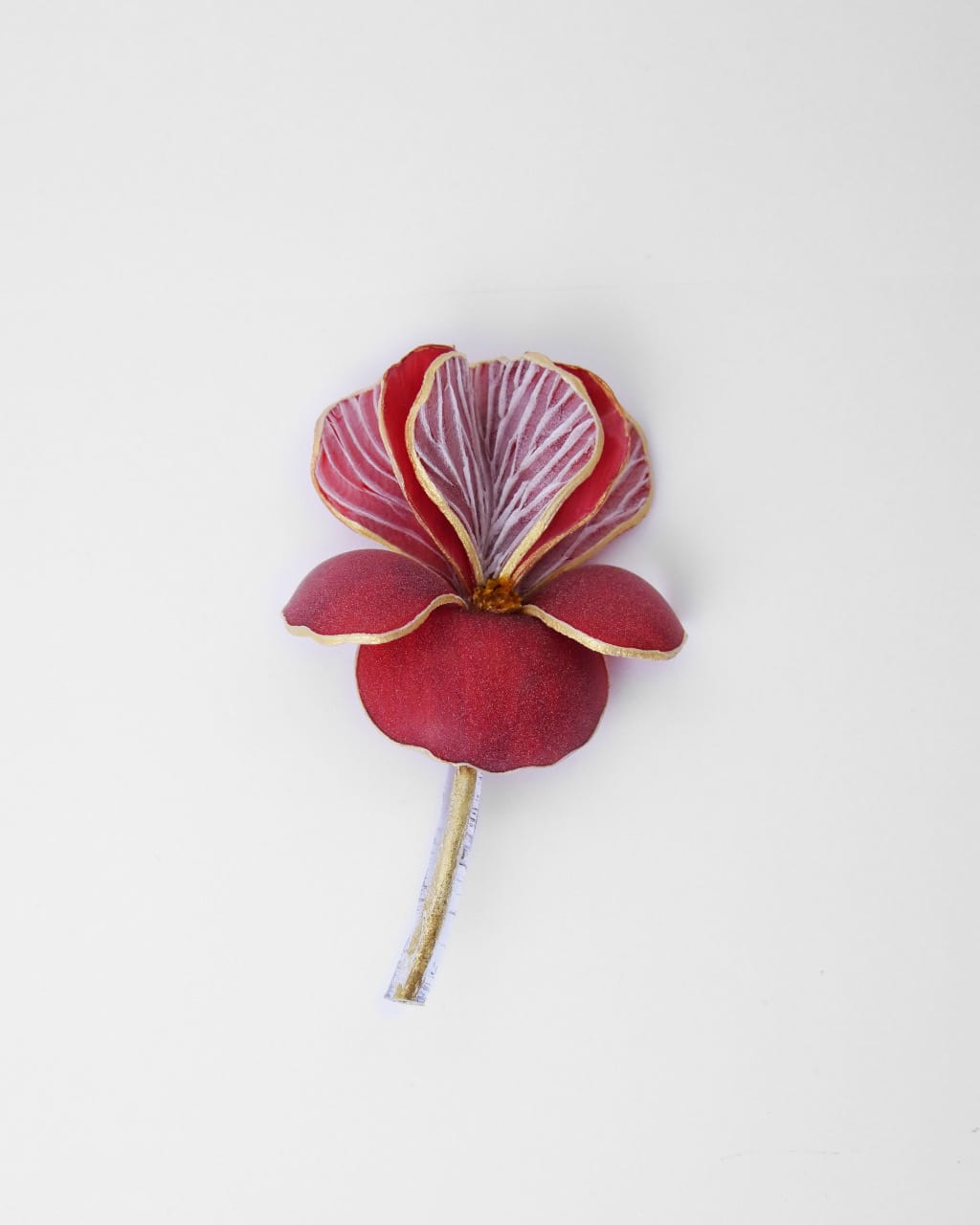
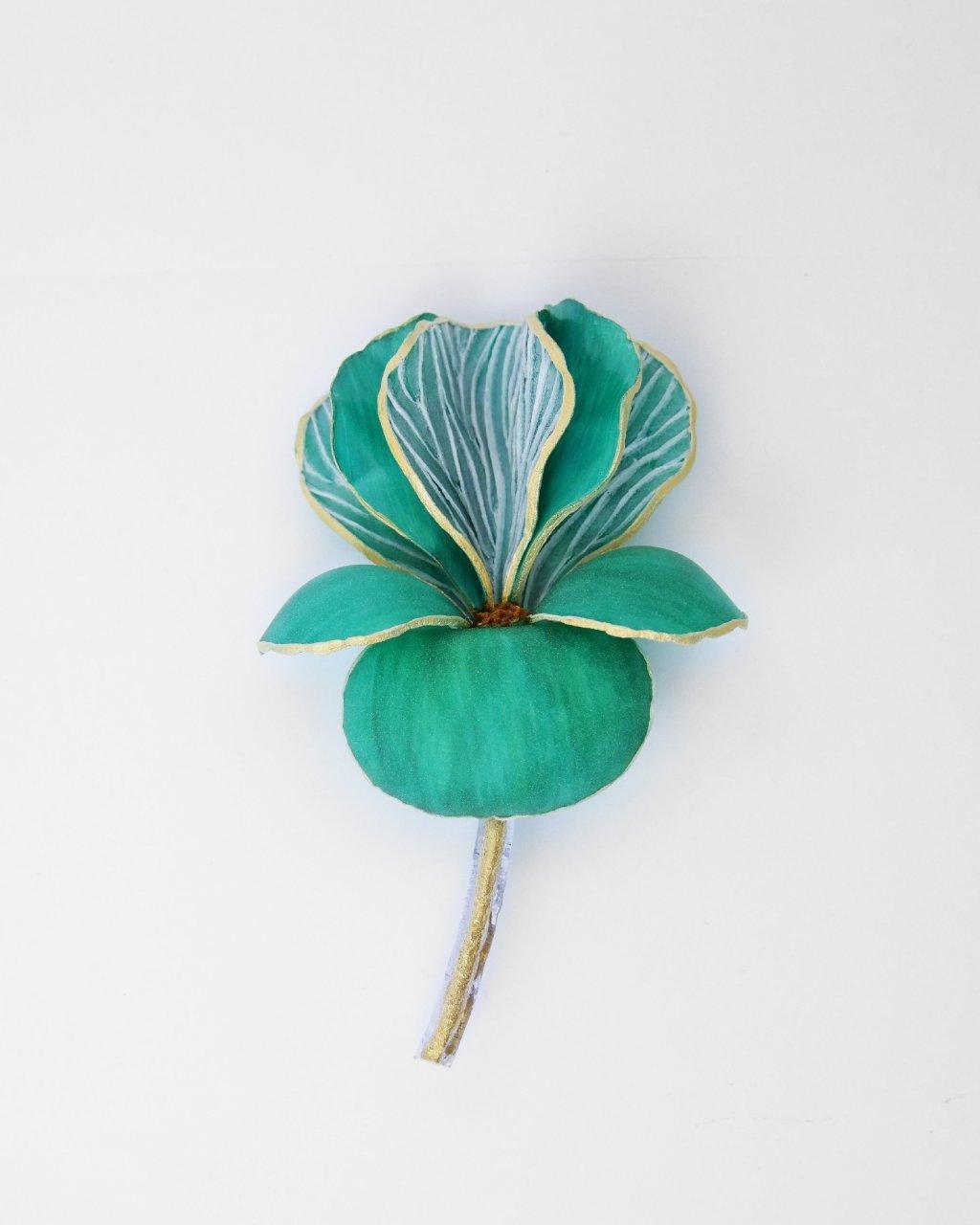
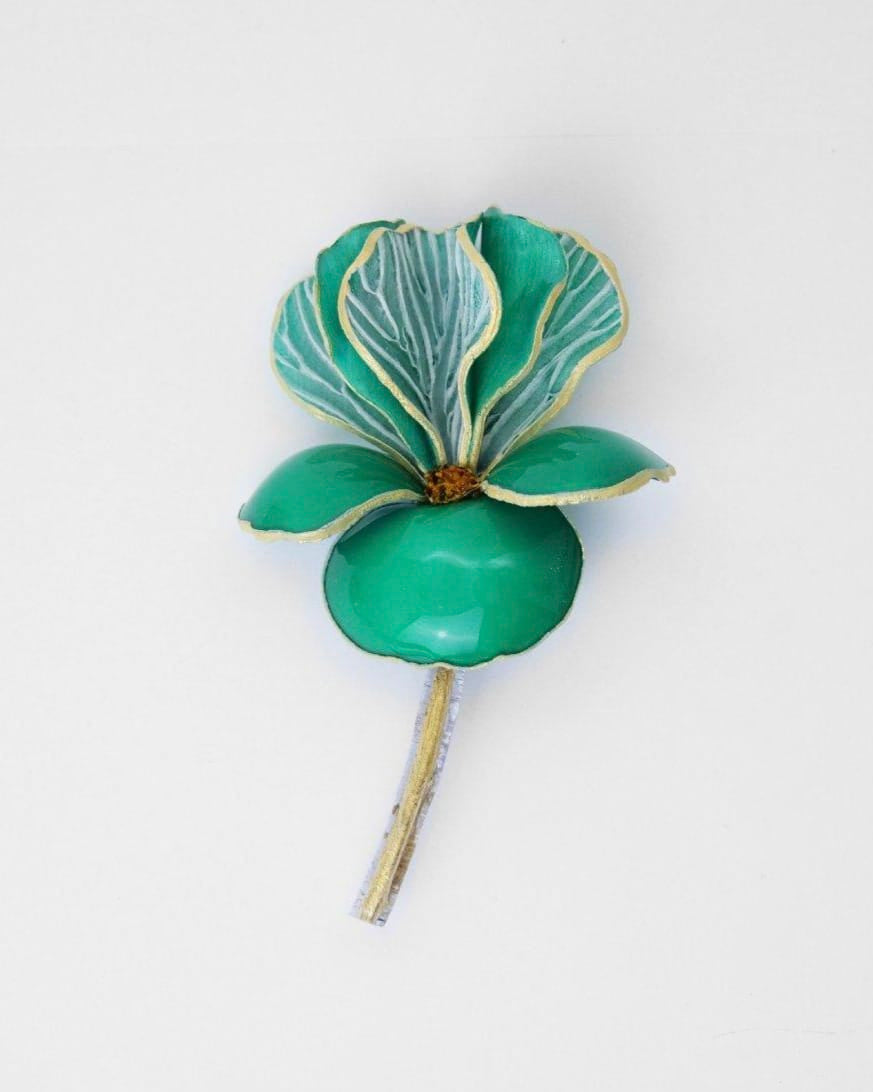
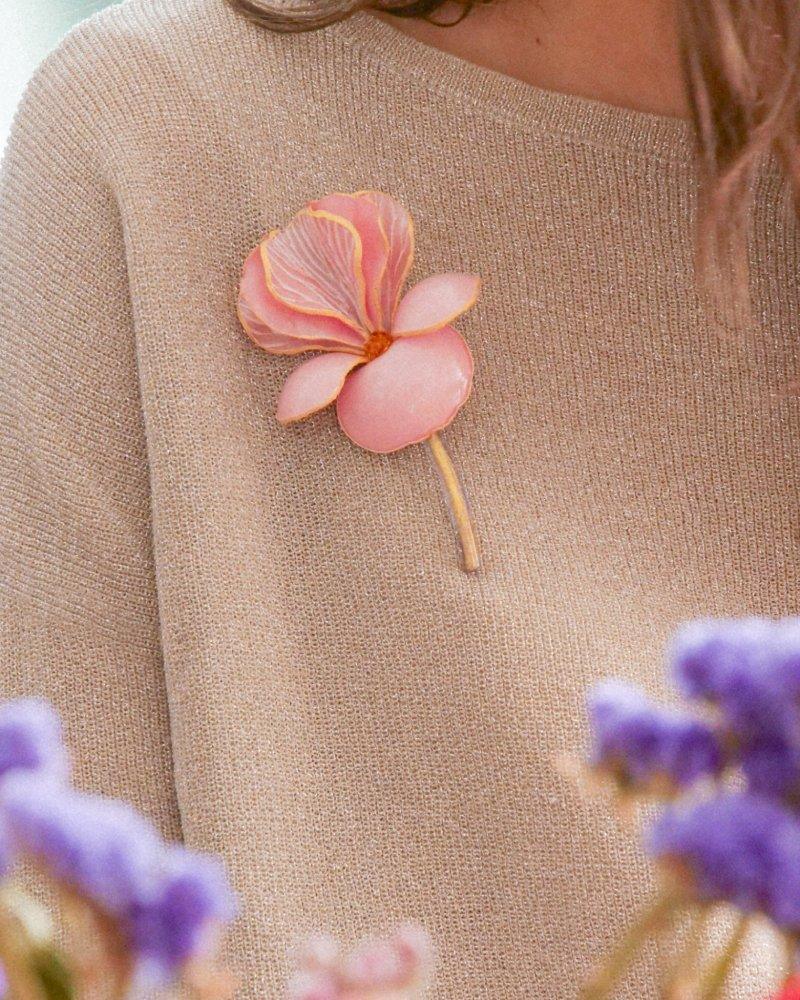
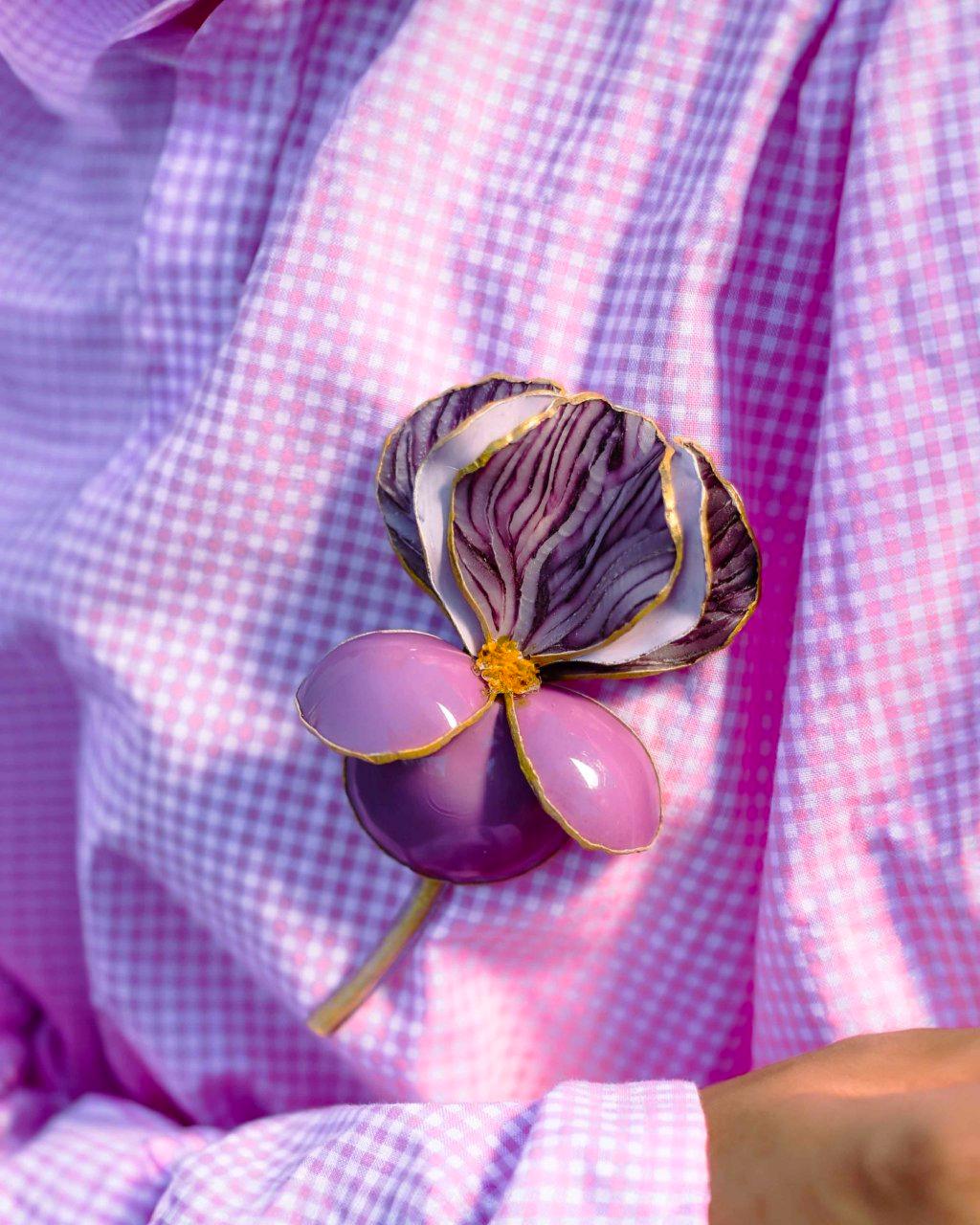
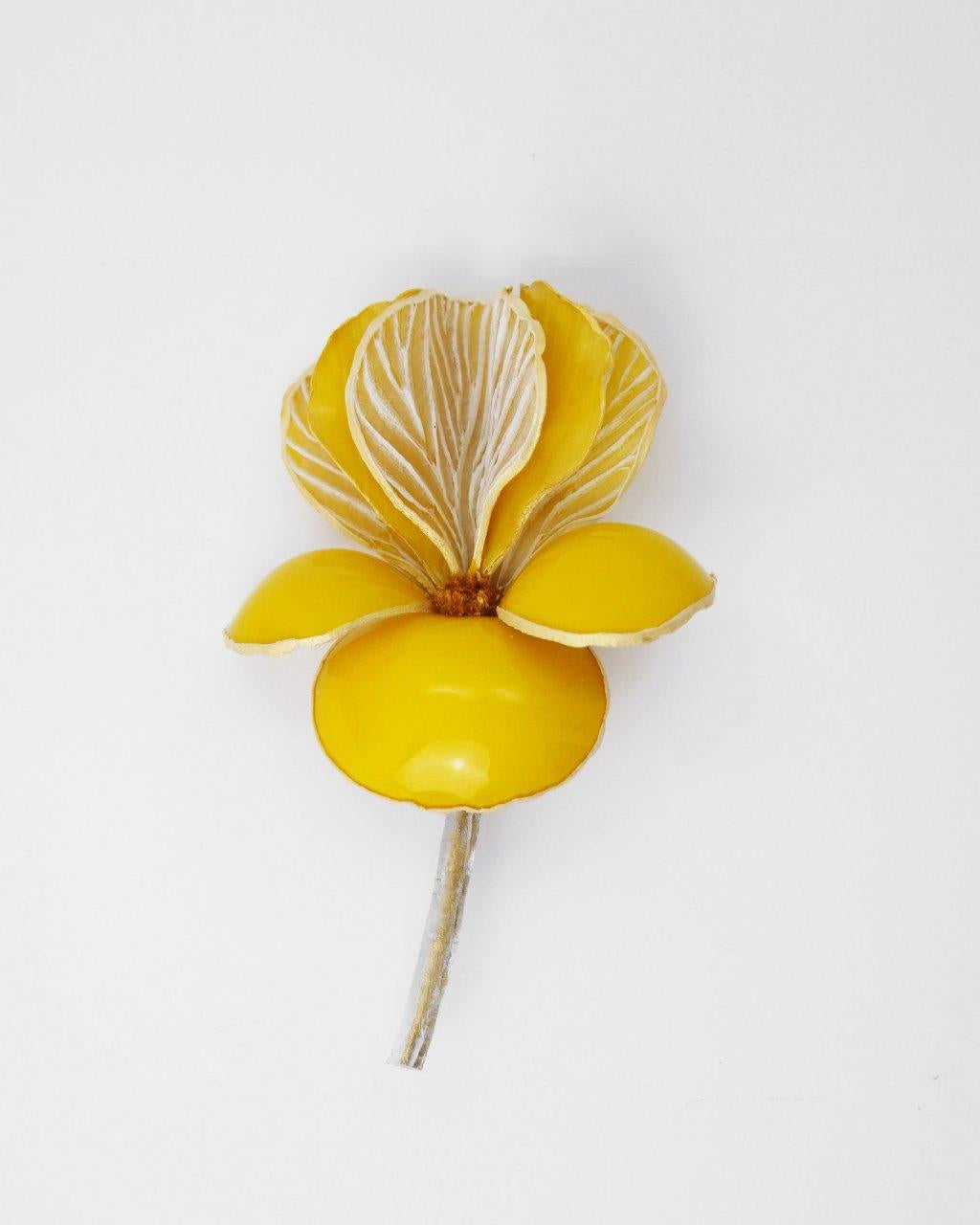
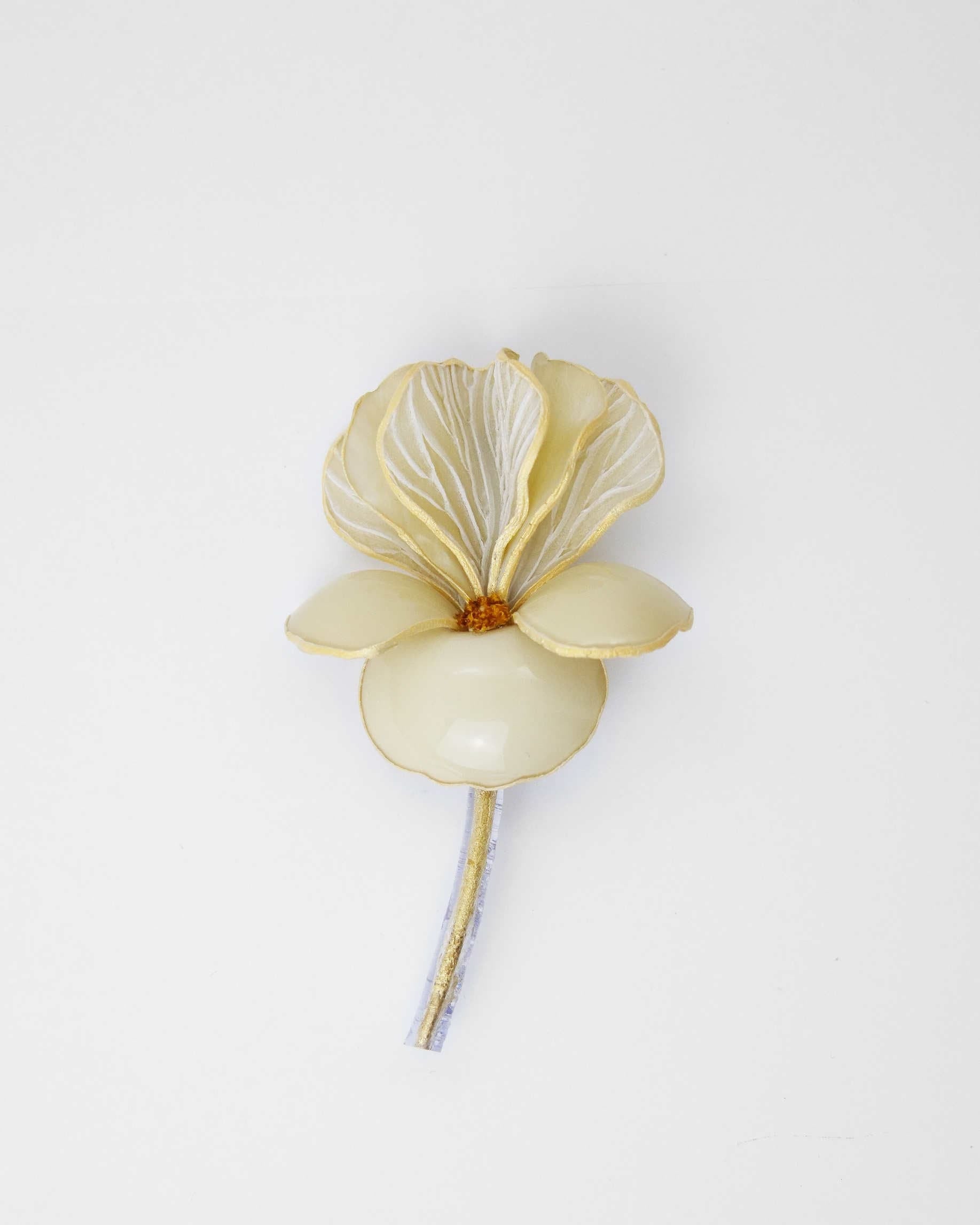
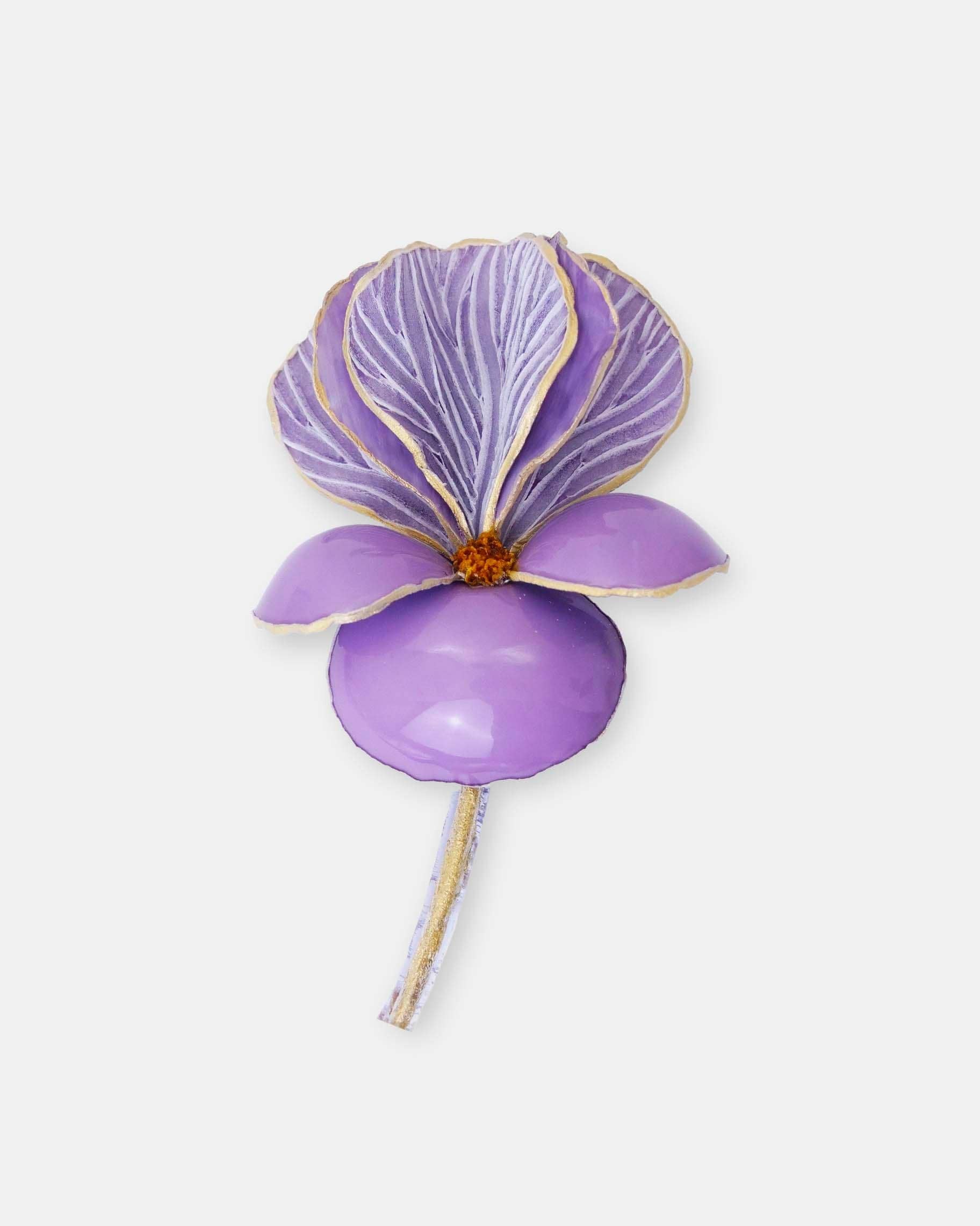
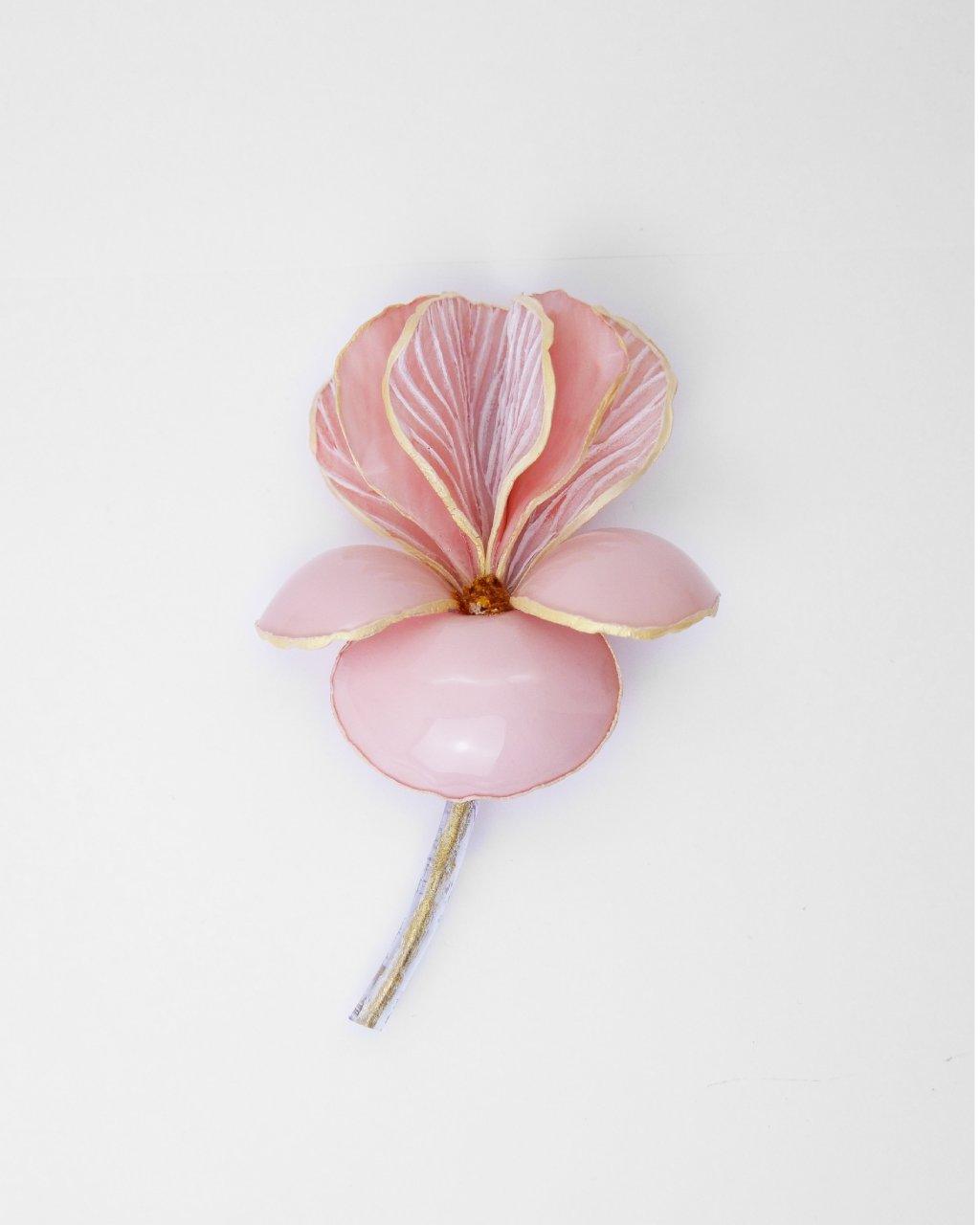
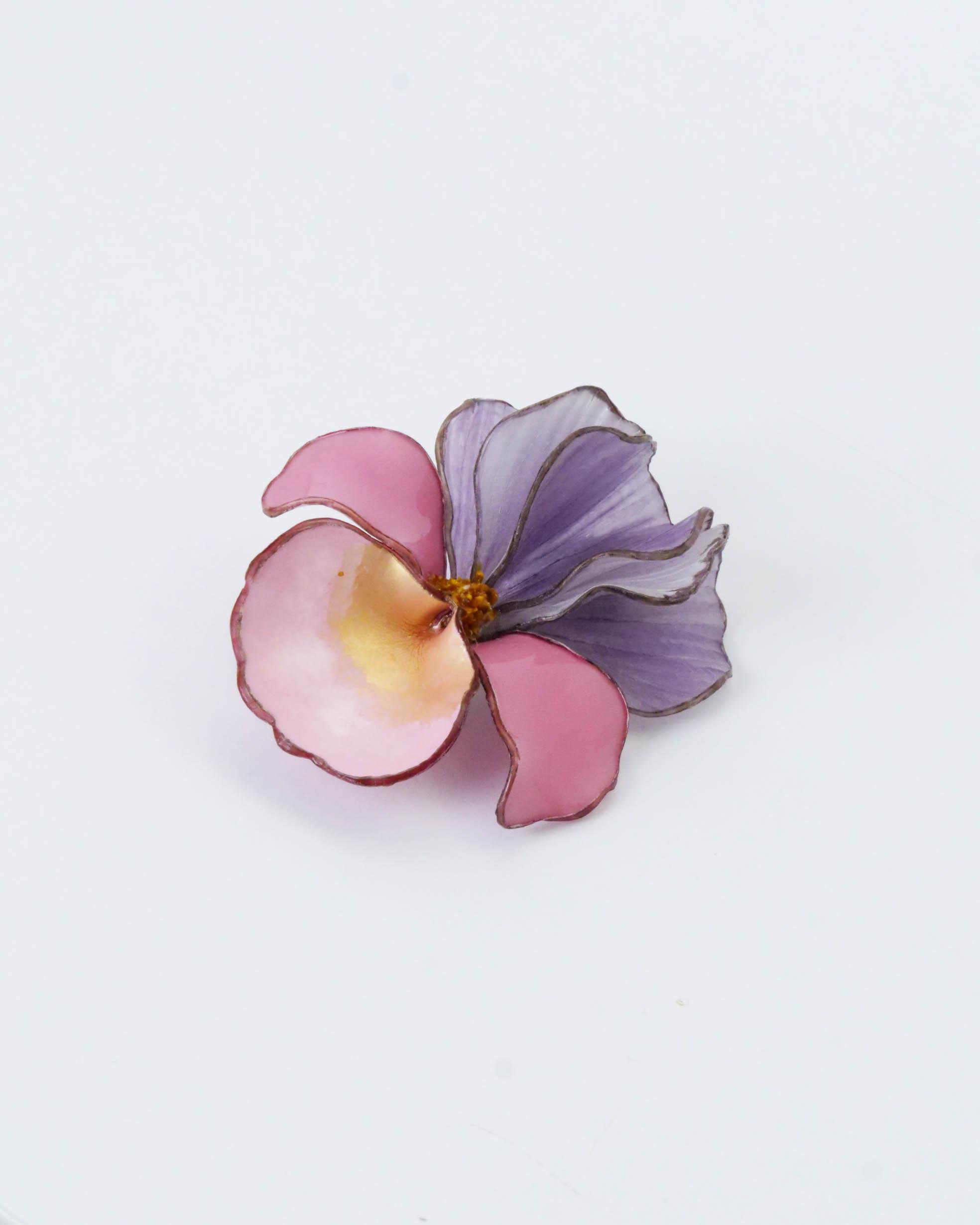
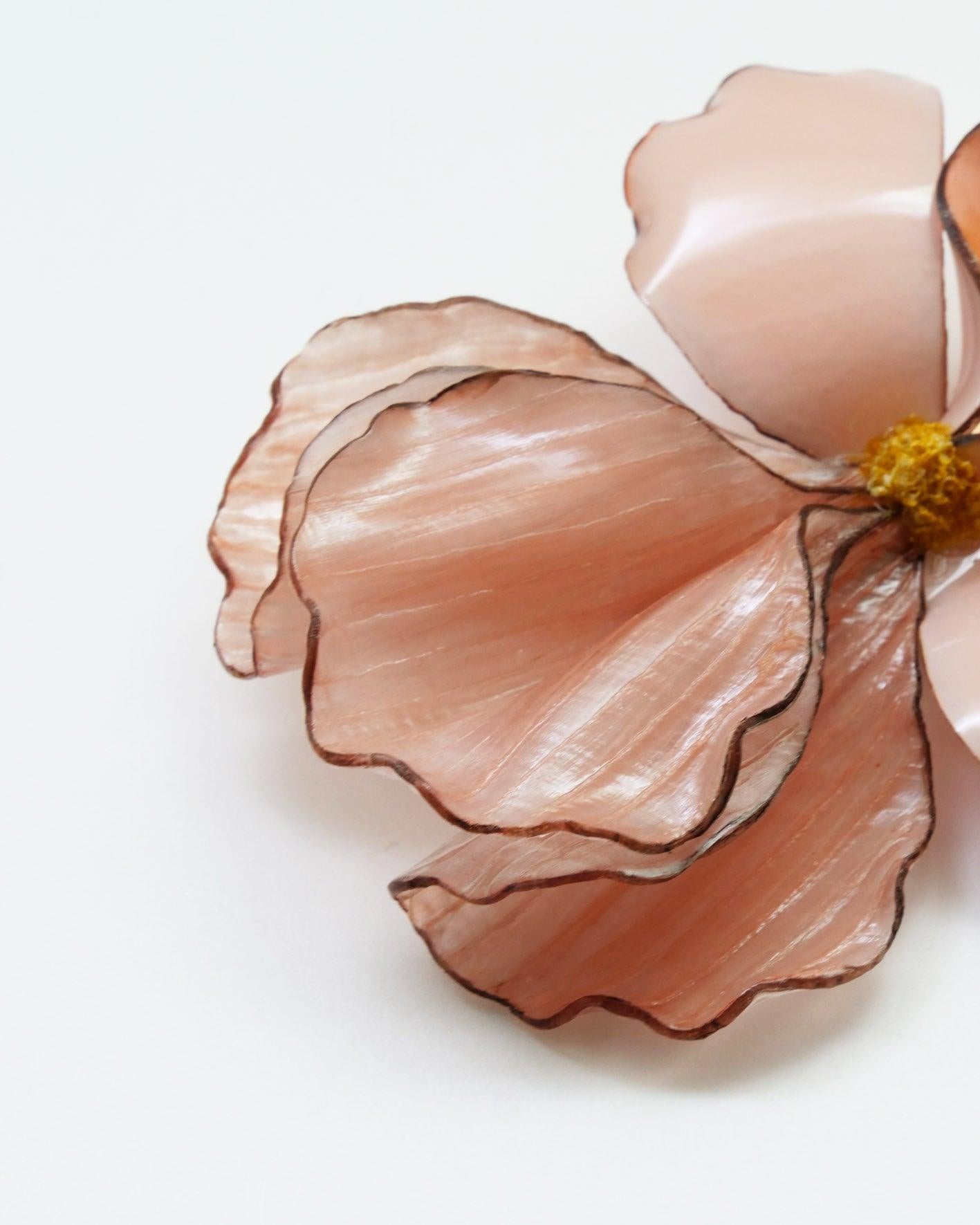
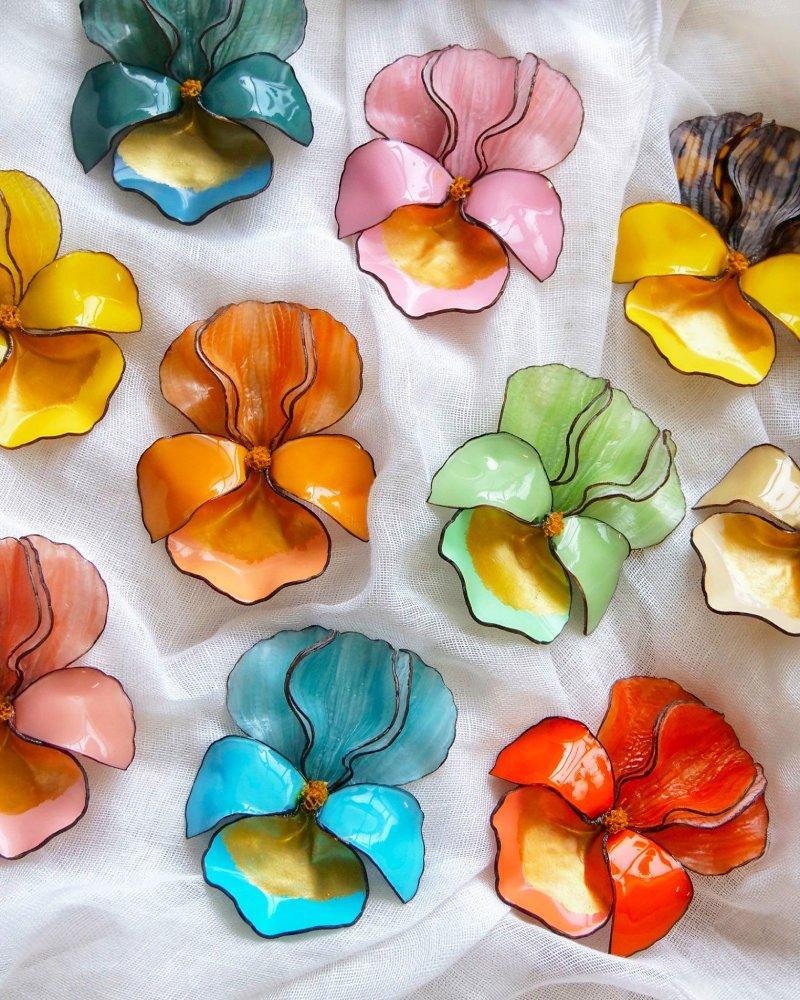
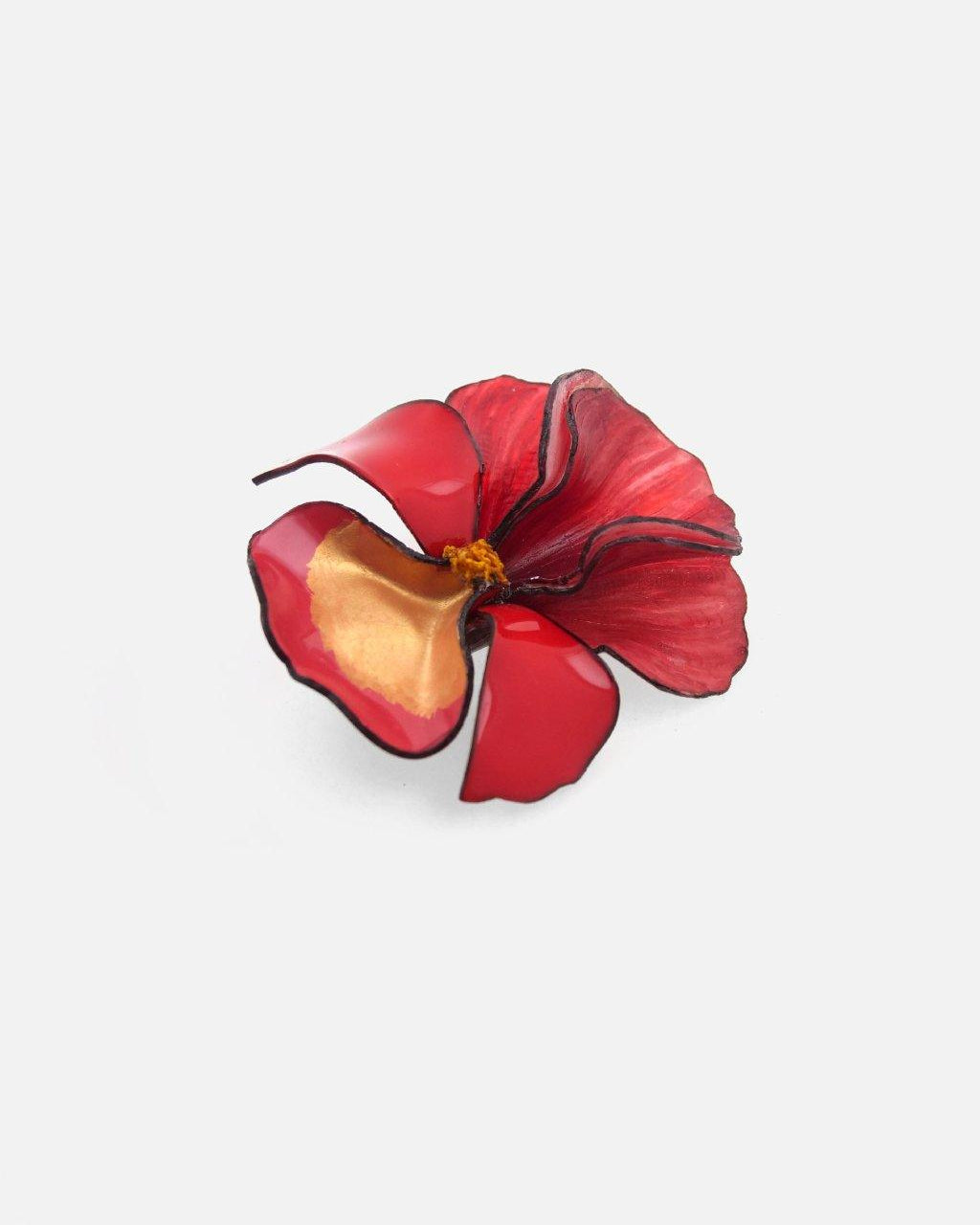
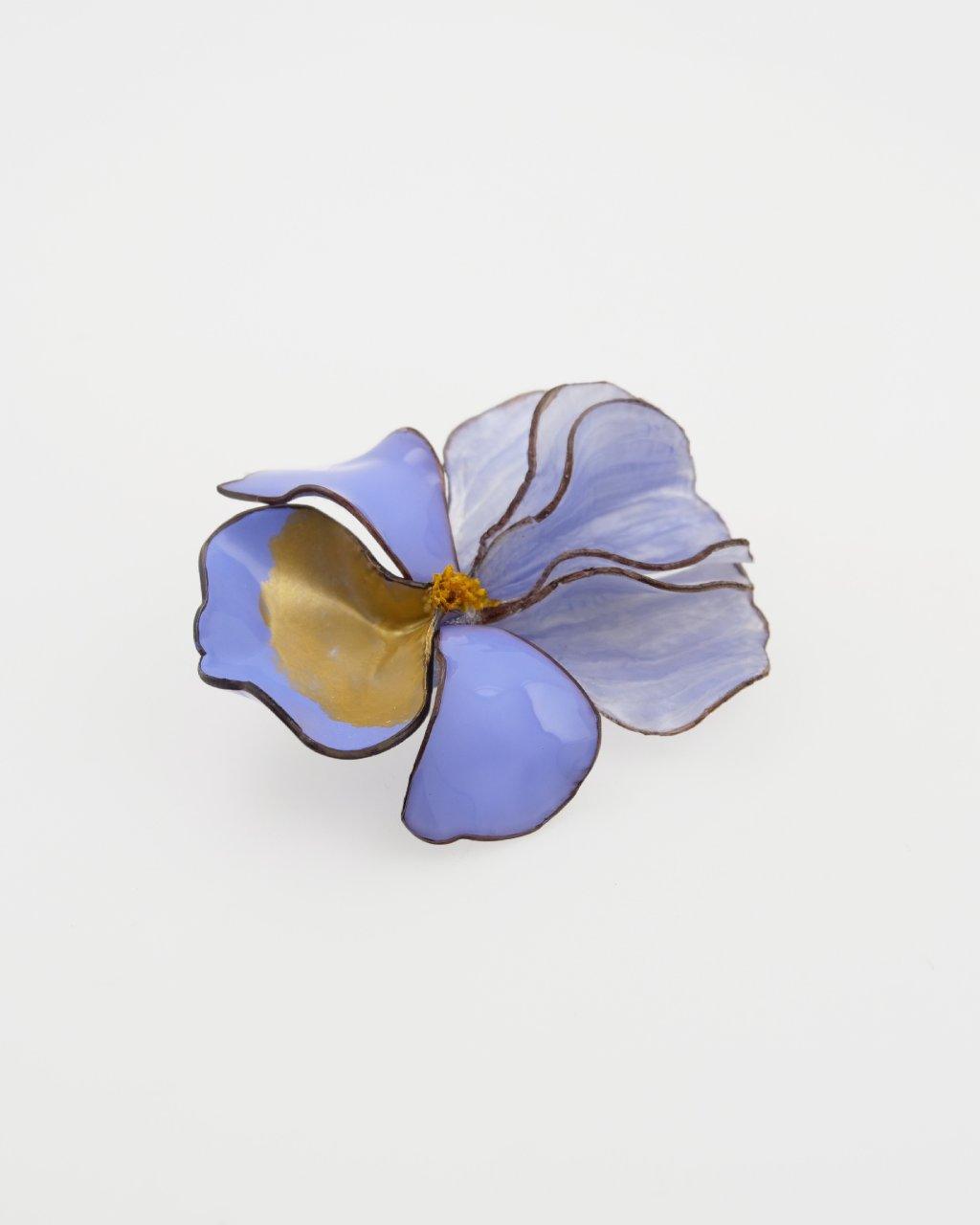
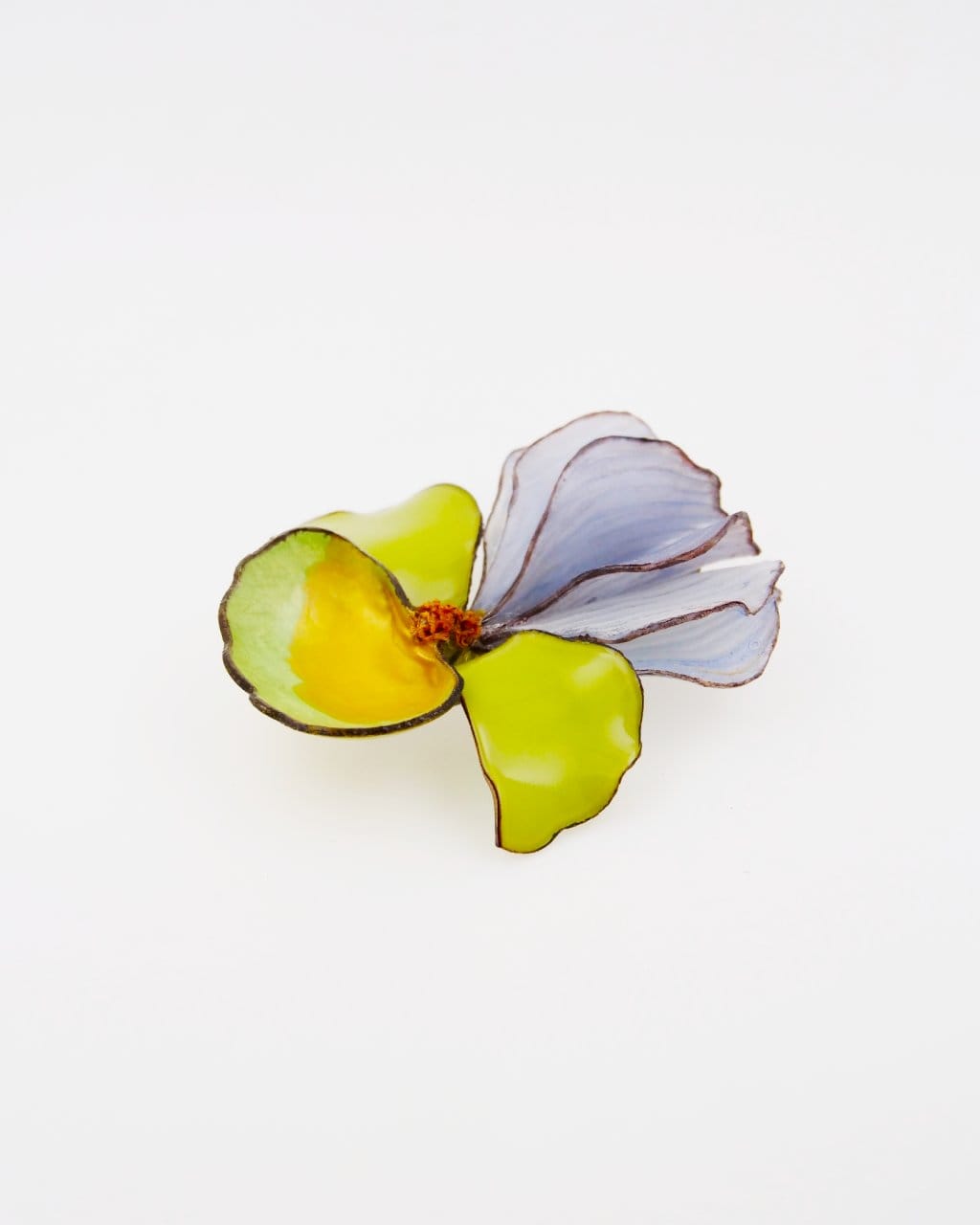
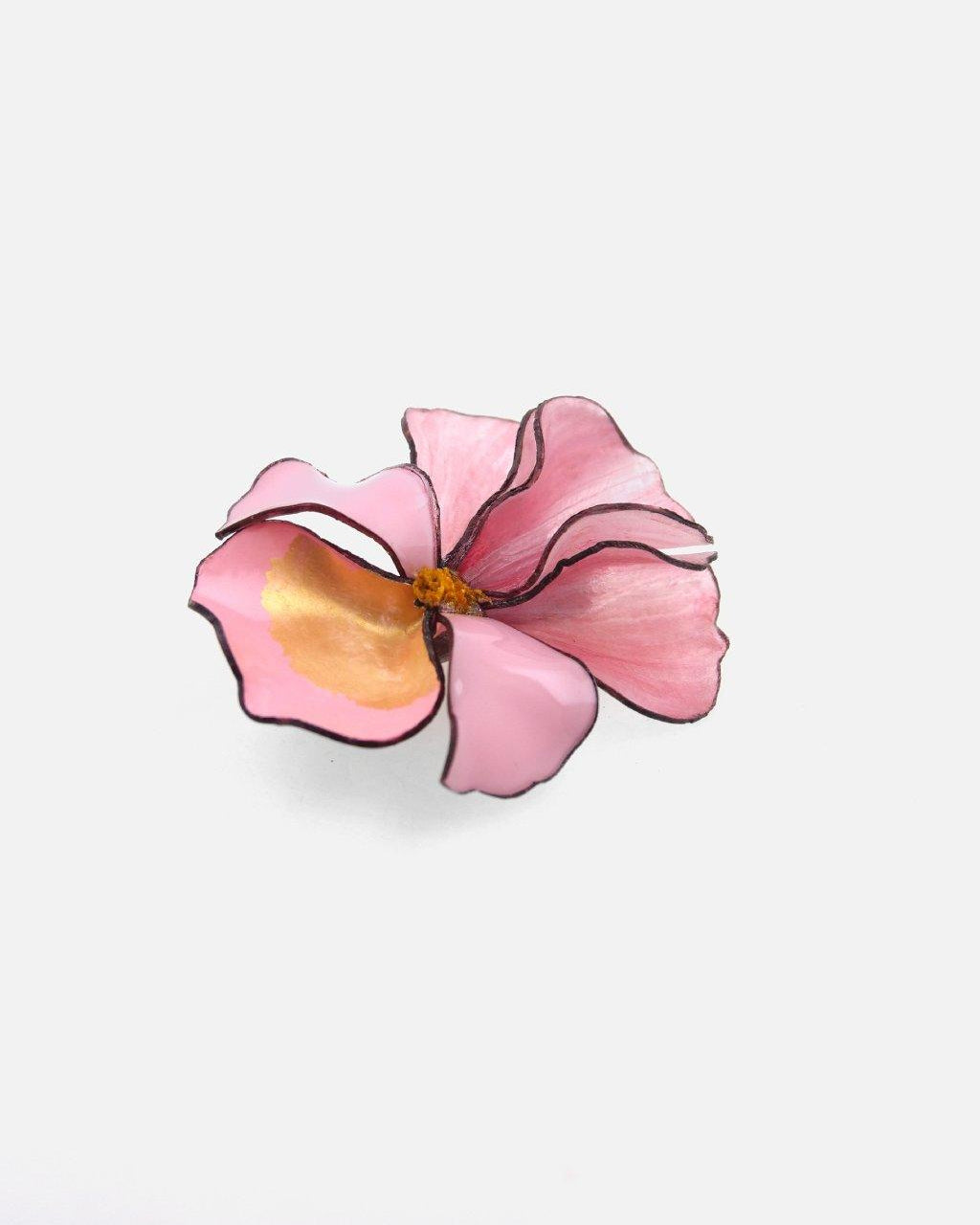
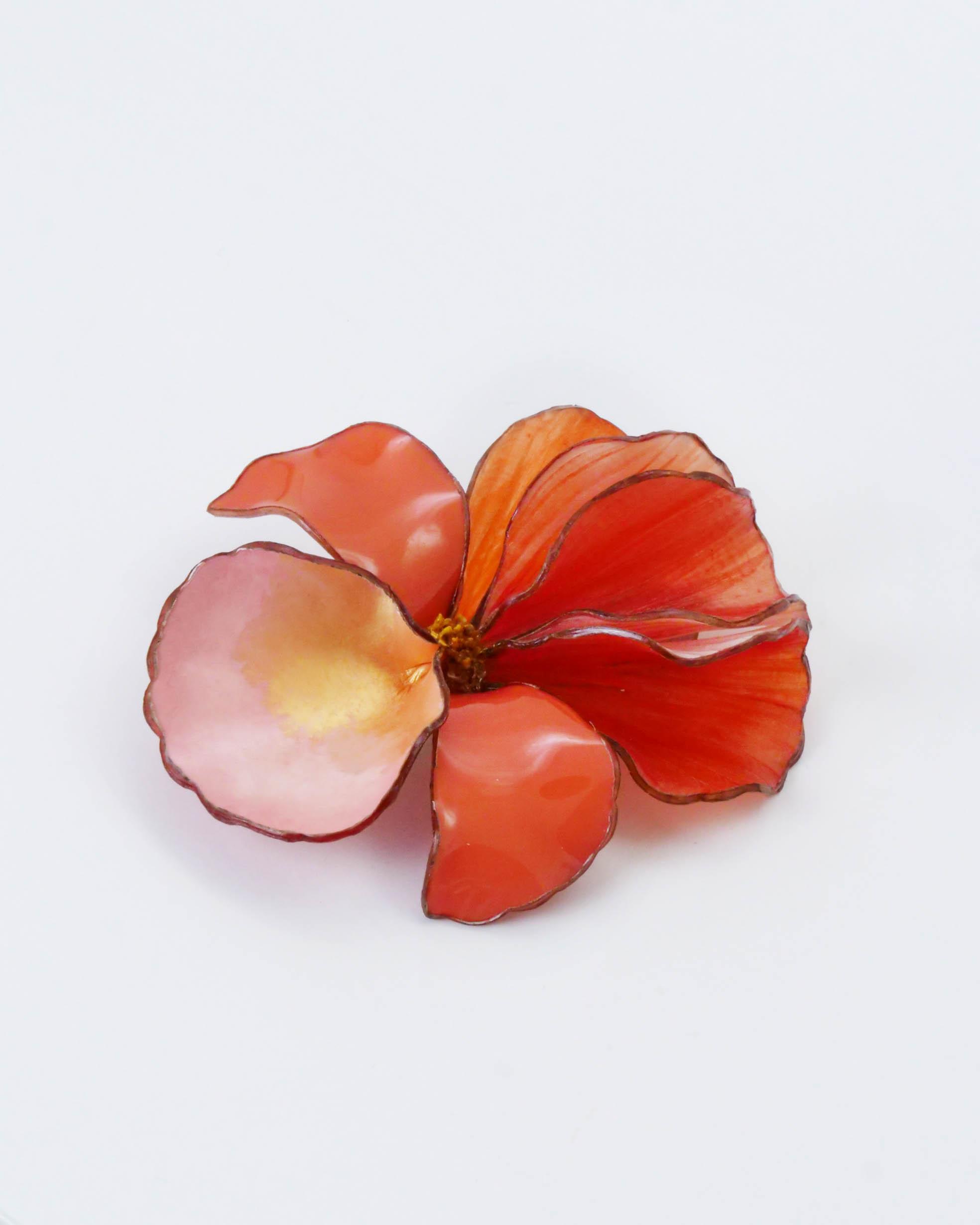
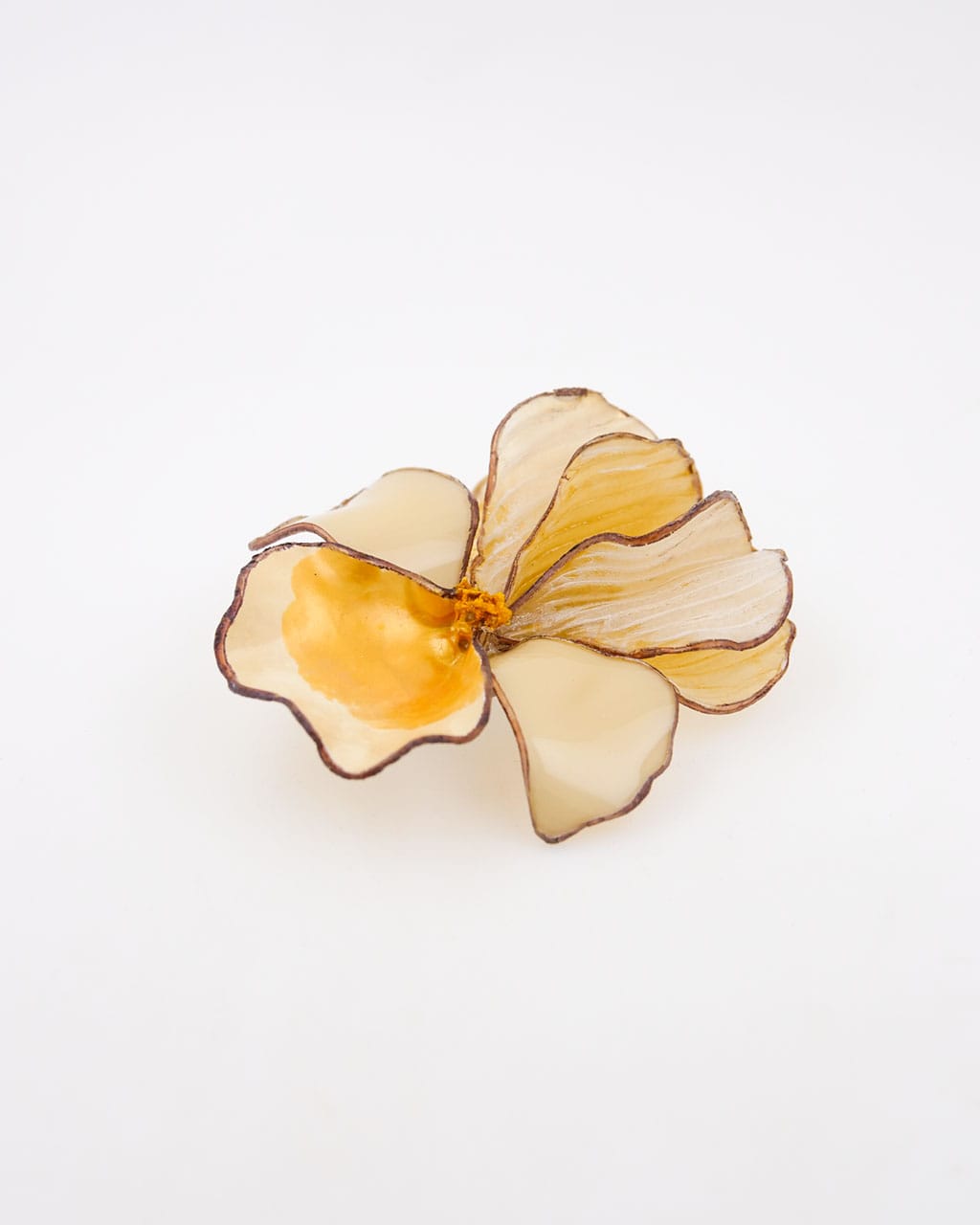
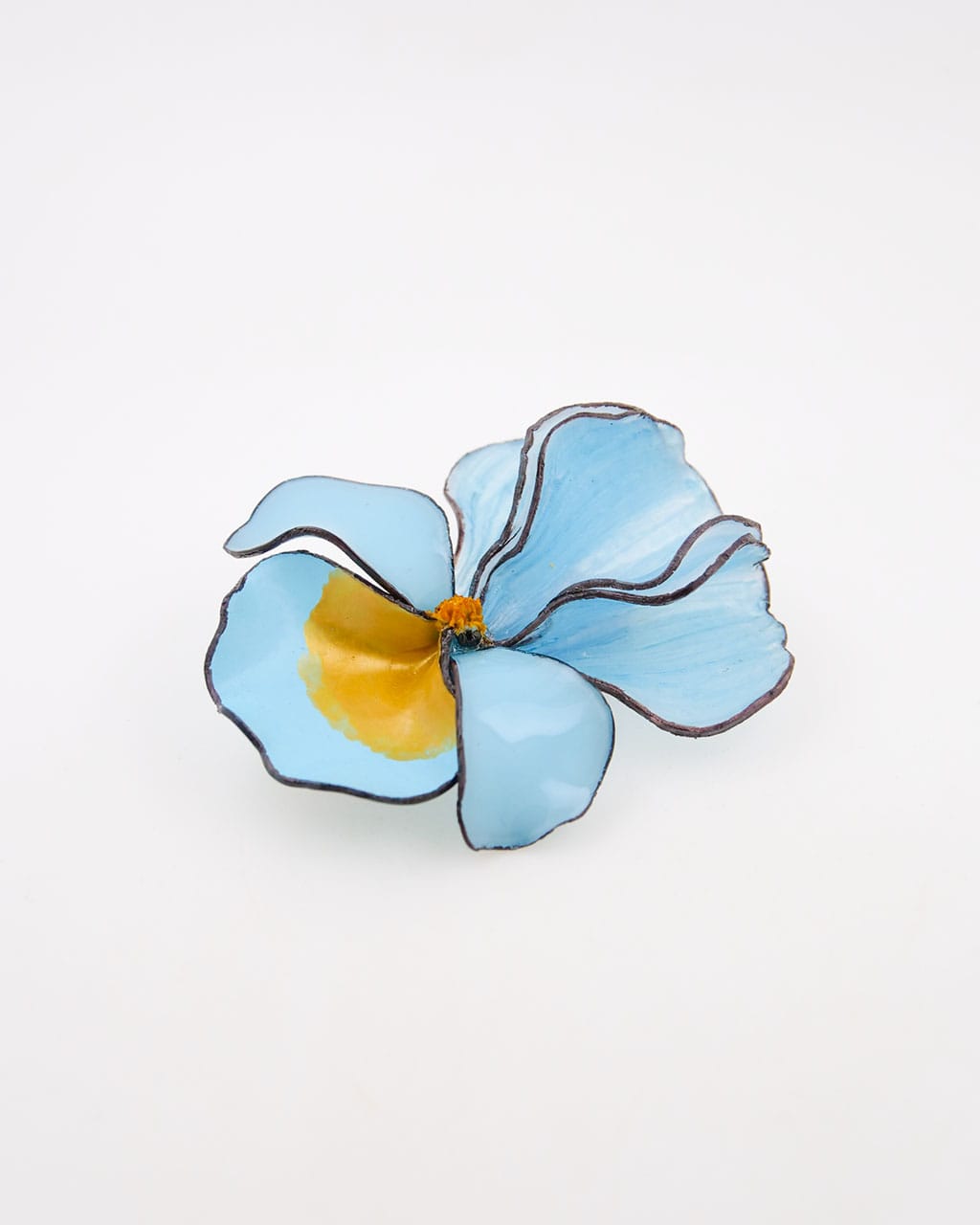
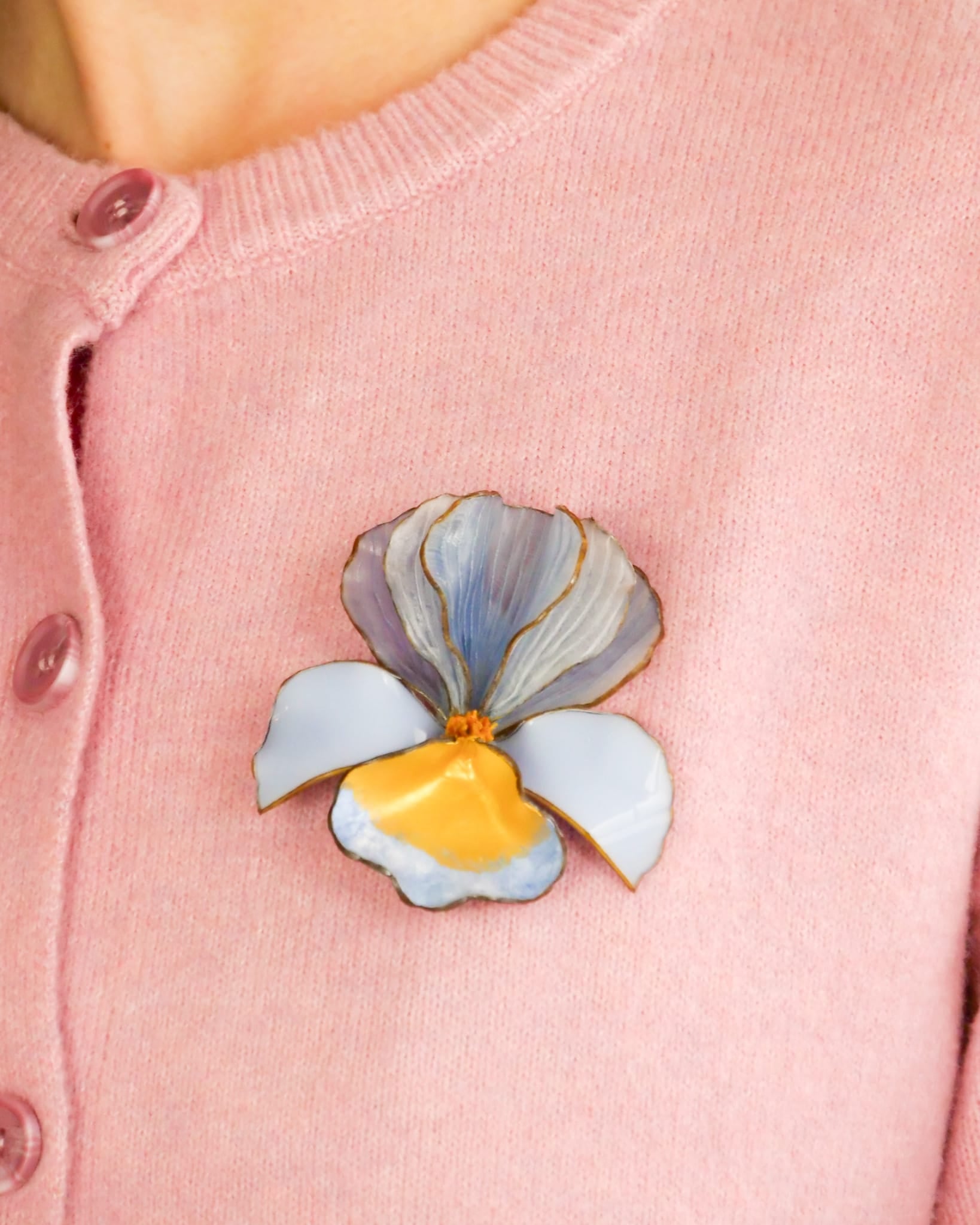
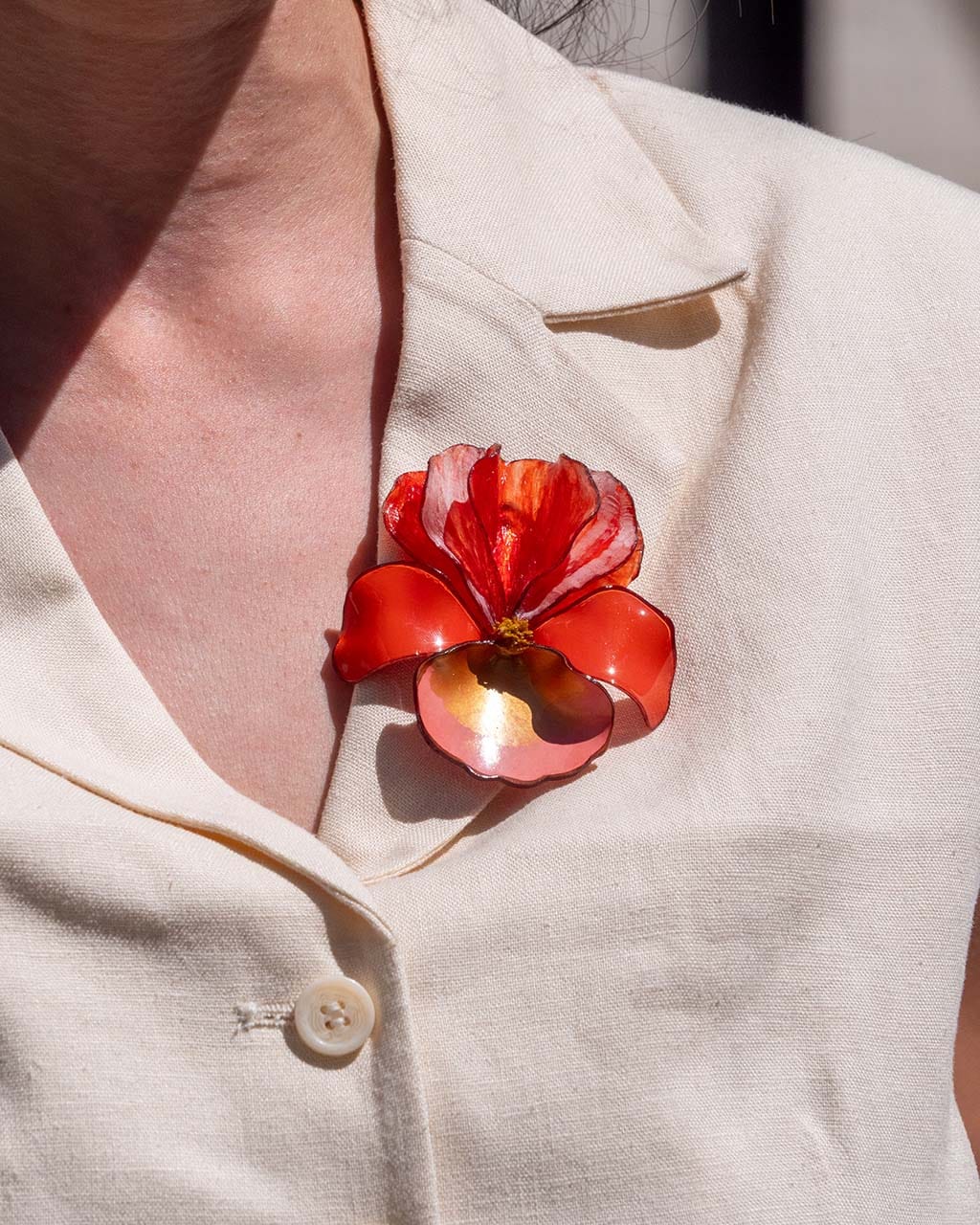
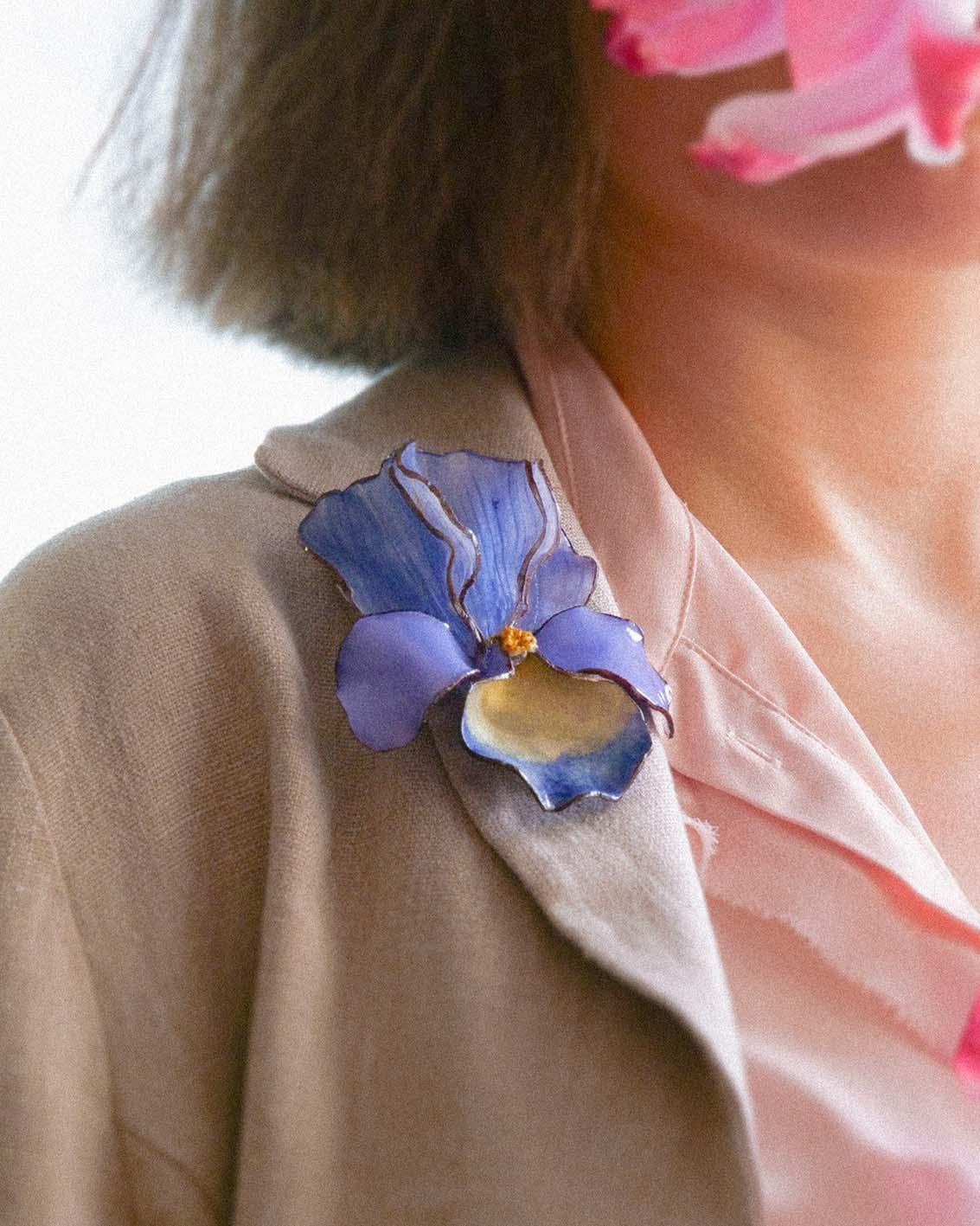
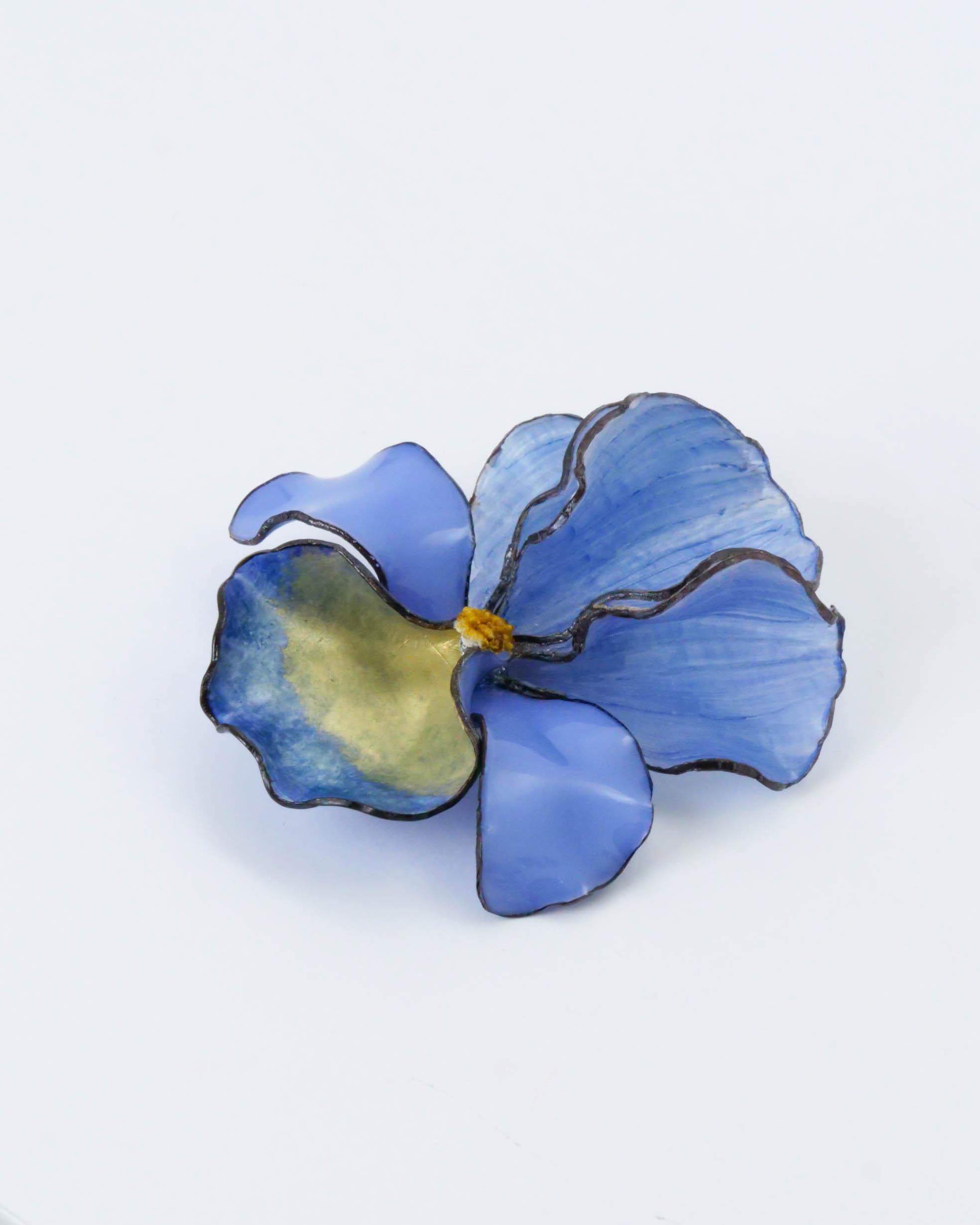
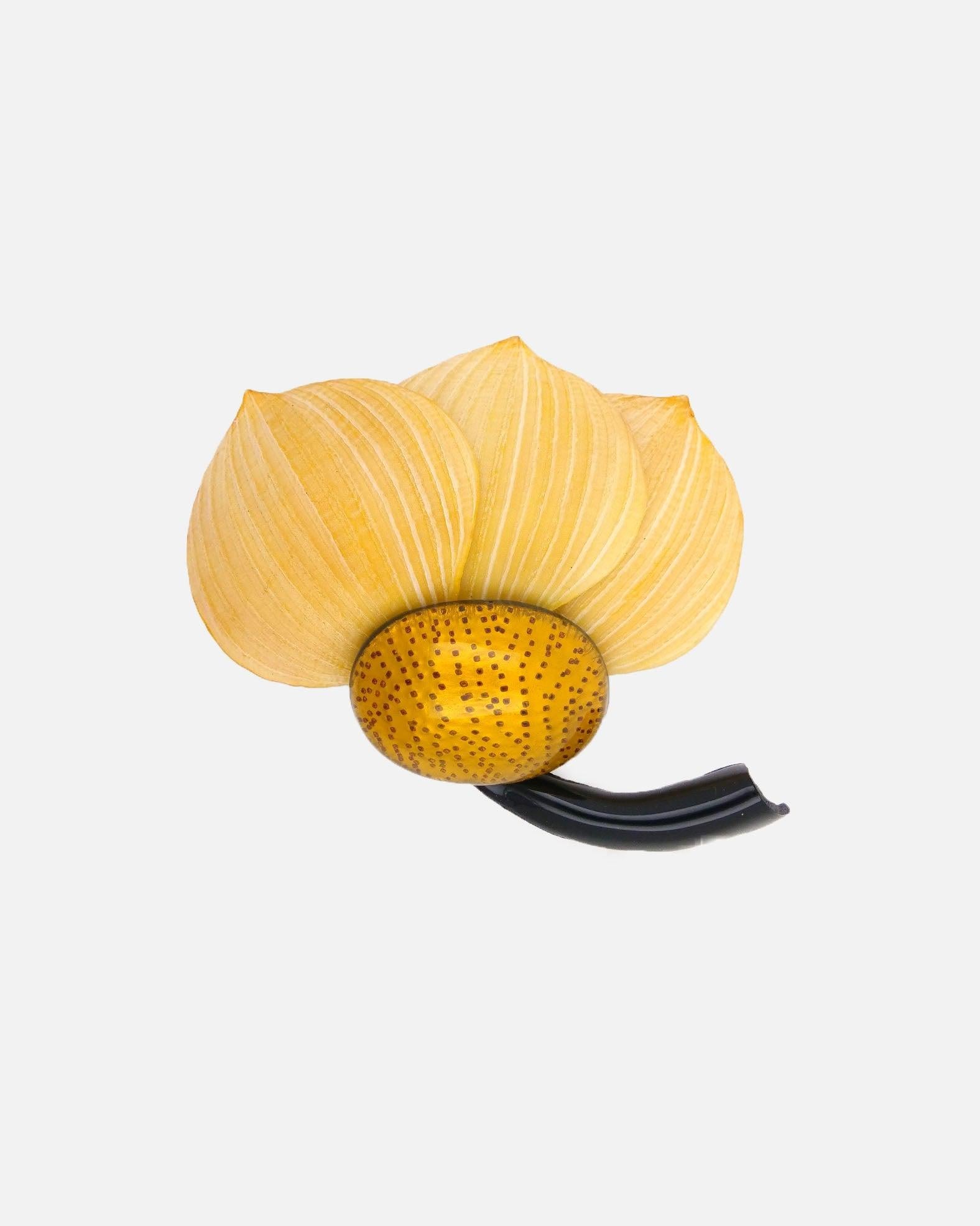
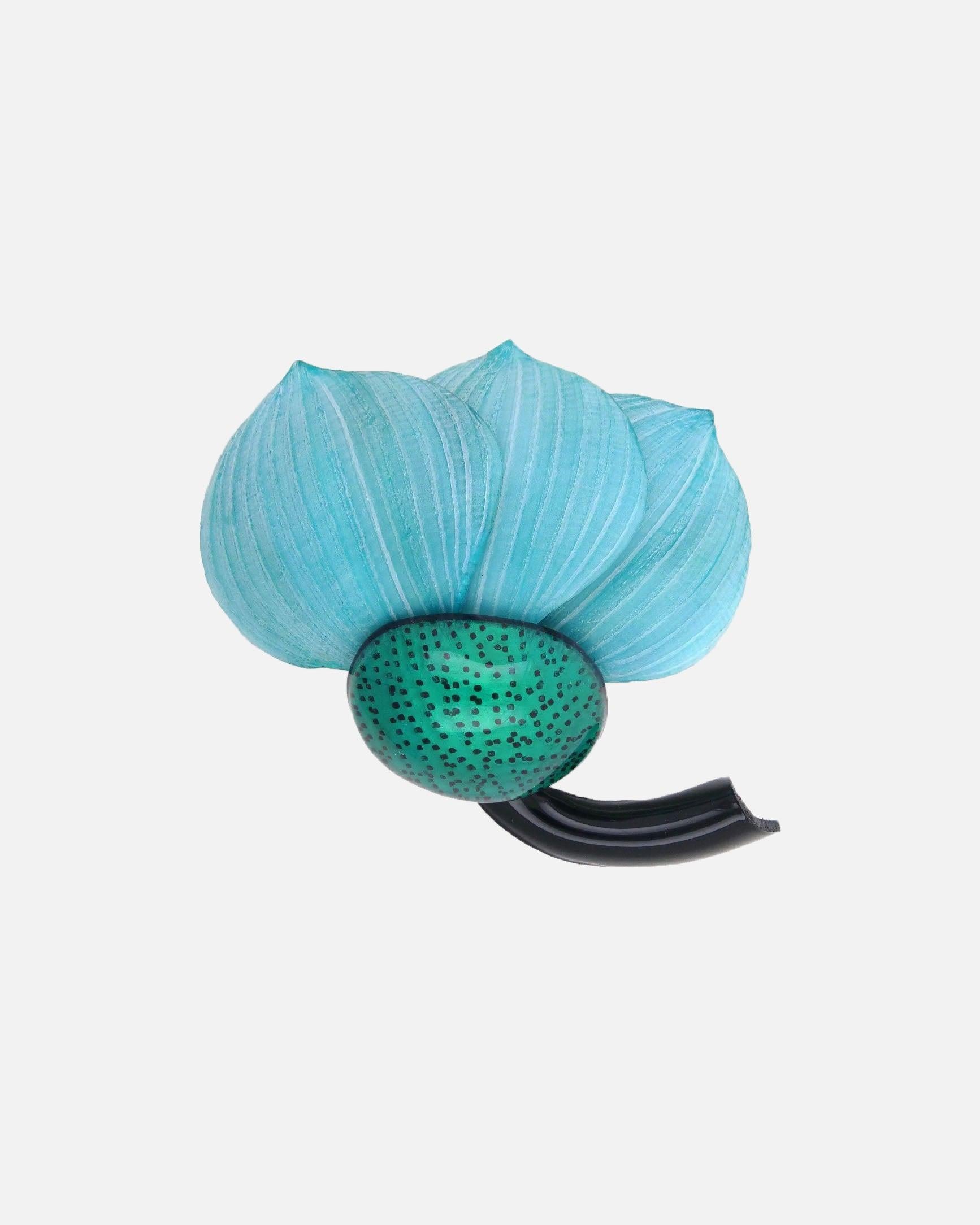
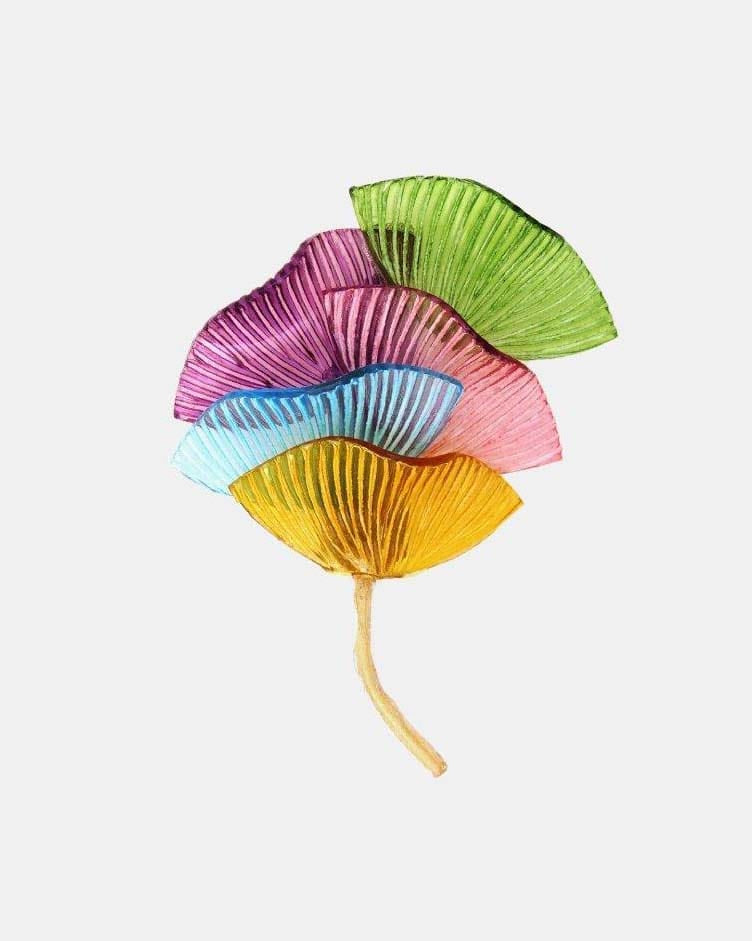
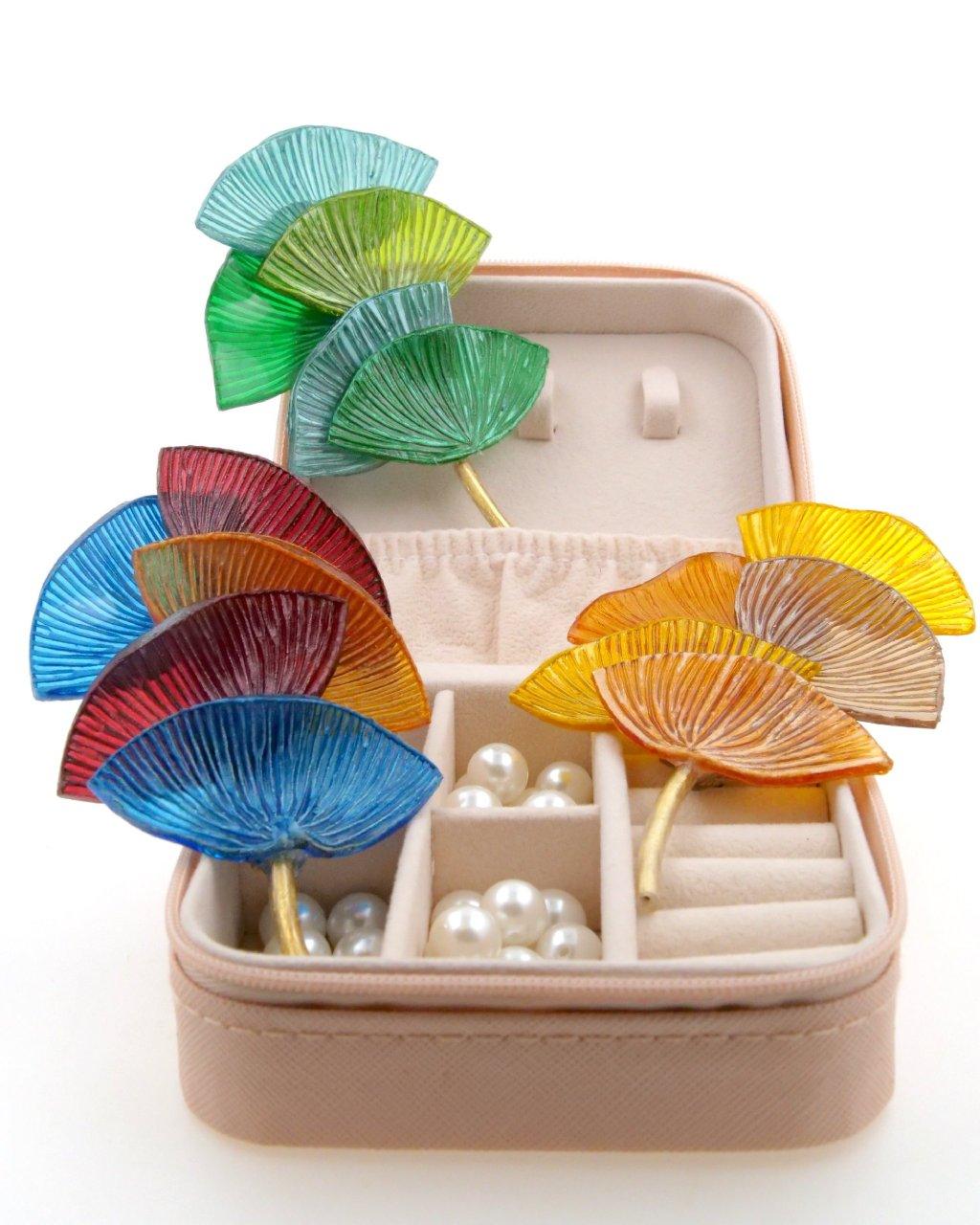
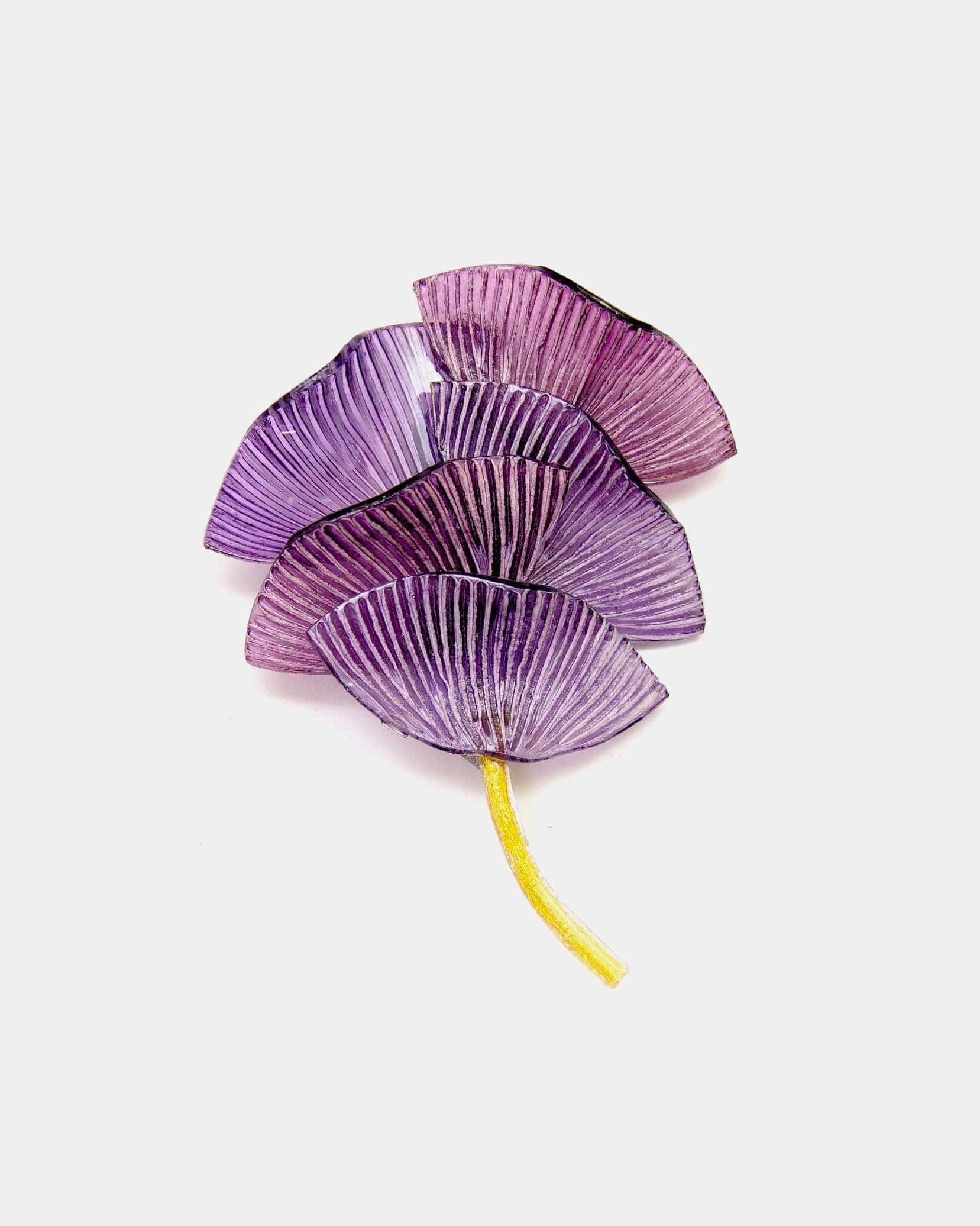
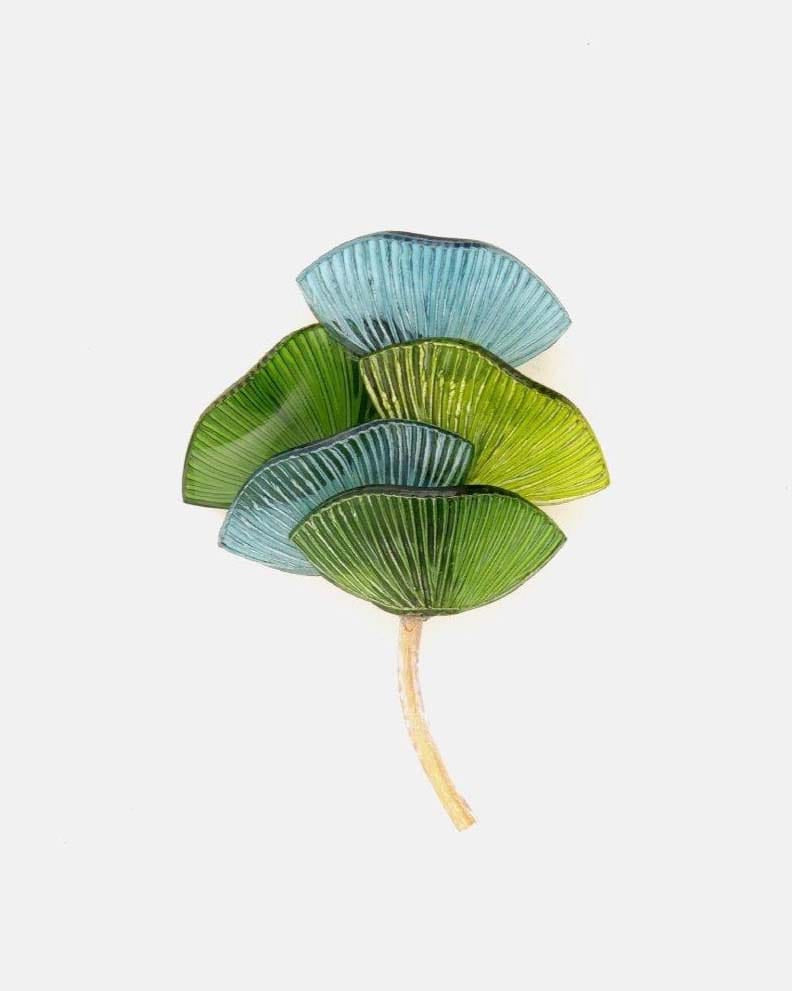
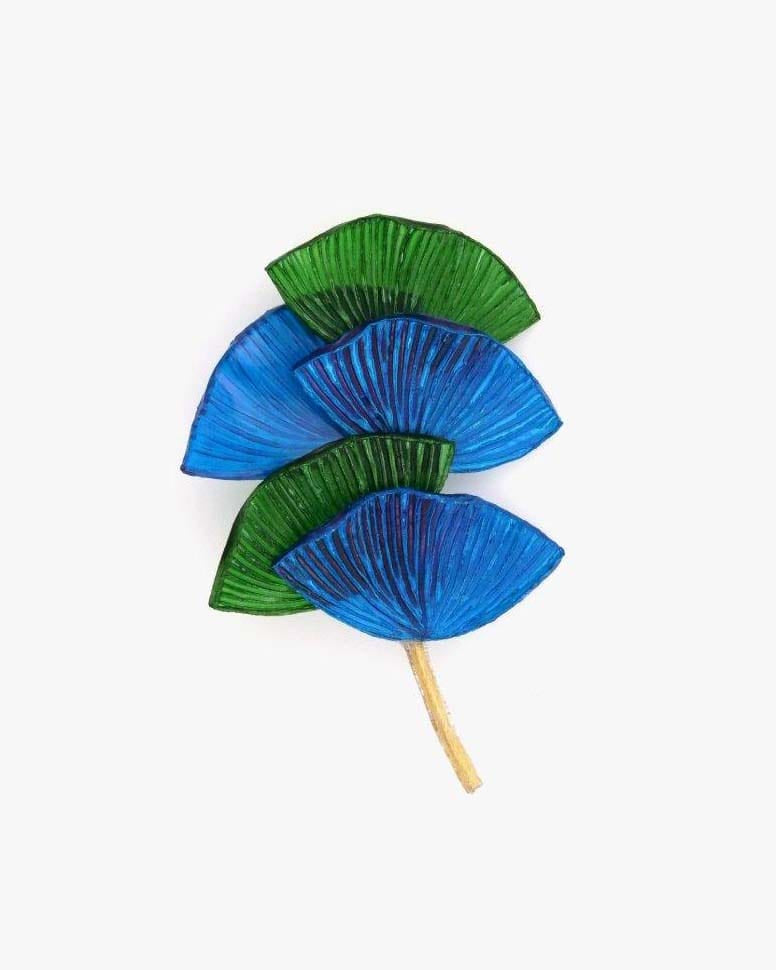
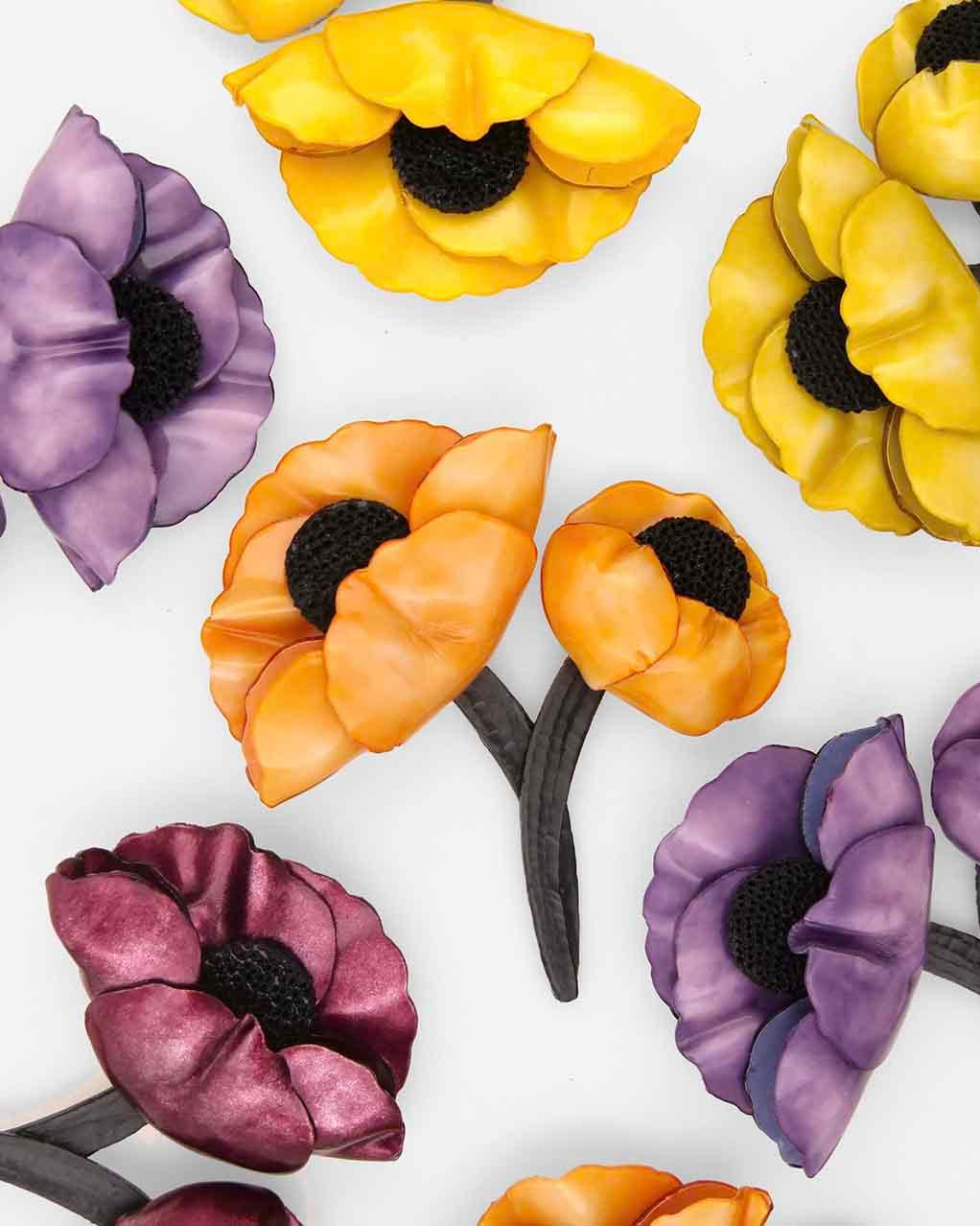
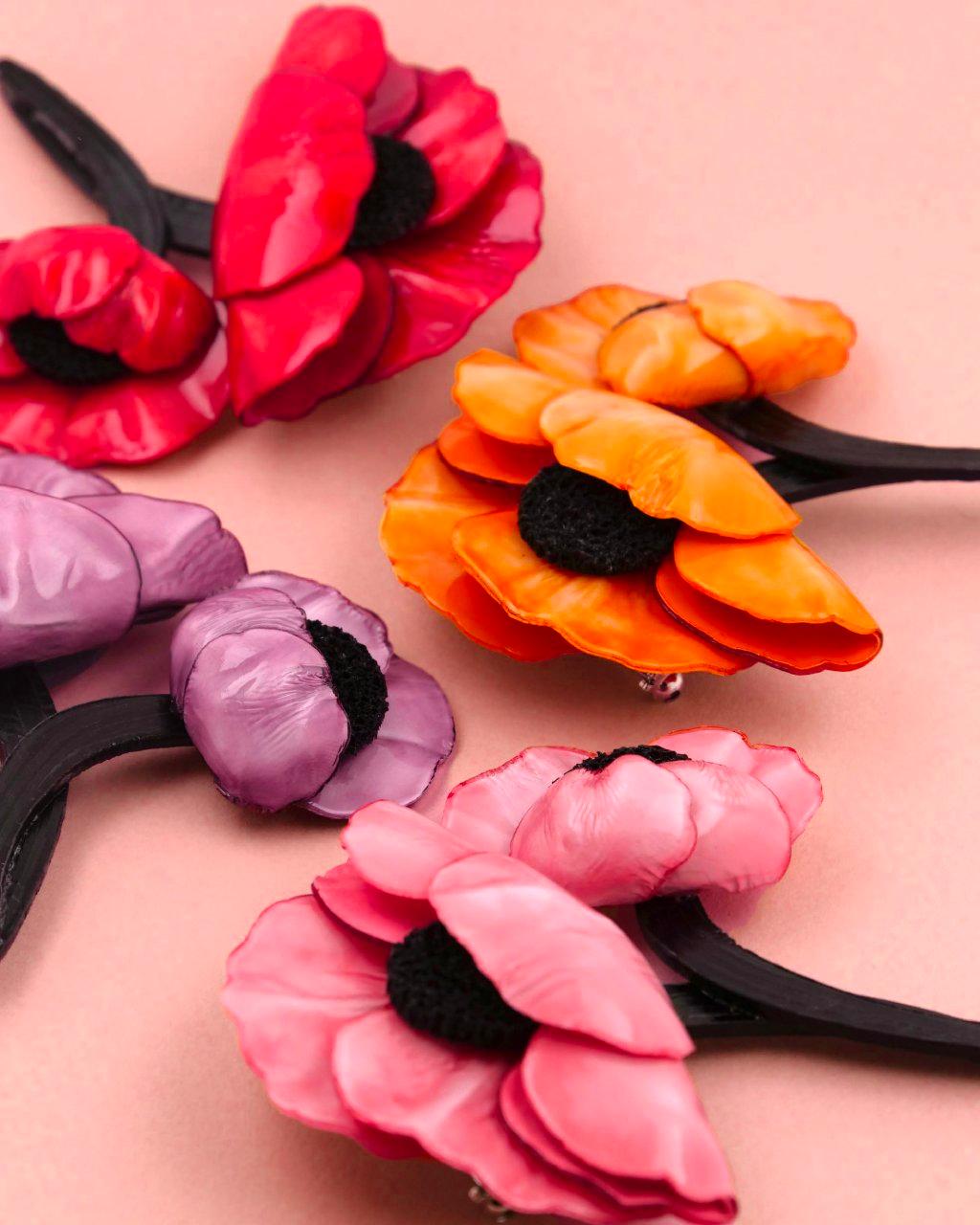
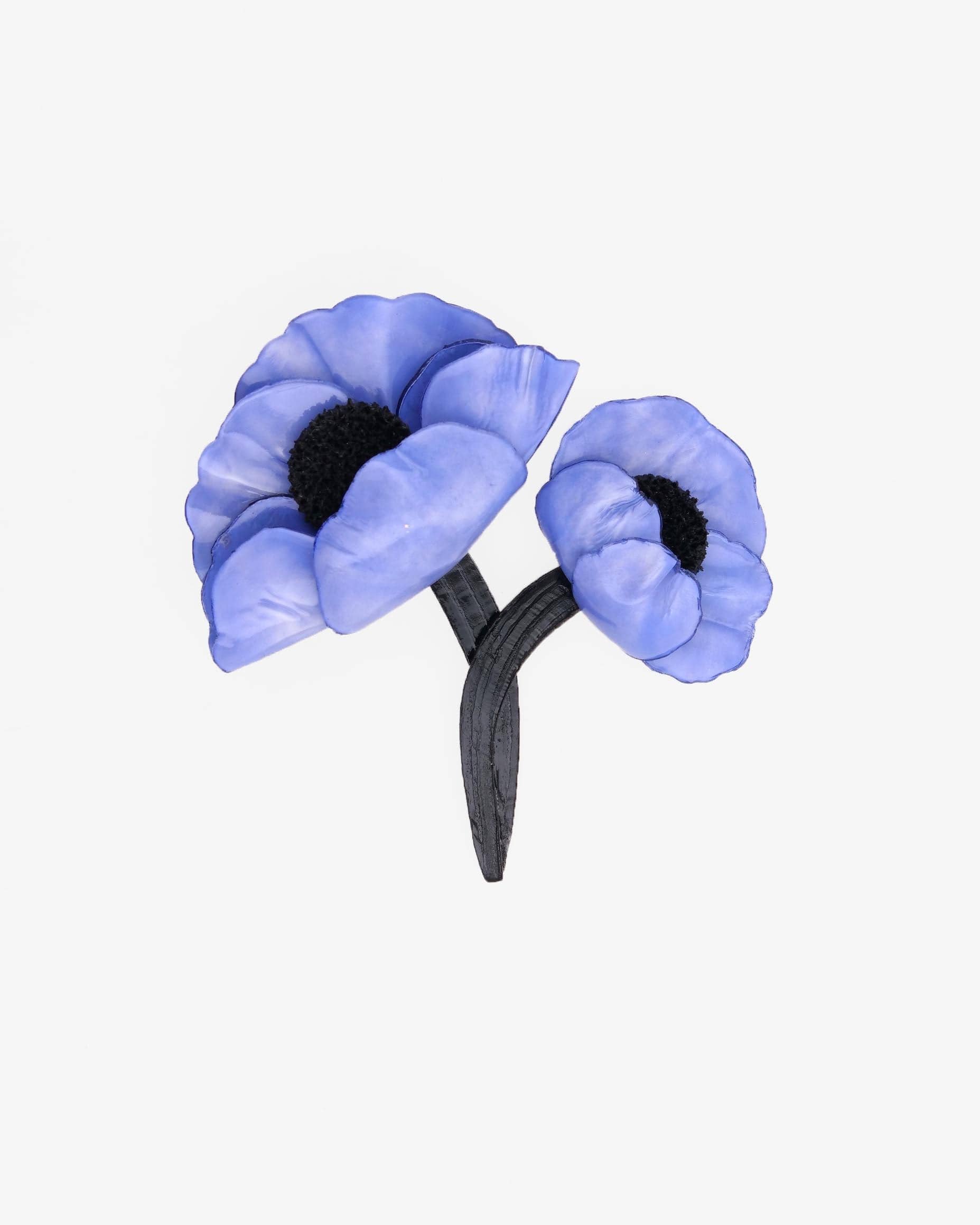
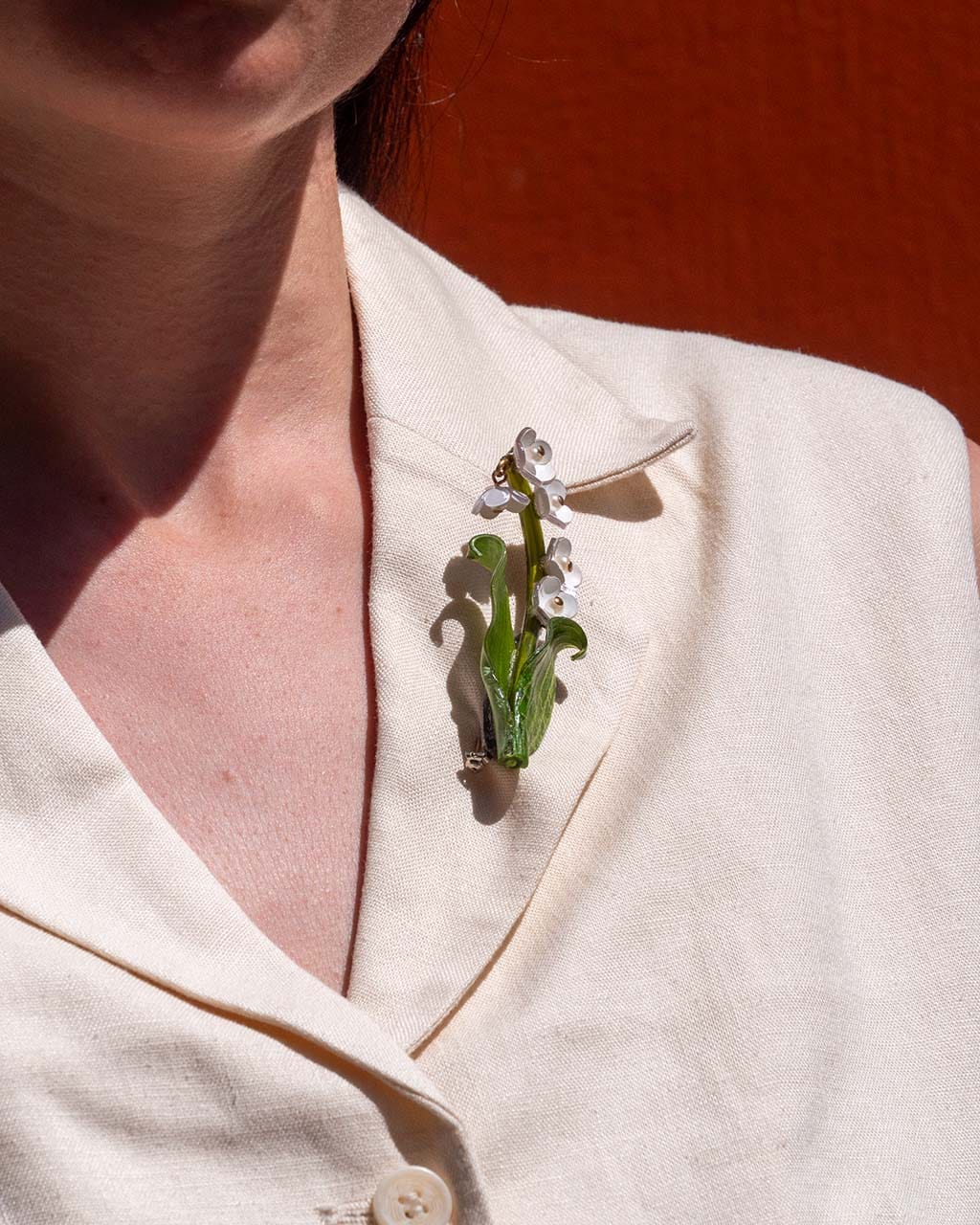
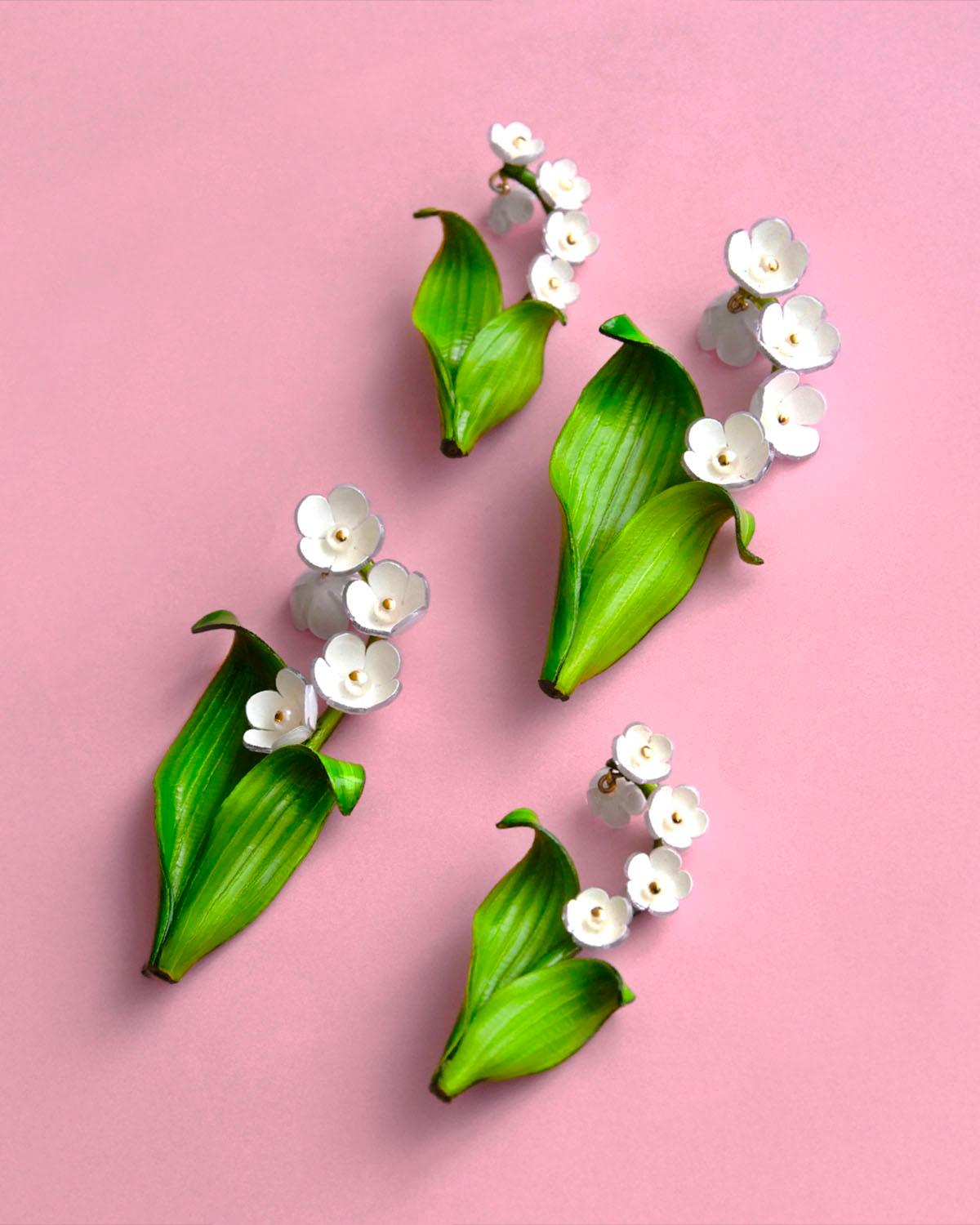
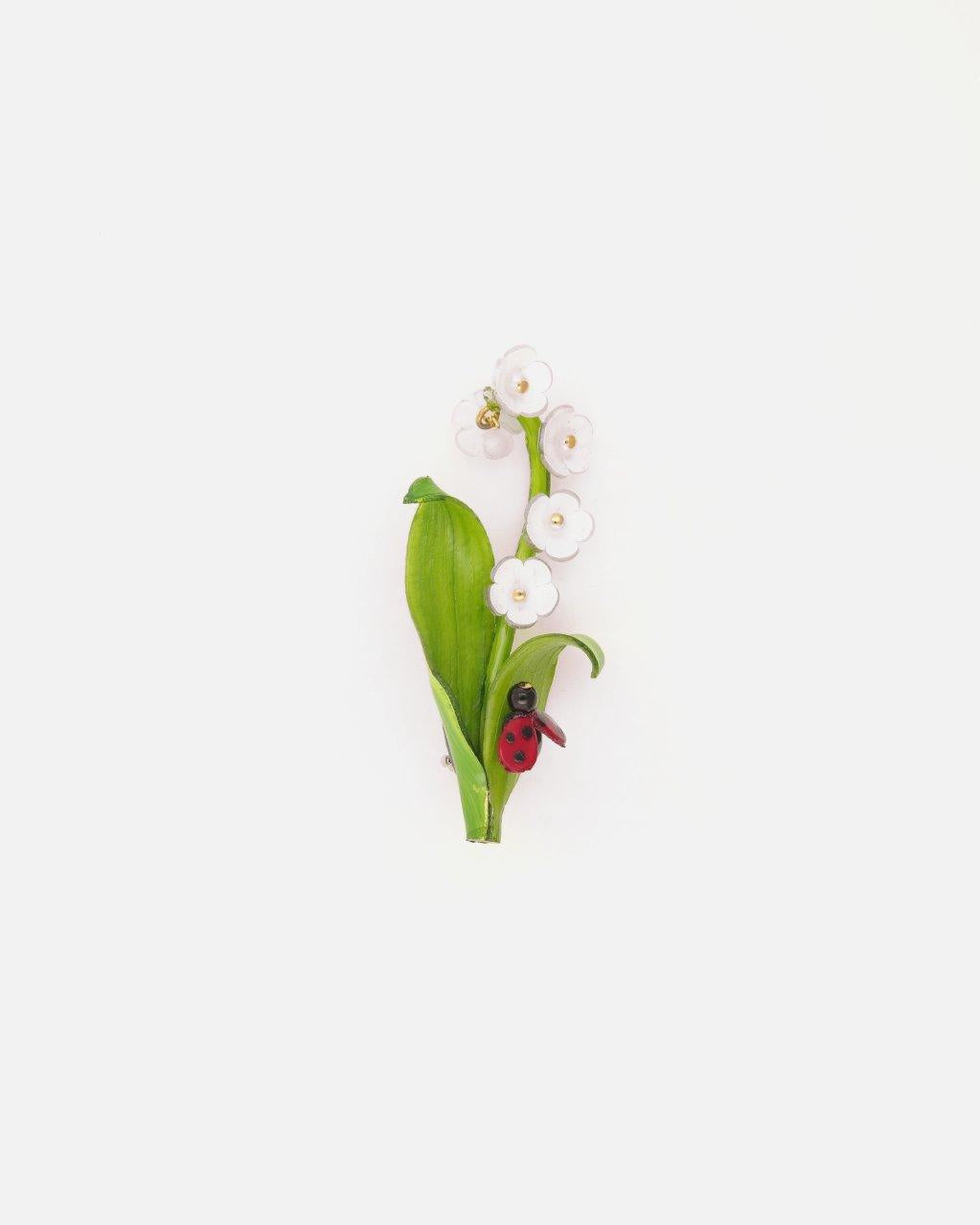
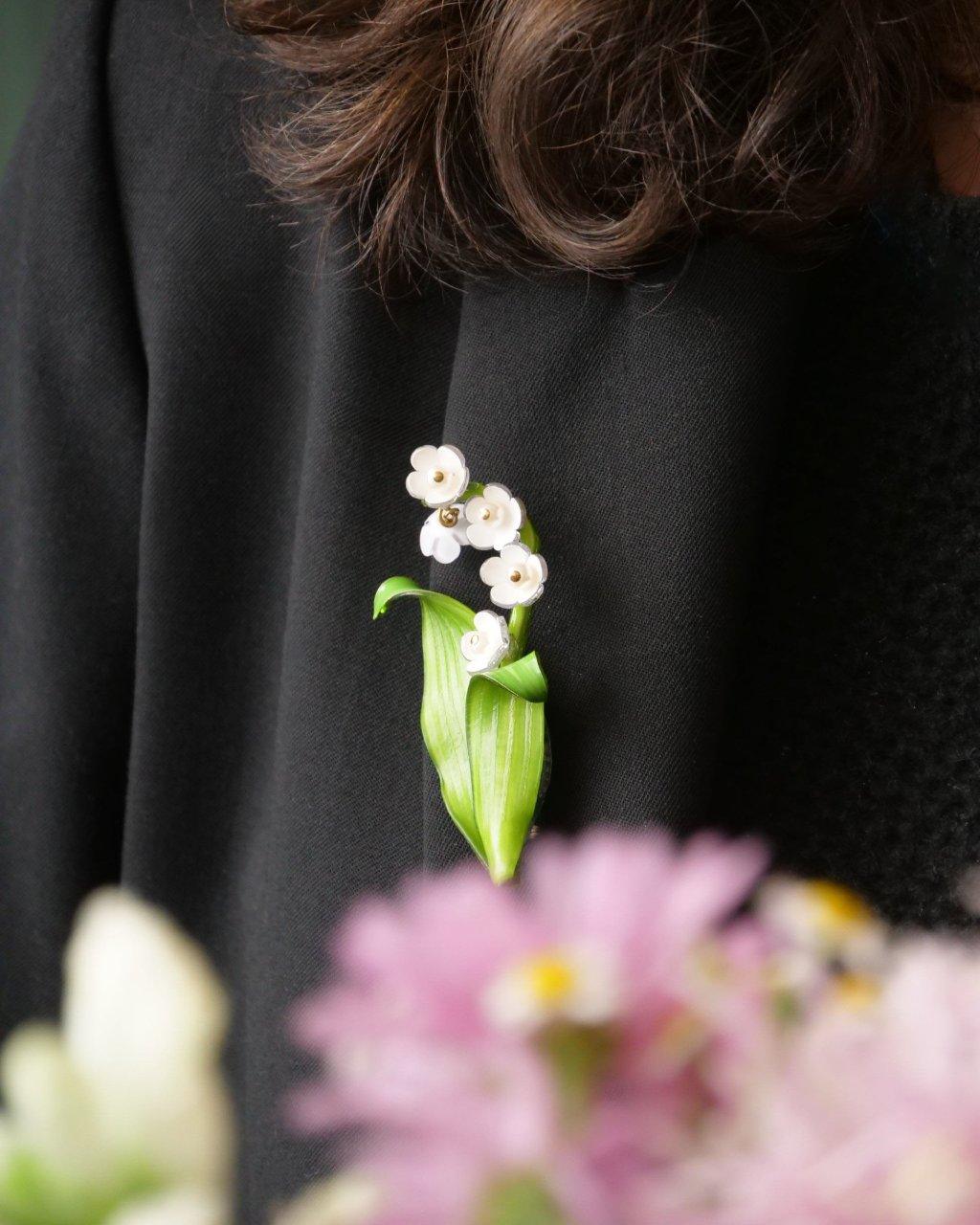
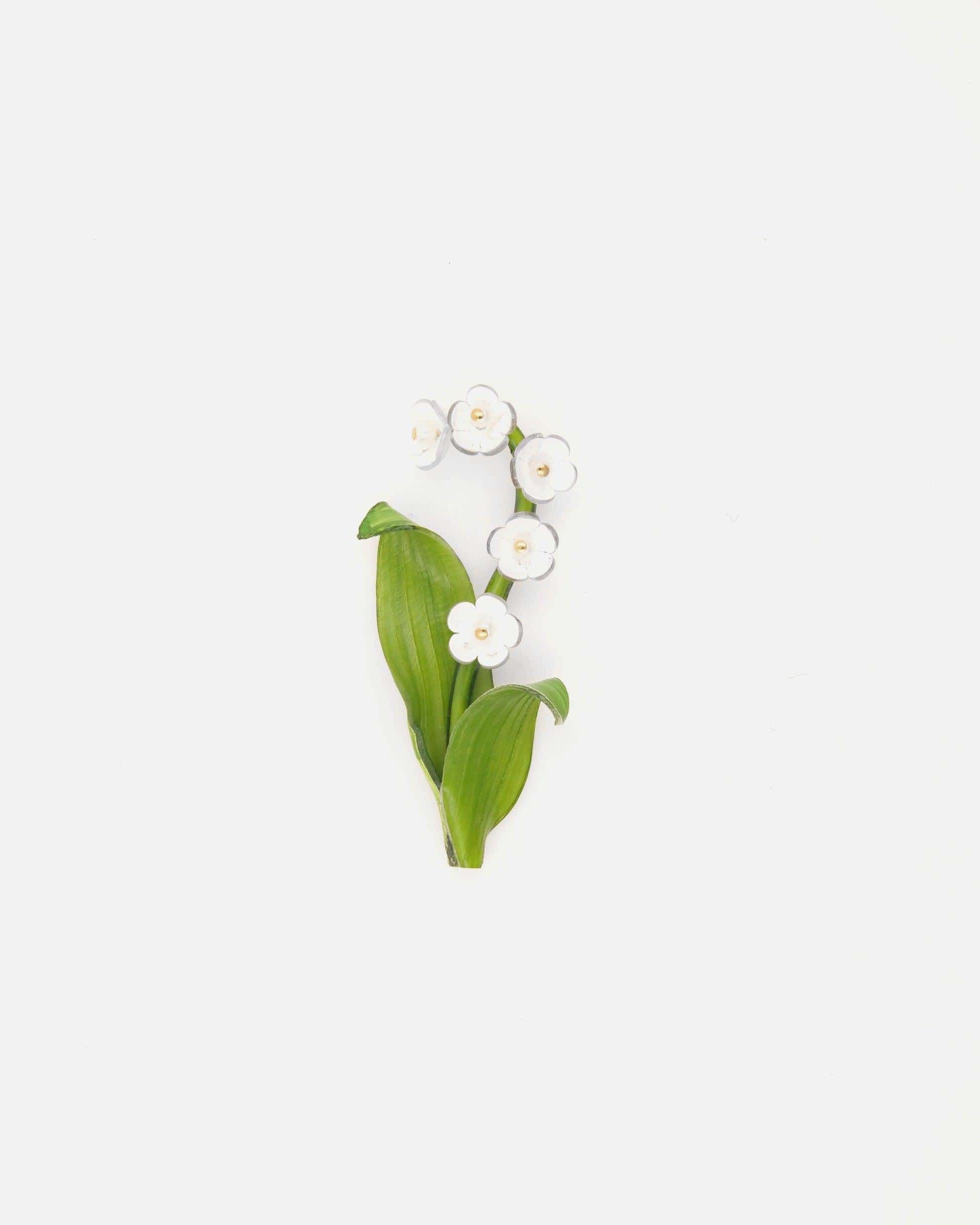
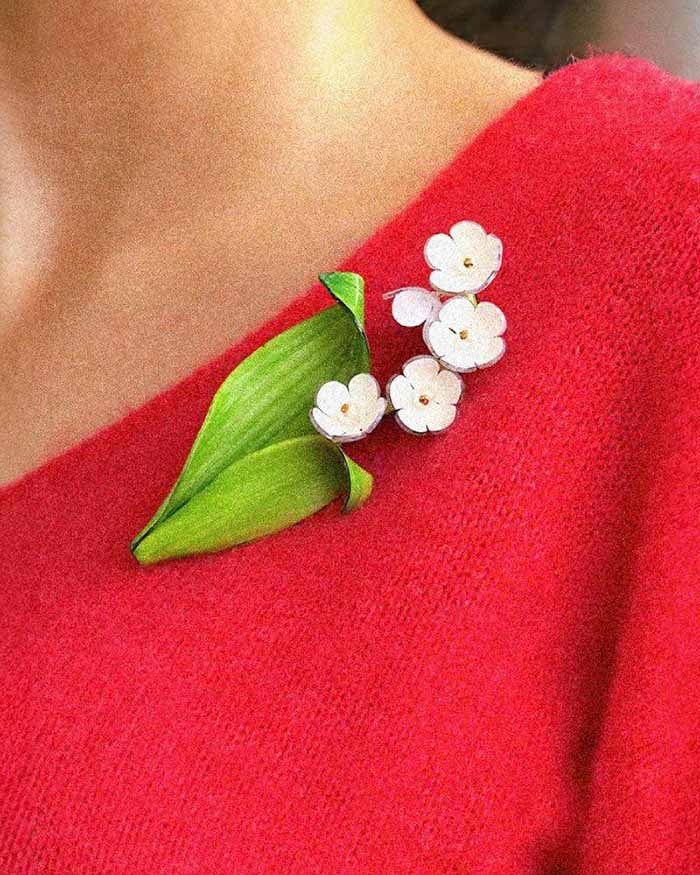
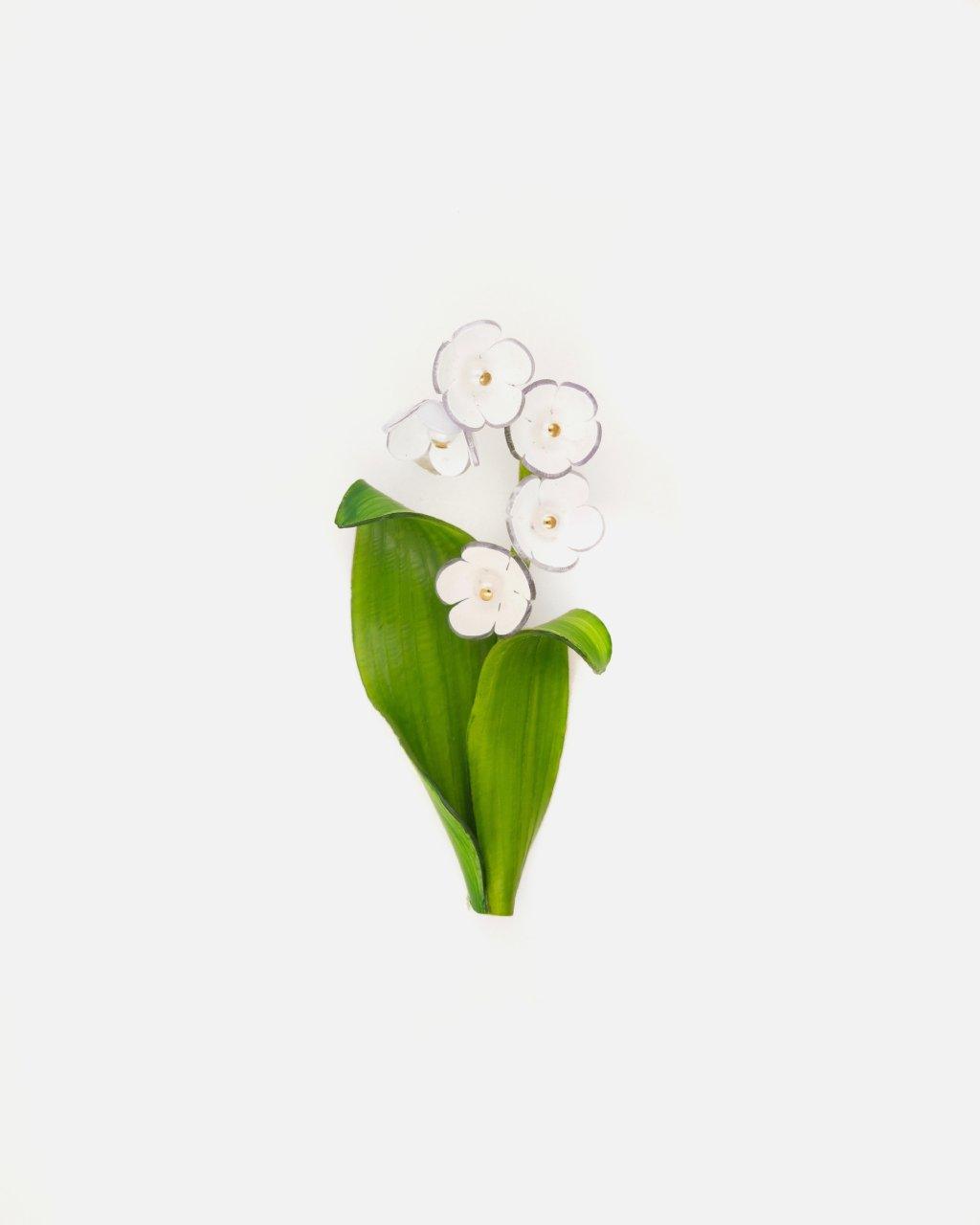
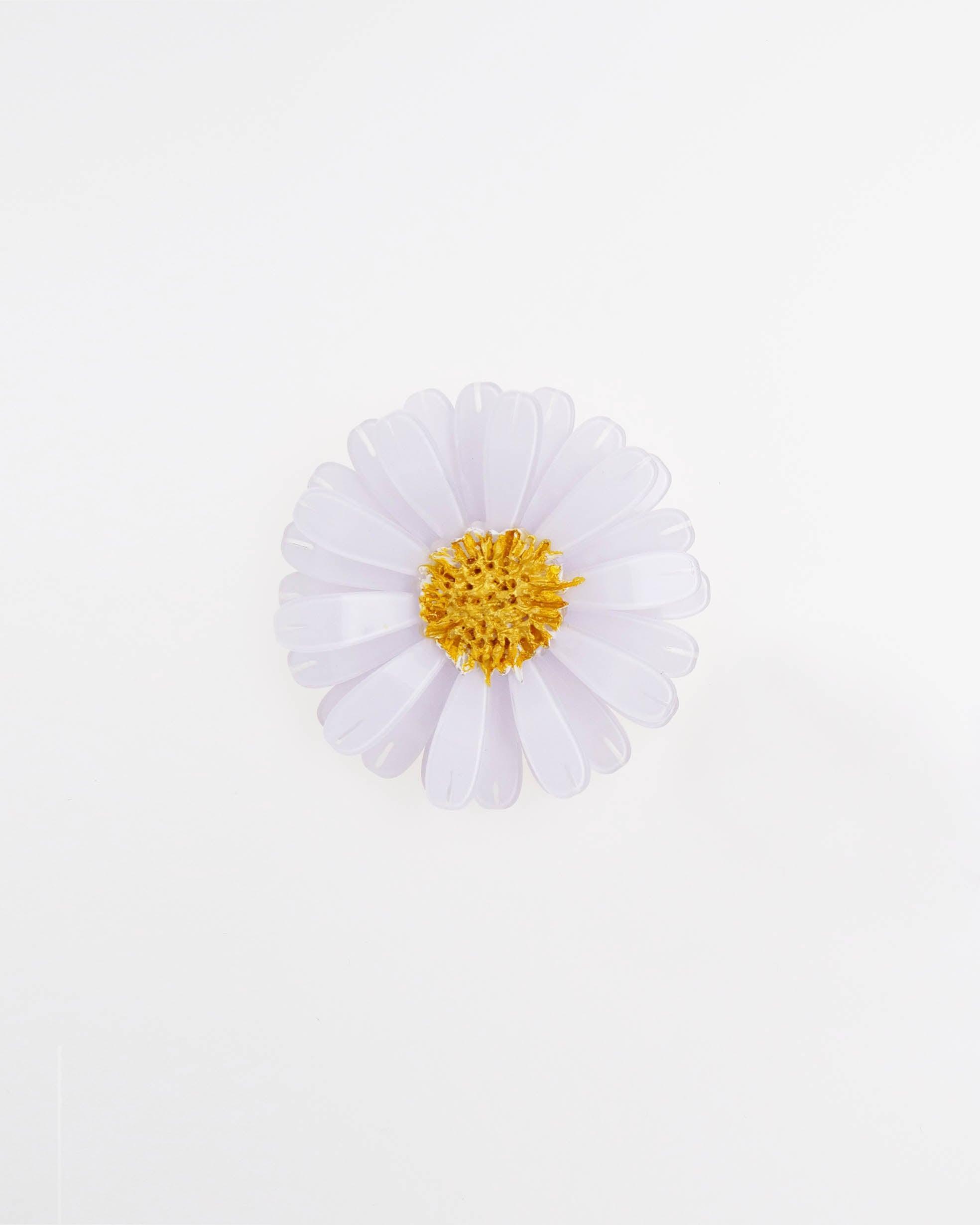
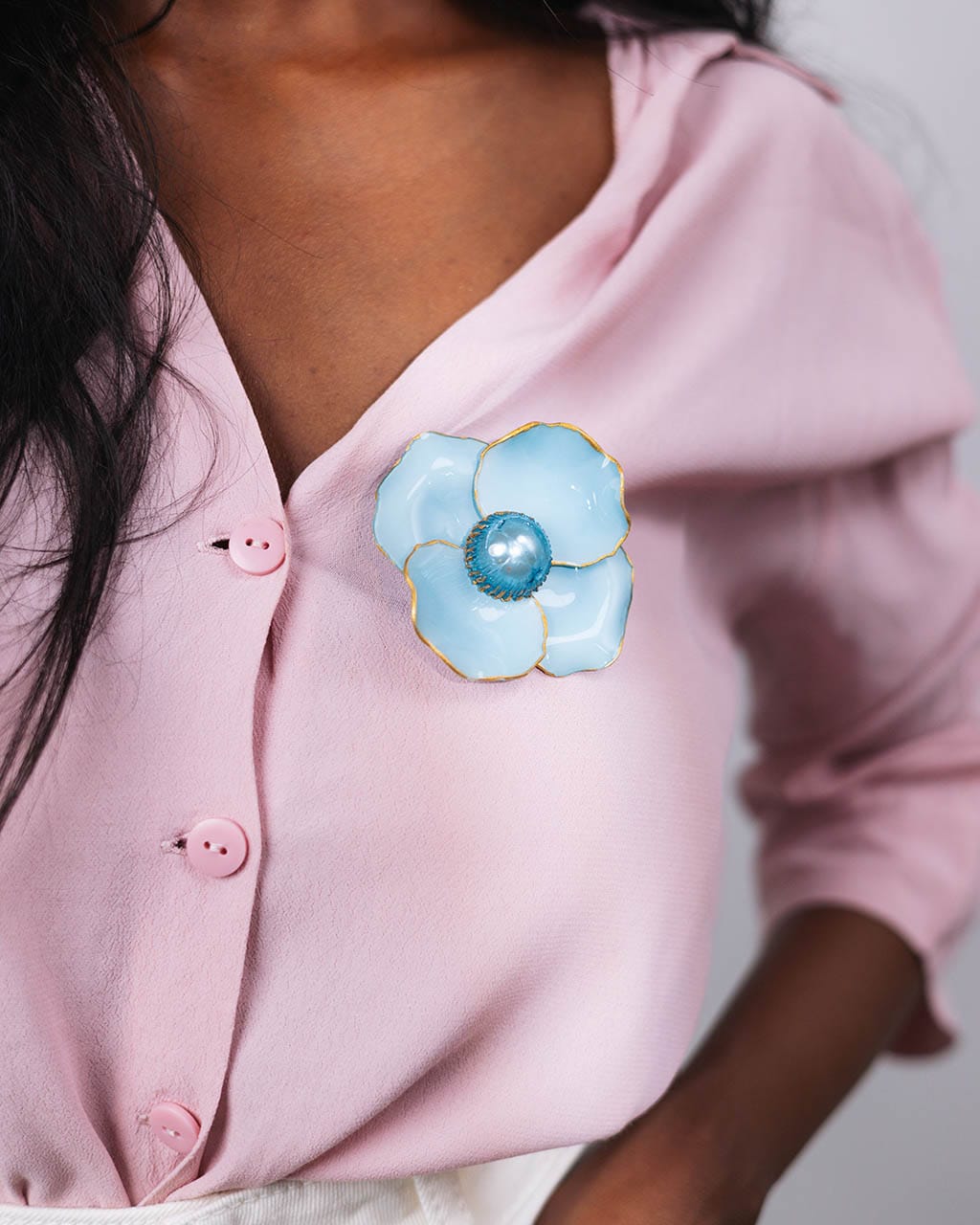
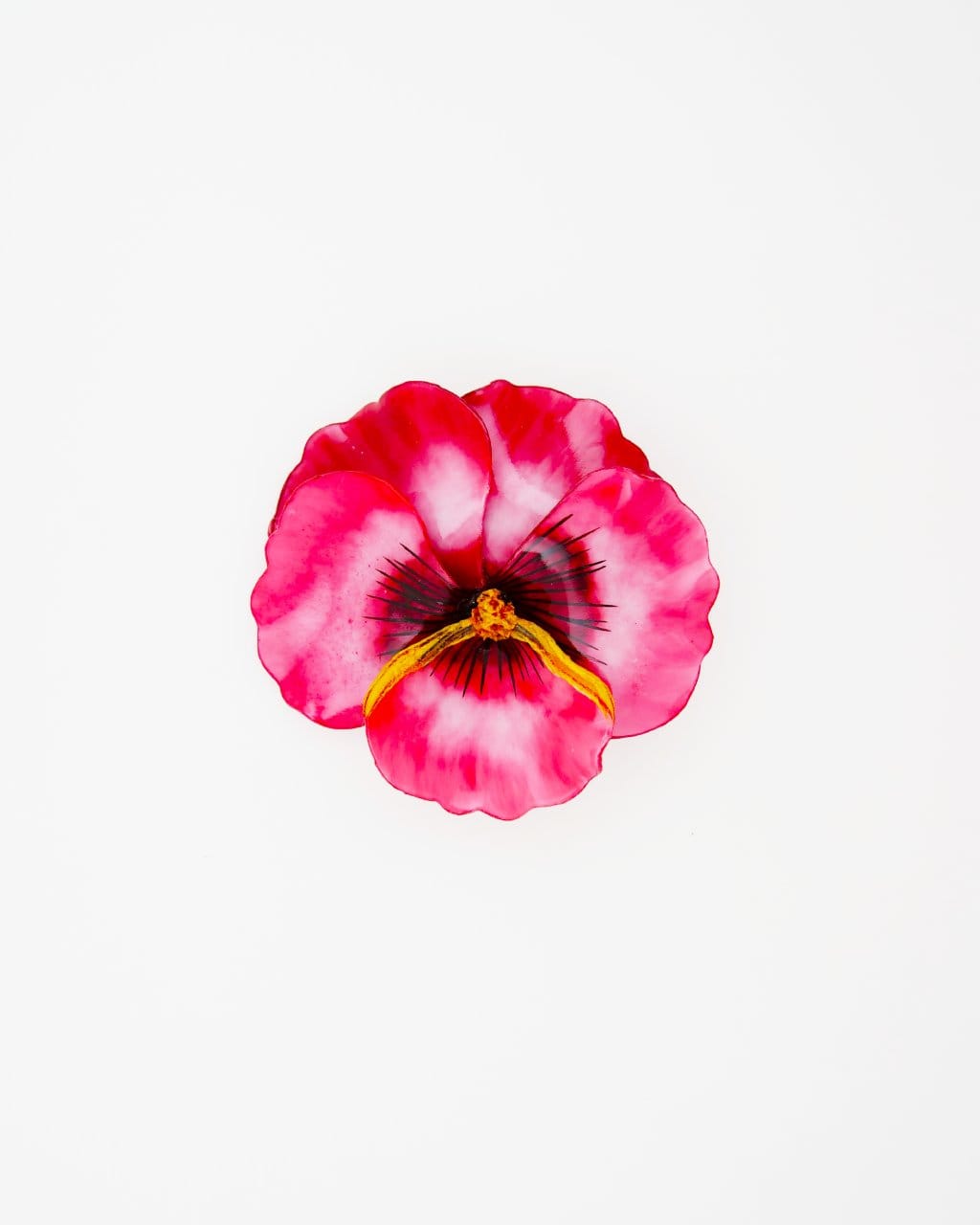
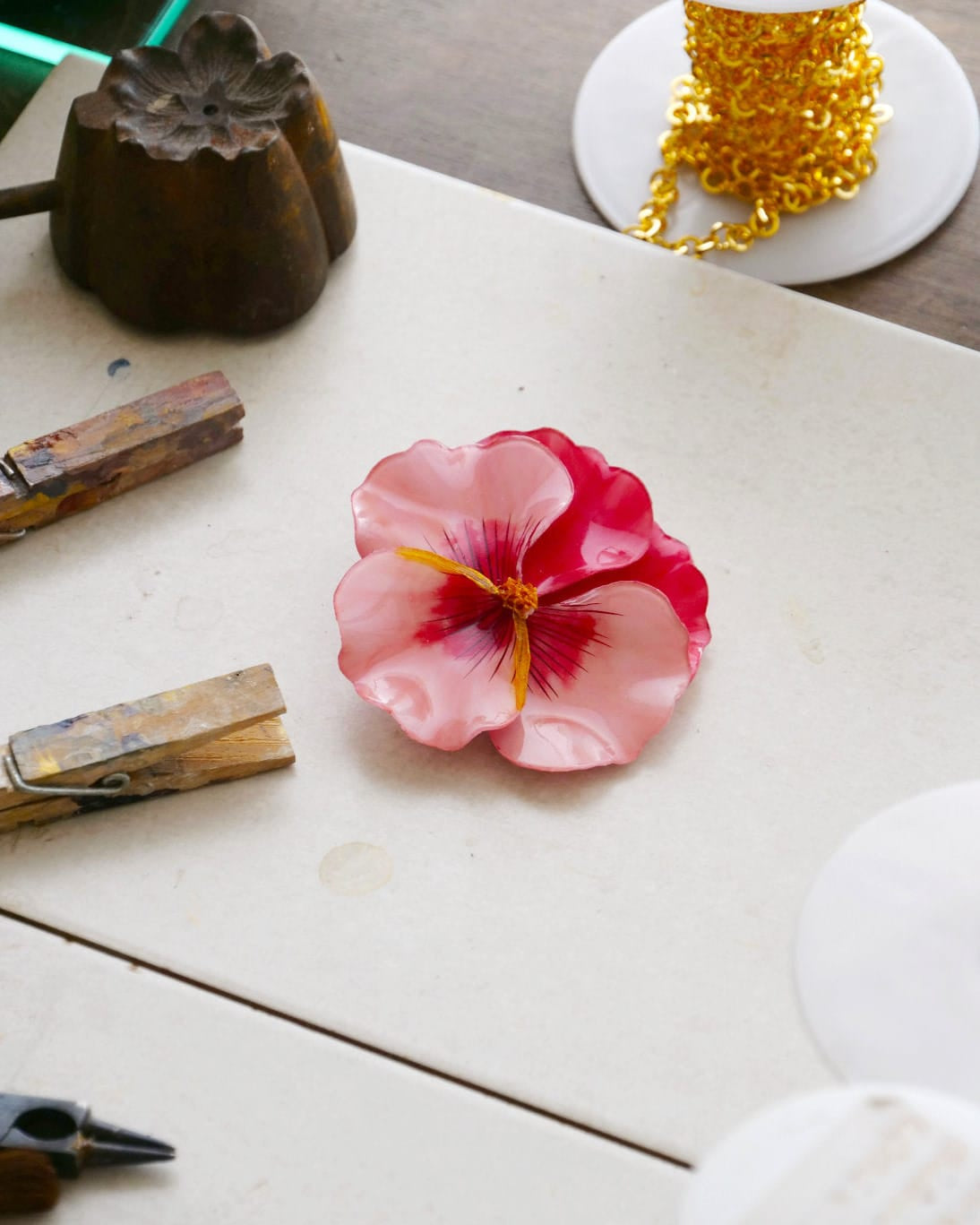
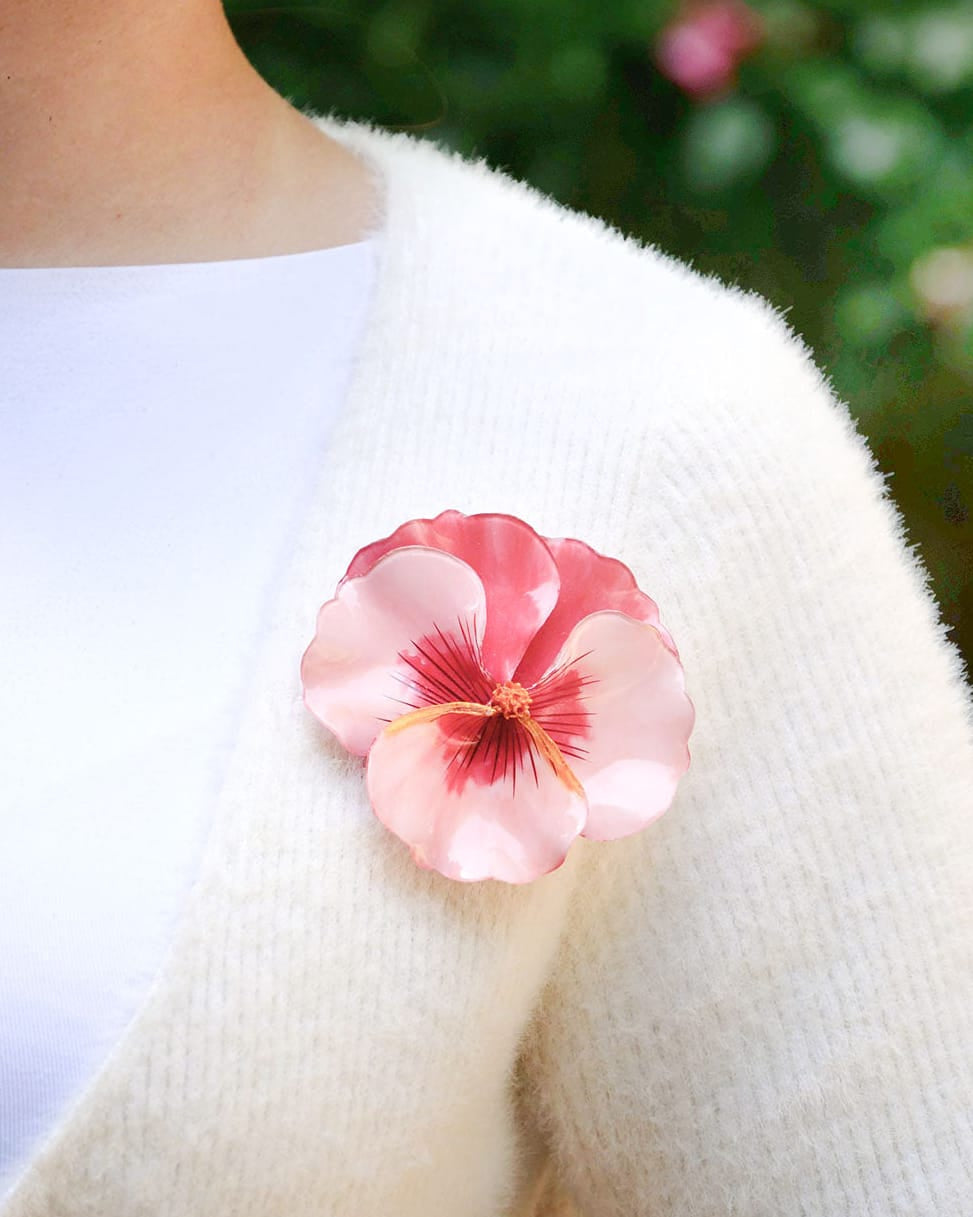
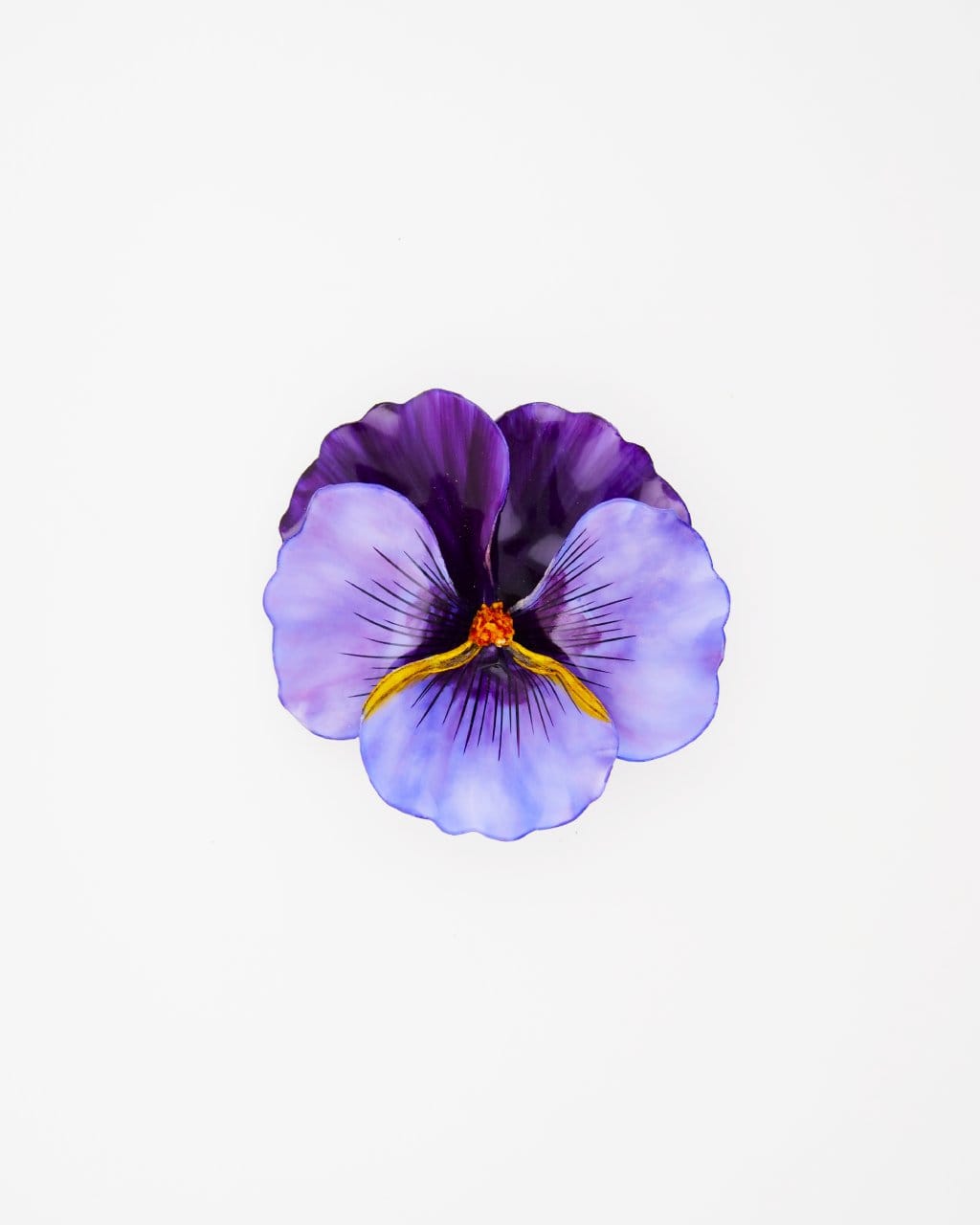
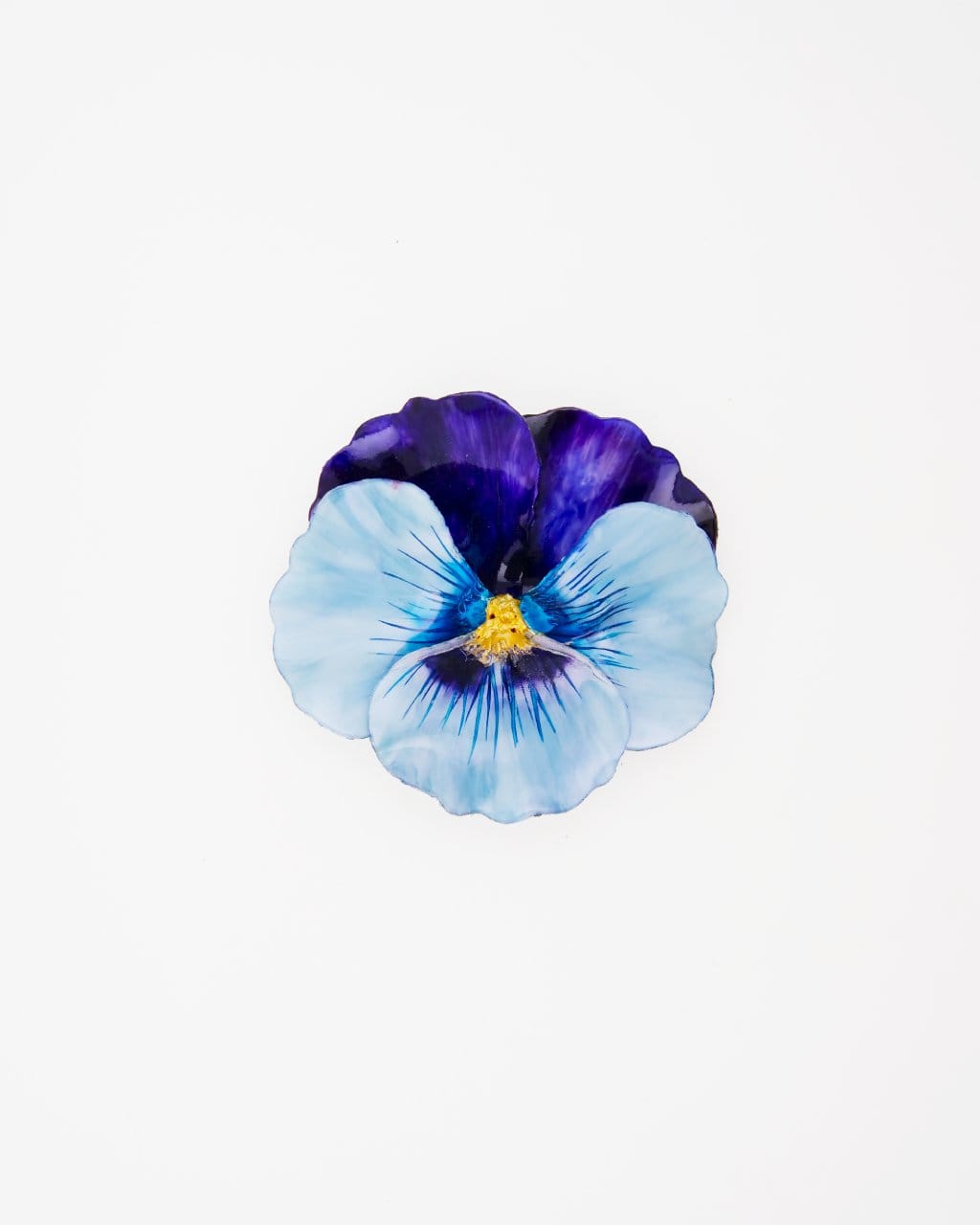
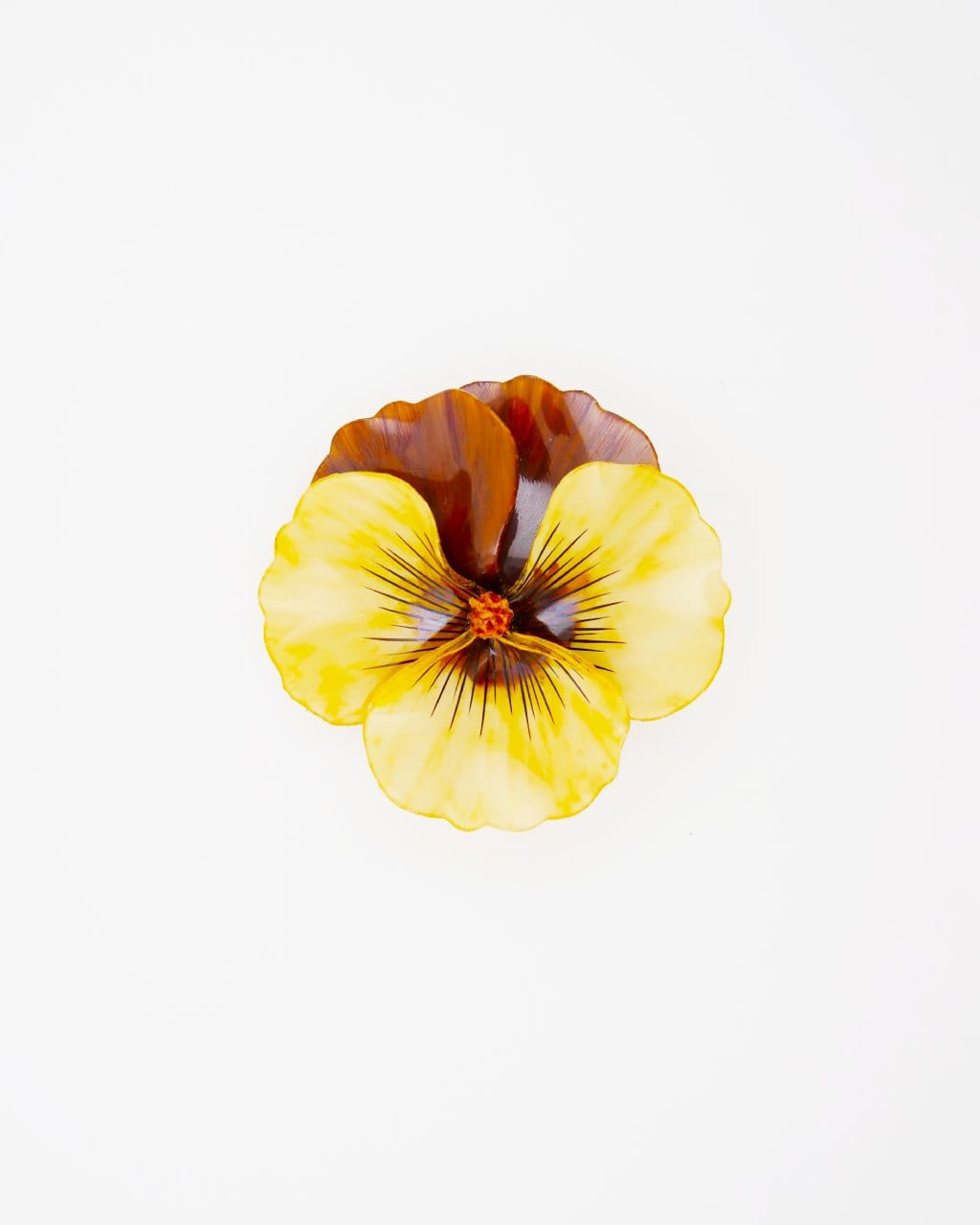
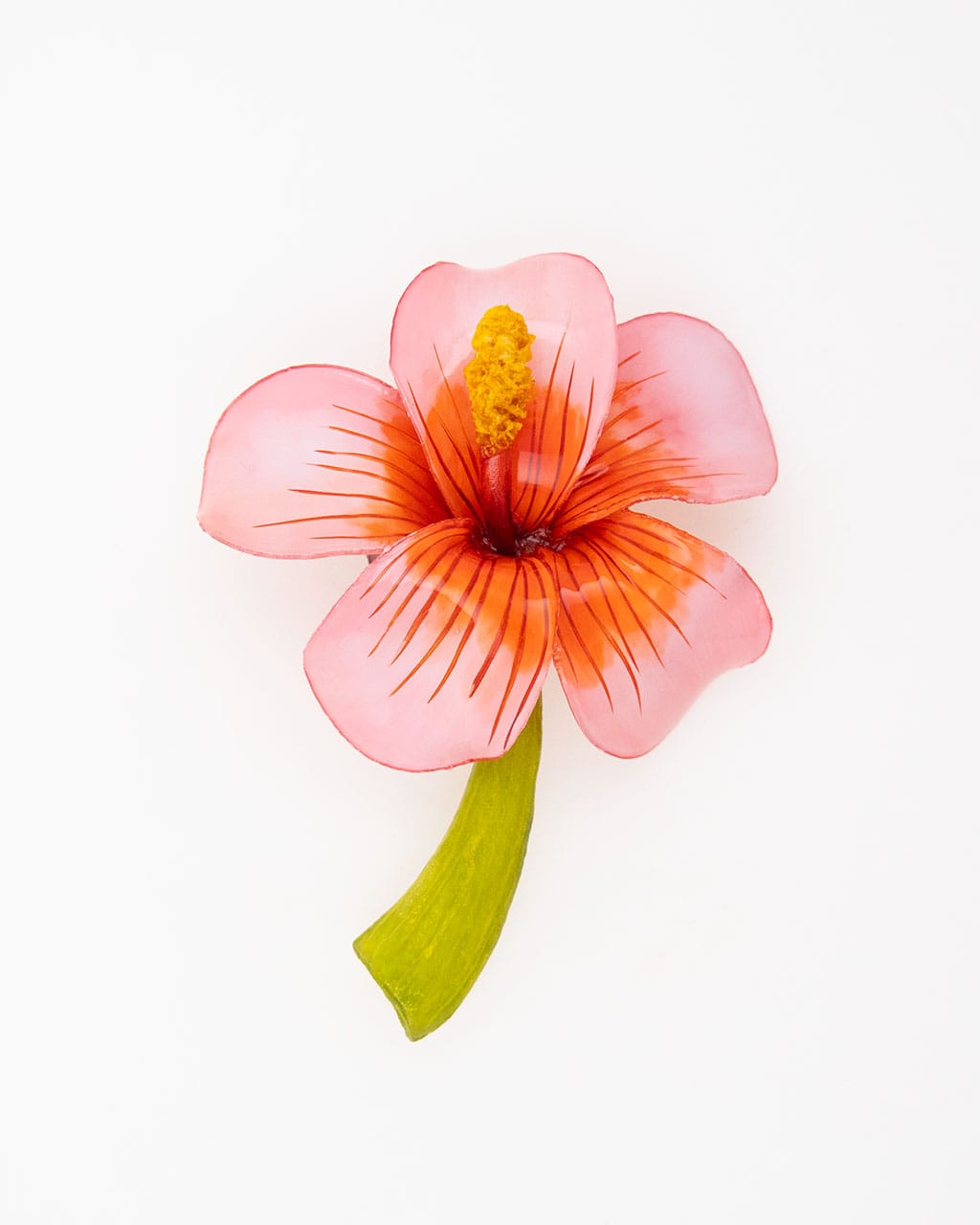
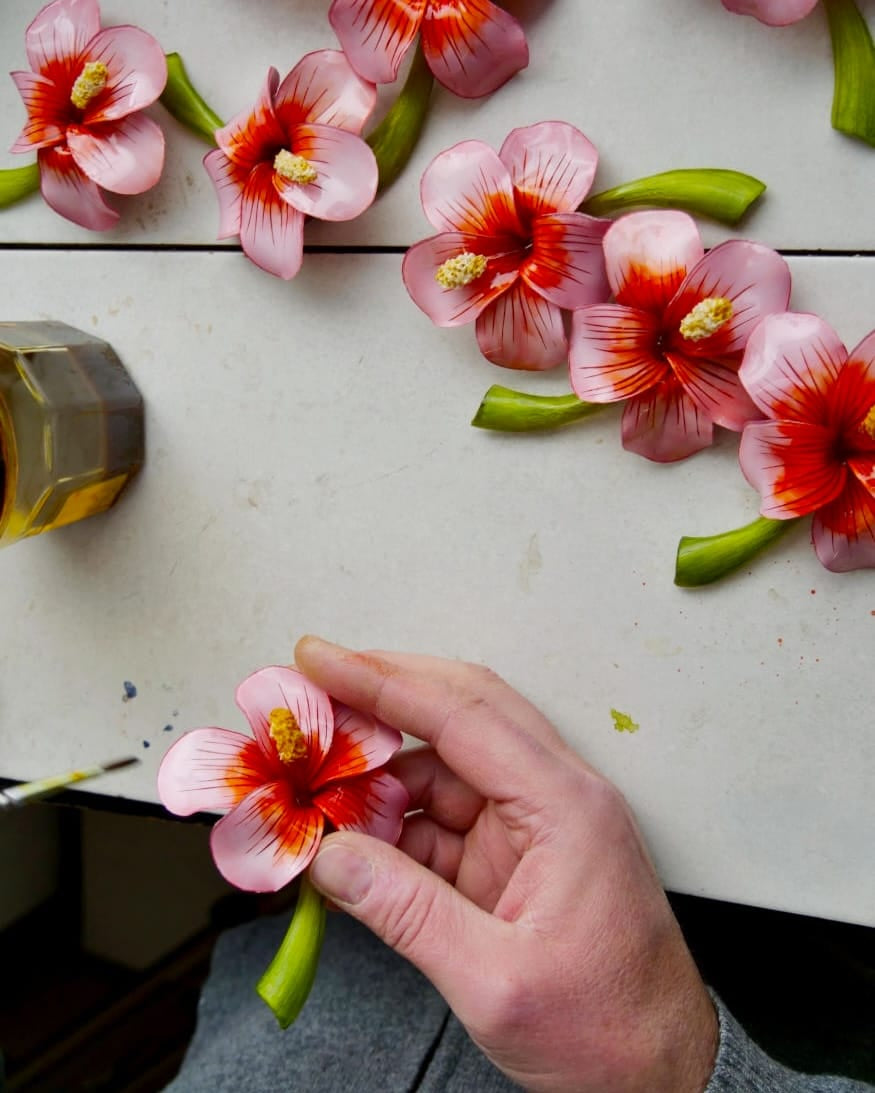
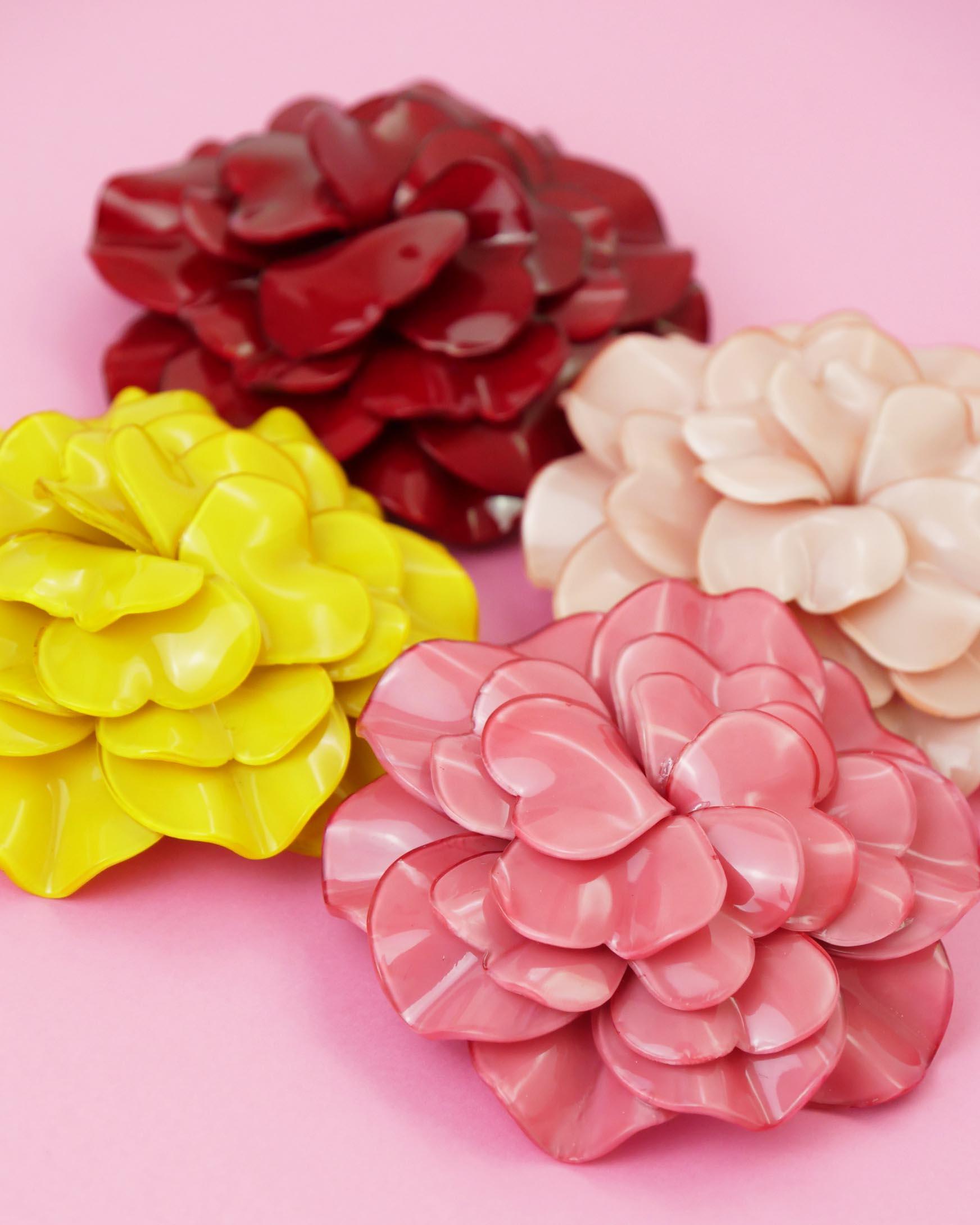
Emaline is the exclusive material of our workshop. It is an exclusive material hand-enameled. It was developed by Stéphane Ravel and is still manufactured in our workshop. Lightweight, resistant, available in over ninety colors. It has nothing to do with molded plastic, and it is not maintained like it.
The method, in three steps:
- Wipe dry, with a microfiber cloth. This is all an Emaline piece needs ninety percent of the time. Microfiber catches dust, fingerprints, and cosmetic residue without scratching the enamel.
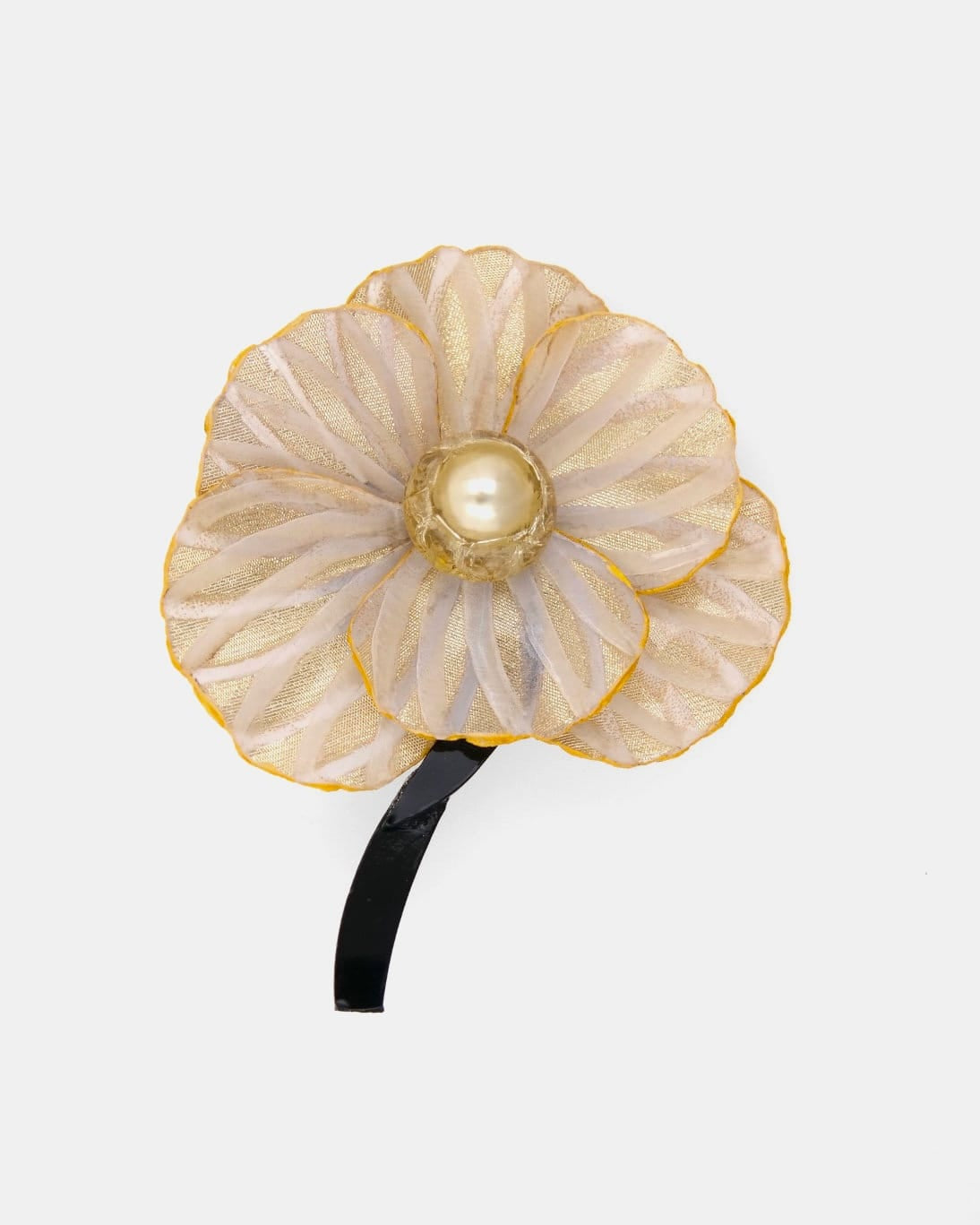
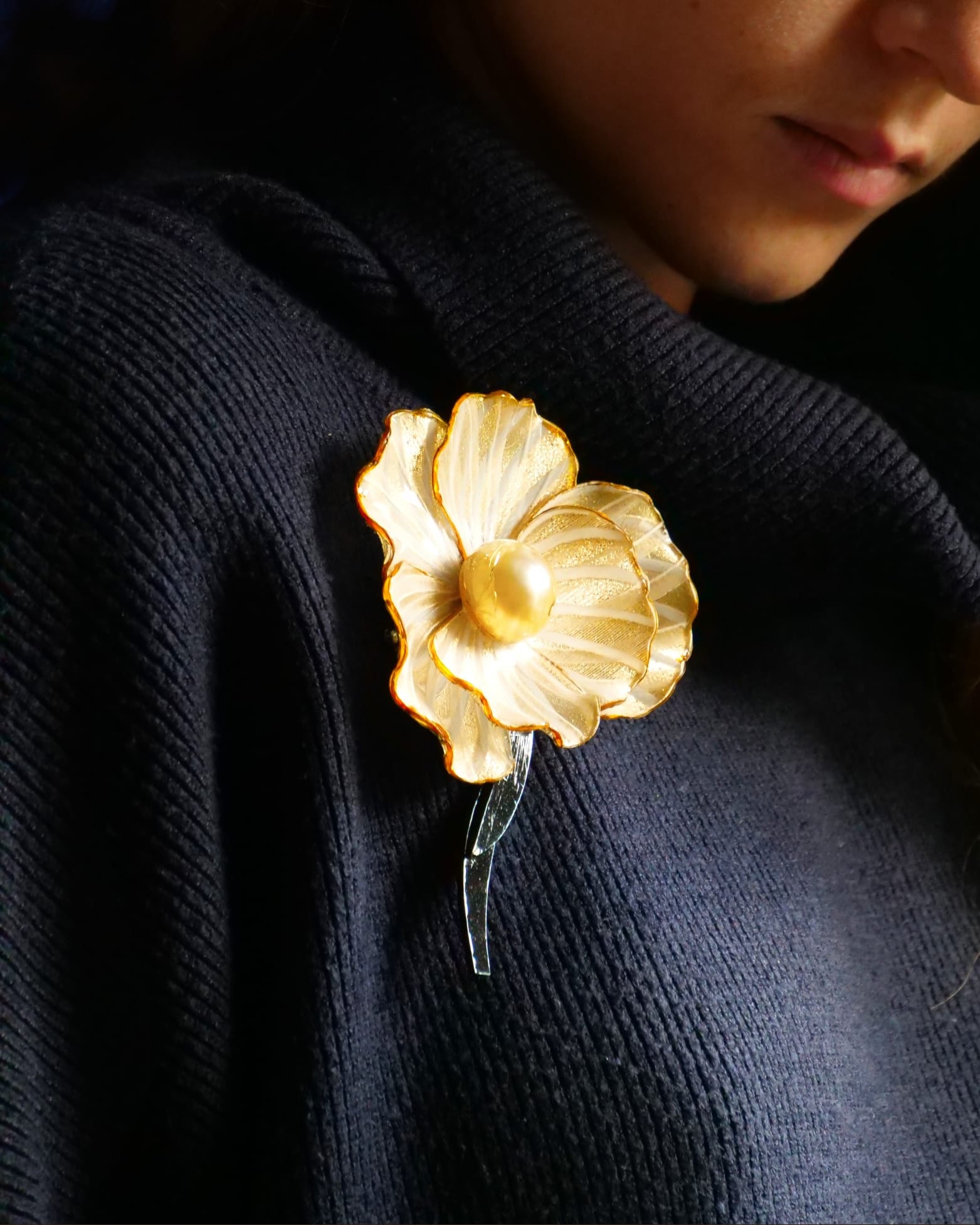
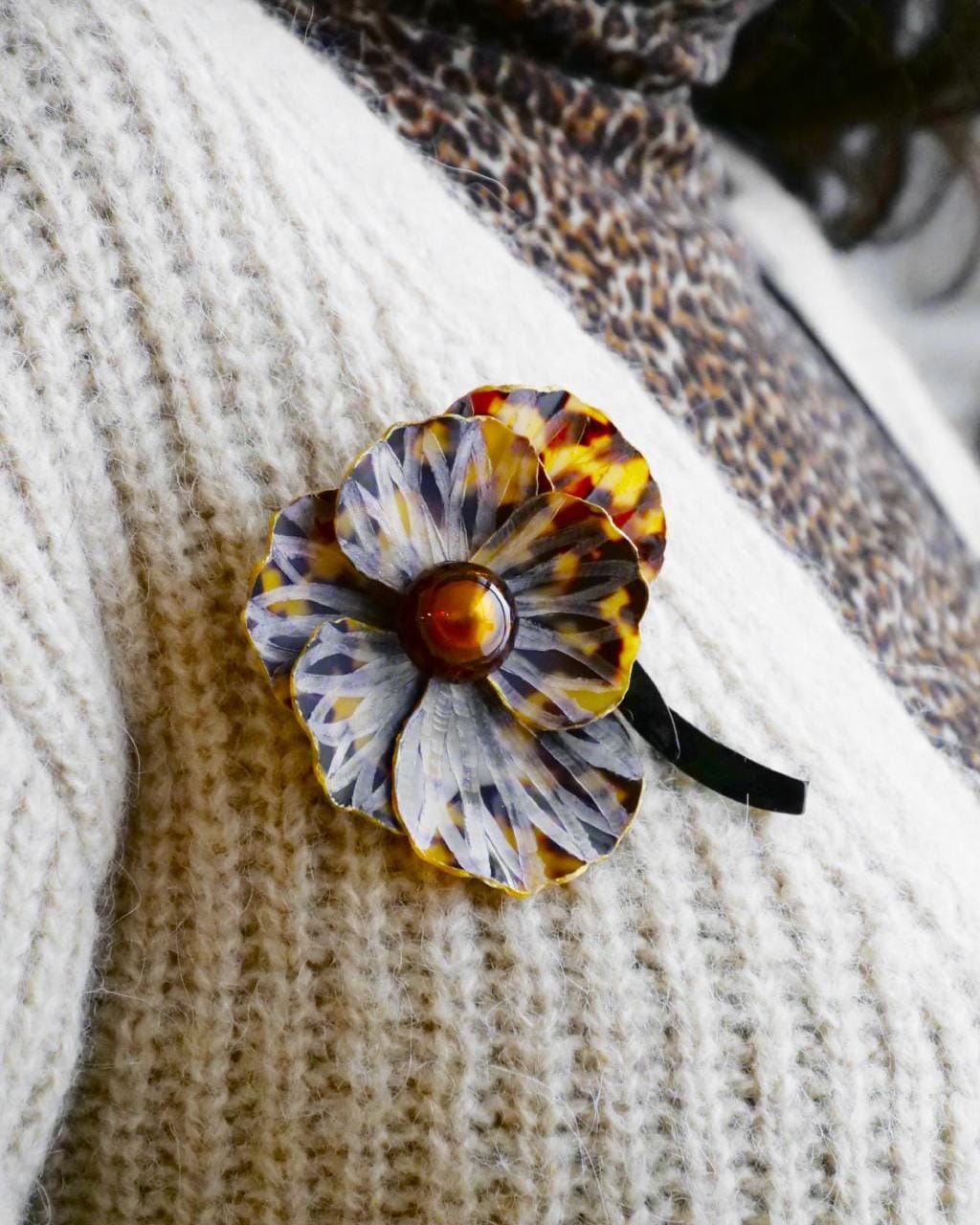
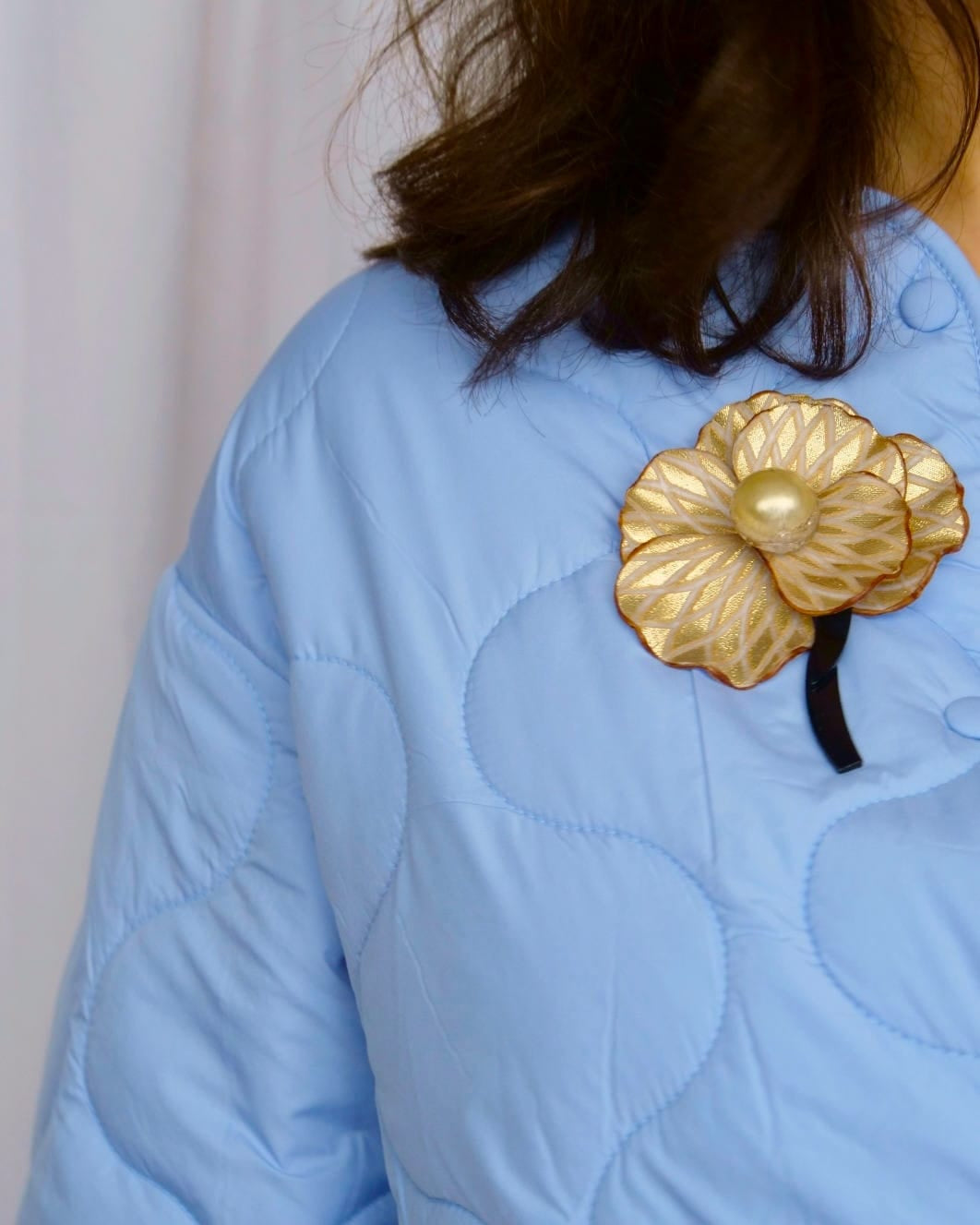
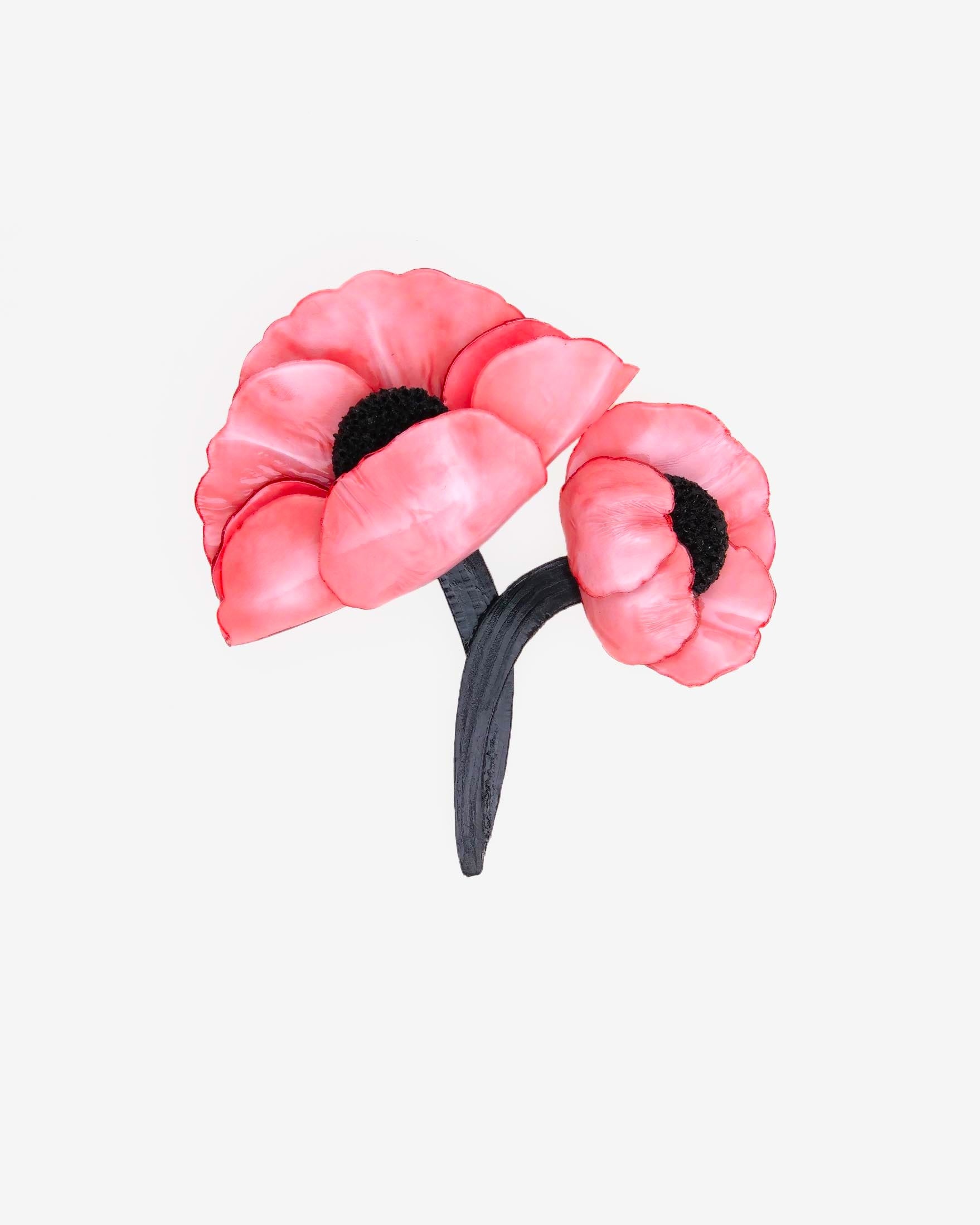
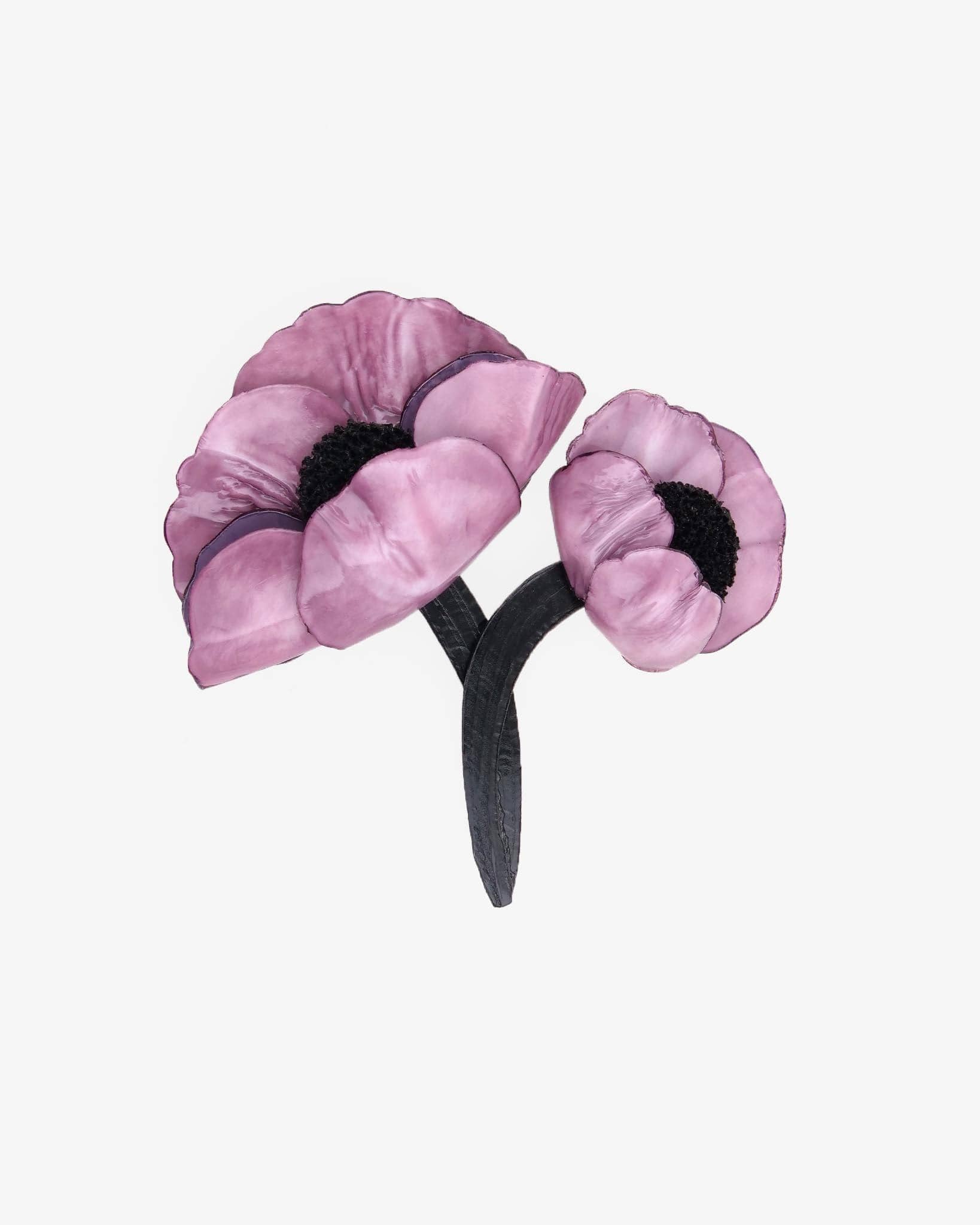
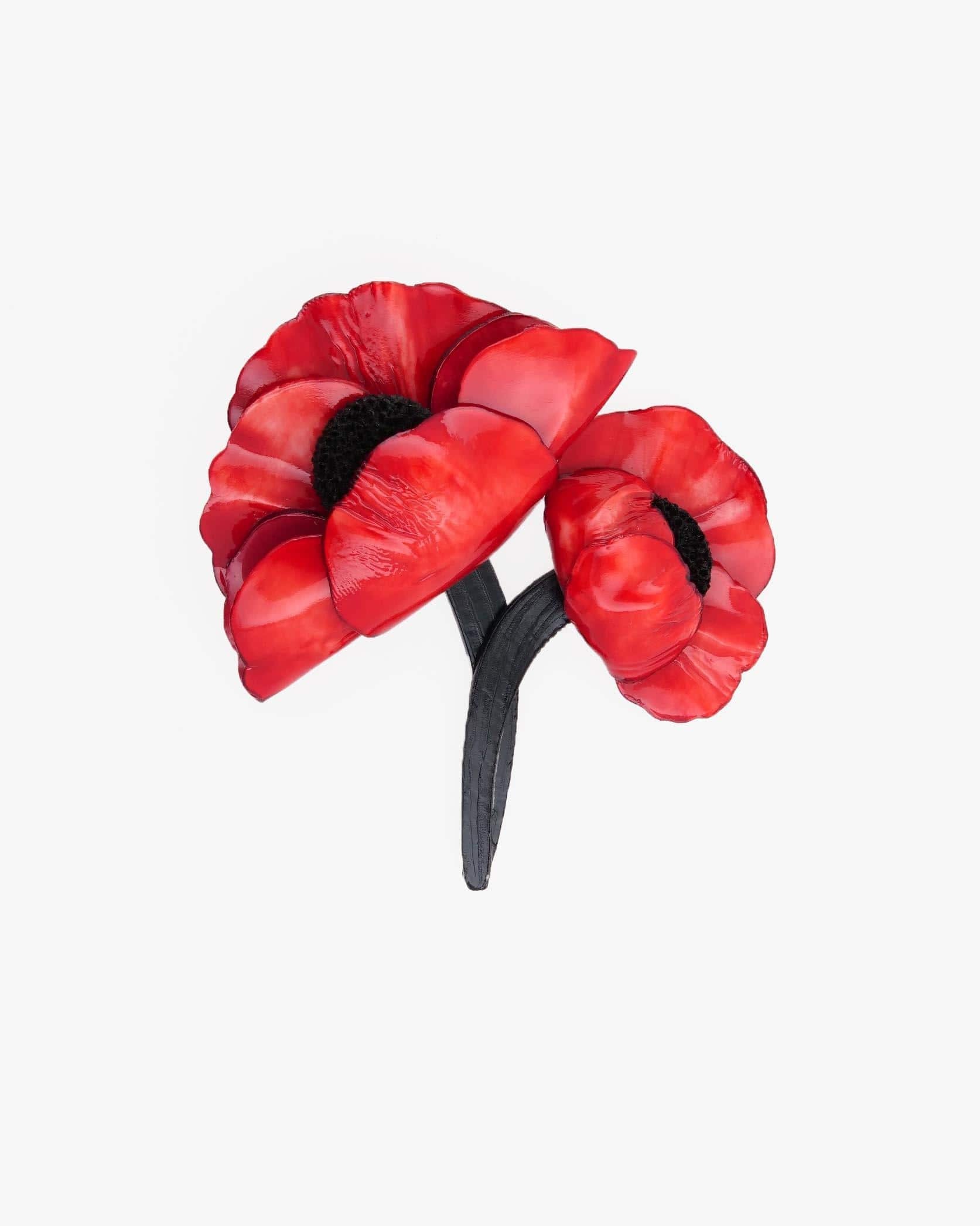
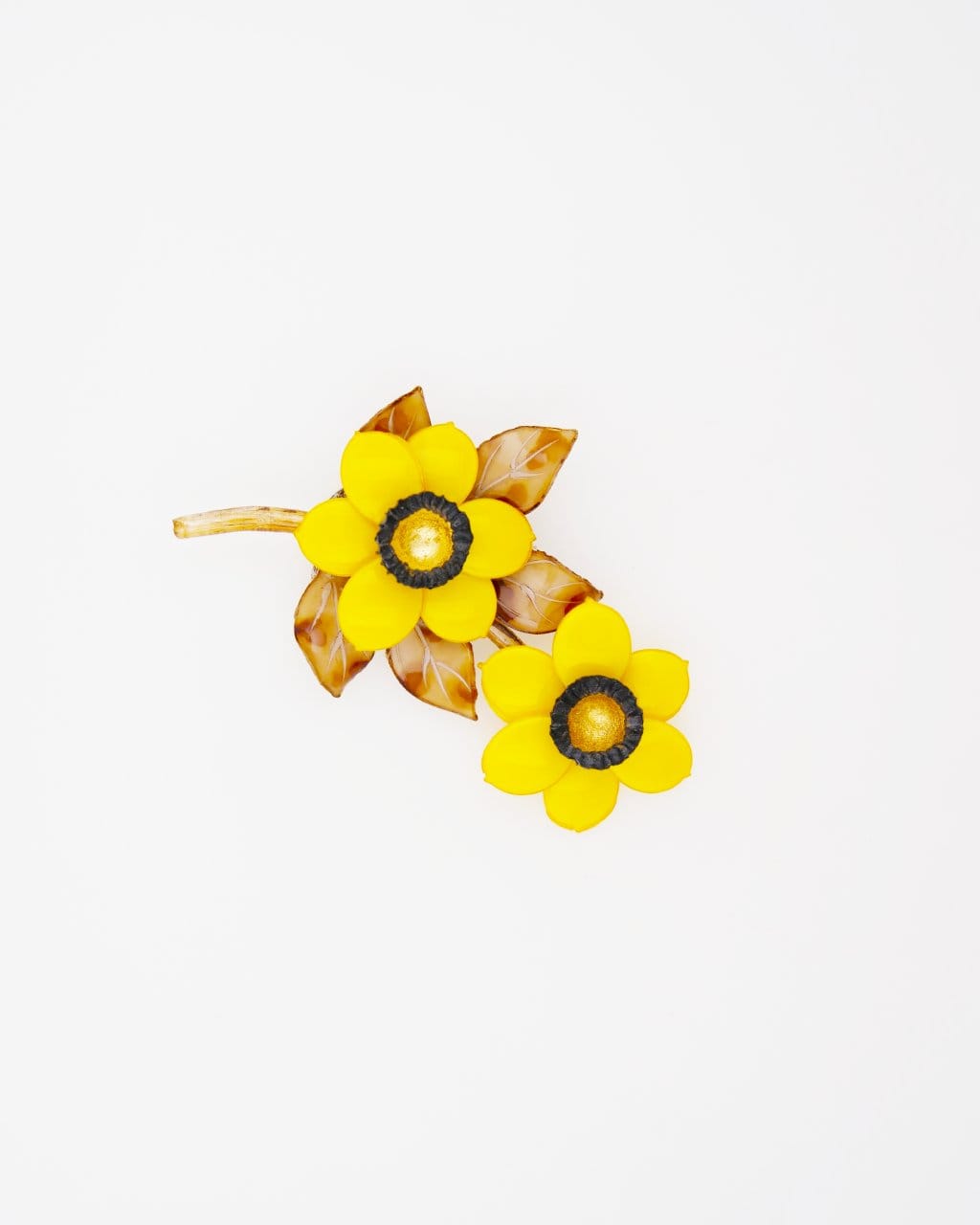
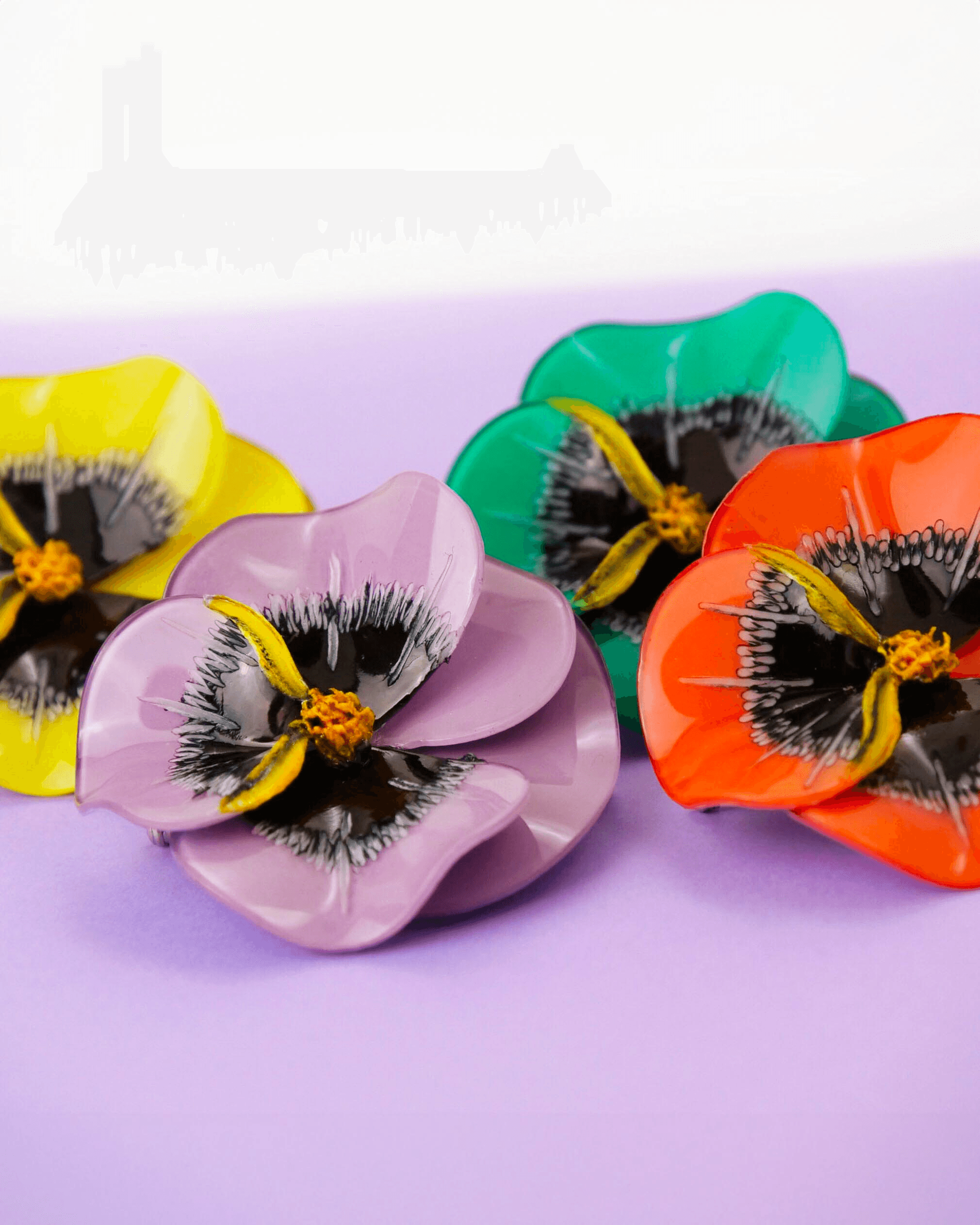
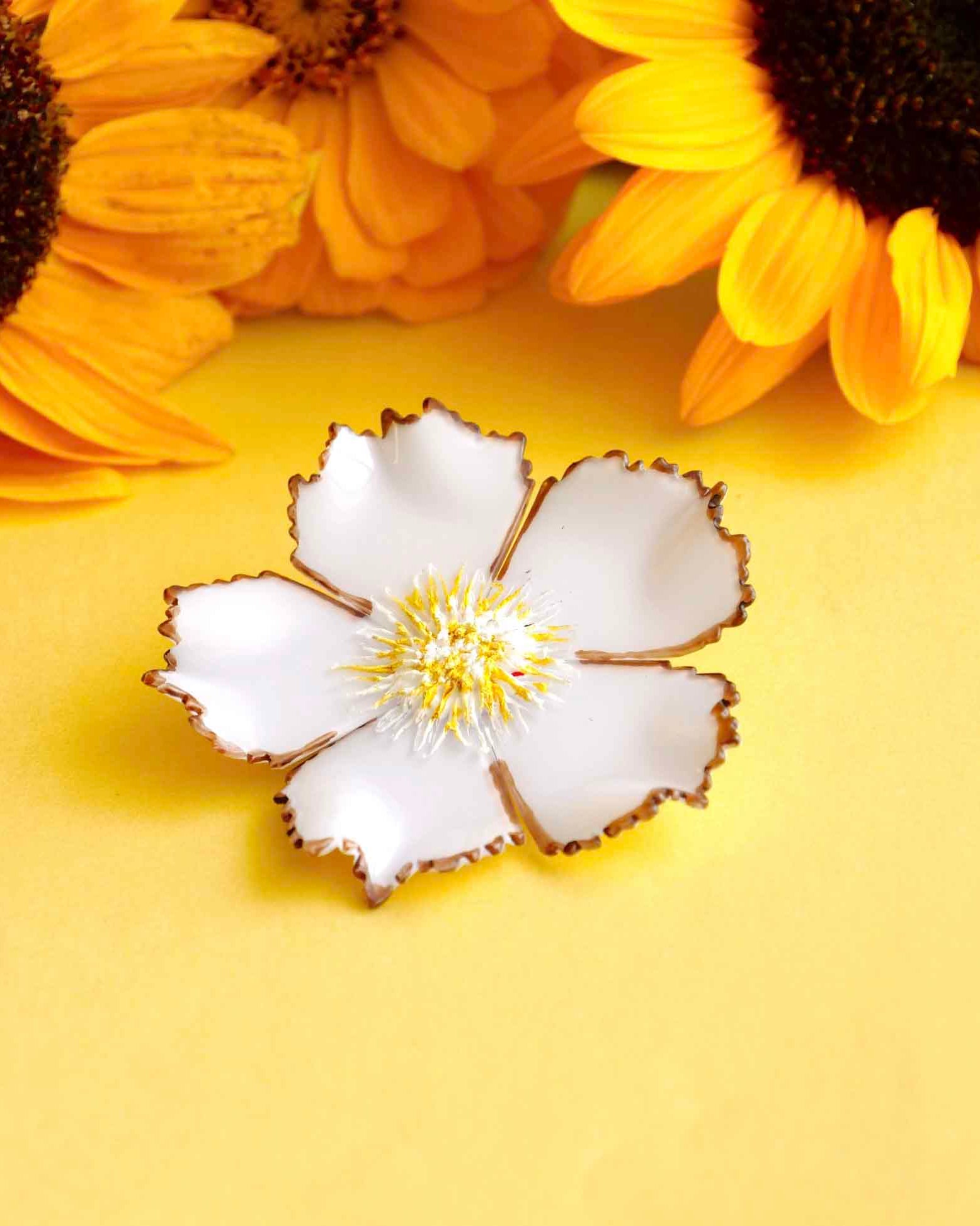
- Gently insist on the hollows. The veins of a Pansy, the heart of an Anemone, because that's where cream and perfume residues accumulate. A folded corner of a cloth is enough, never a brush.
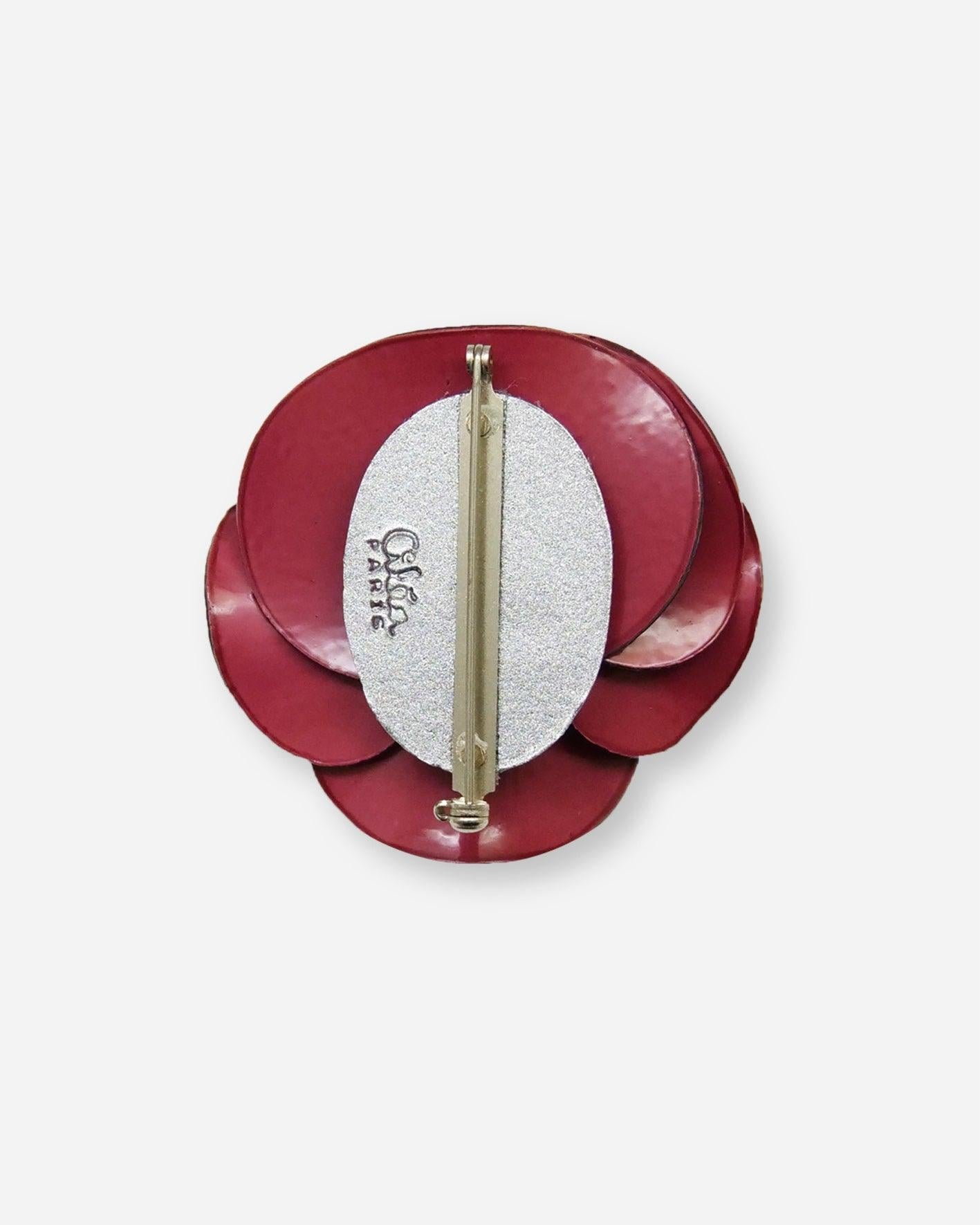
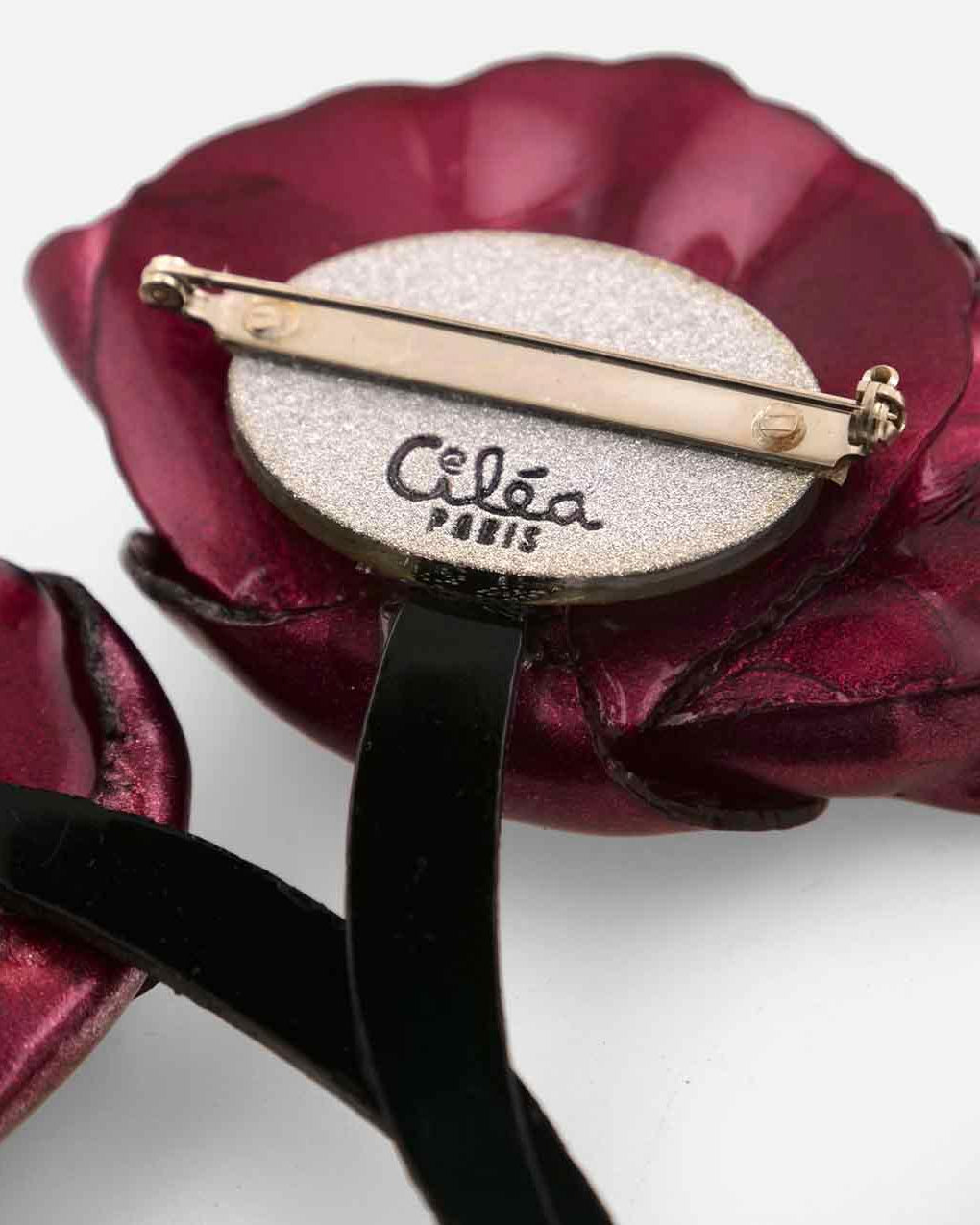
- Check the setting. Our clasps and supports are made of brass gilded with fine gold or silver-plated. They are also wiped dry with a clean cloth (see below).
What not to do: no water, no detergent, no alcohol, no solvent, no acetone. No hard brushes or sponges. No ultrasonic baths. Enameled resin is sensitive to prolonged moisture and aggressive substances; a single exposure can permanently tarnish the surface.
Gilded brass and silver-plated brass fittings
The metal that holds the piece tarnishes before the piece itself. This is normal, and it is reversible.
Wipe dry with a clean microfiber cloth — not the one used on the resin. If the gilding has lost its shine, absolutely do not use a silver polishing cloth: it is impregnated with an abrasive designed for solid silver, which will strip the gilding in a few passes.
For mixed jewelry like ours, never treat the metal with a product without protecting the resin. The simplest method remains a dry cloth.
Gold plated
Plating is a layer of a few microns. Anything that rubs it will wear it down.
Use a soft, dry cloth, in the direction of the surface, without pressing. No products, no pastes, no silver polishing cloth. If a mark remains, it remains. It is better to have a slightly marked piece of jewelry than one where the plating has come off.
925 Silver
Silver blackens through natural oxidation, in contact with air and perspiration. It is the only material on this list that accepts a slightly more direct treatment.
A special silver-impregnated cloth does the job in minutes. Otherwise, lukewarm, very slightly soapy water, a quick rinse, and immediate and complete drying. Toothpaste, often recommended, is an abrasive; it works once and causes lasting scratches.
Stainless steel
The most tolerant. Lukewarm soapy water, soft cloth, drying. Just avoid abrasive sponges and chlorinated products.
Pearls, Mother-of-Pearl, and Stones
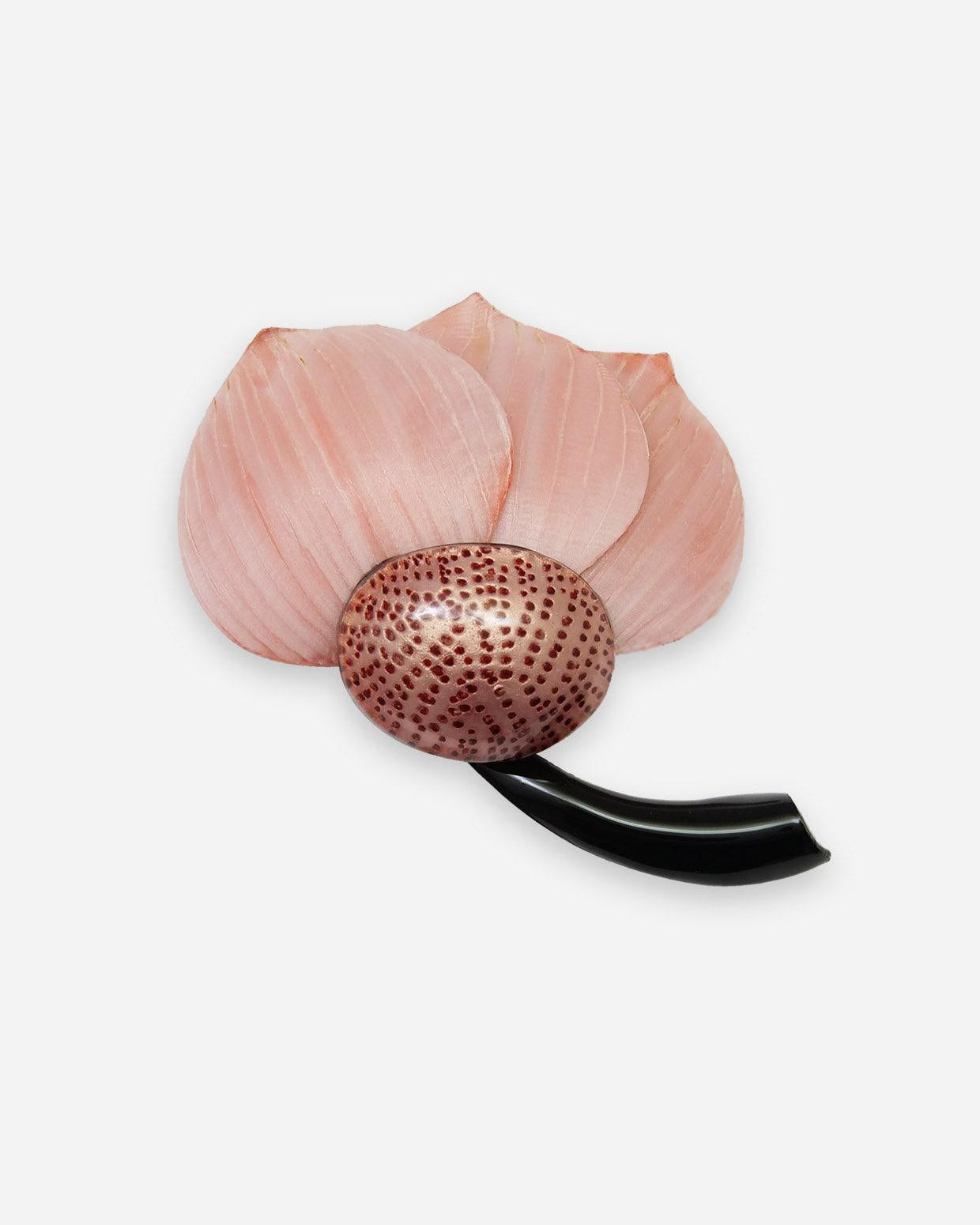
The most fragile, despite appearances. A soft, barely dampened cloth, then flat drying. Never ultrasonics, never steam, never products. A pearl is put on last when dressing, and removed first.
2. The 5 mistakes that damage fashion jewelry
1. Cleaning it because it's dull, when it's simply dirty. Nine times out of ten, jewelry that has lost its shine has a film of cream and perfume on it. A dry cloth solves the problem. Cleaning products, on the other hand, attack a finish that was perfectly fine.
2. Using a product designed for another material. A silver polishing cloth on gold-plated jewelry, eyeglass cleaner on resin, toothpaste on almost anything. Each product is formulated for a specific material; on another, it becomes an abrasive or a solvent.
3. Putting it on before perfume. The alcohol in perfumes and the oils in creams are the two primary causes of tarnishing. Jewelry should be put on after everything else has dried.
4. Leaving it in the bathroom. A jewelry holder near the sink is a bad idea: steam, constant humidity, splashes of products. The bedroom, away from light, is the right place.
5. Storing everything together. A metal ring placed on a resin piece will scratch it in a few weeks of rubbing. Each piece should be stored in its own pouch or compartment.
3. Daily maintenance, the order of steps
Good maintenance follows a consistent sequence.
In the morning. Cream, makeup, perfume, hair styling, then jewelry, last, when everything is dry.
During the day. Remove your jewelry before sports, swimming, the sea, showering, cleaning, and washing dishes. Sweat, chlorine, salt, and household products cause more damage in an hour than a year of normal wear.
In the evening. Remove them first, before removing makeup. A quick wipe with a microfiber cloth, ten seconds, before putting them away. This action, not the annual deep clean, is what keeps jewelry intact for ten years.
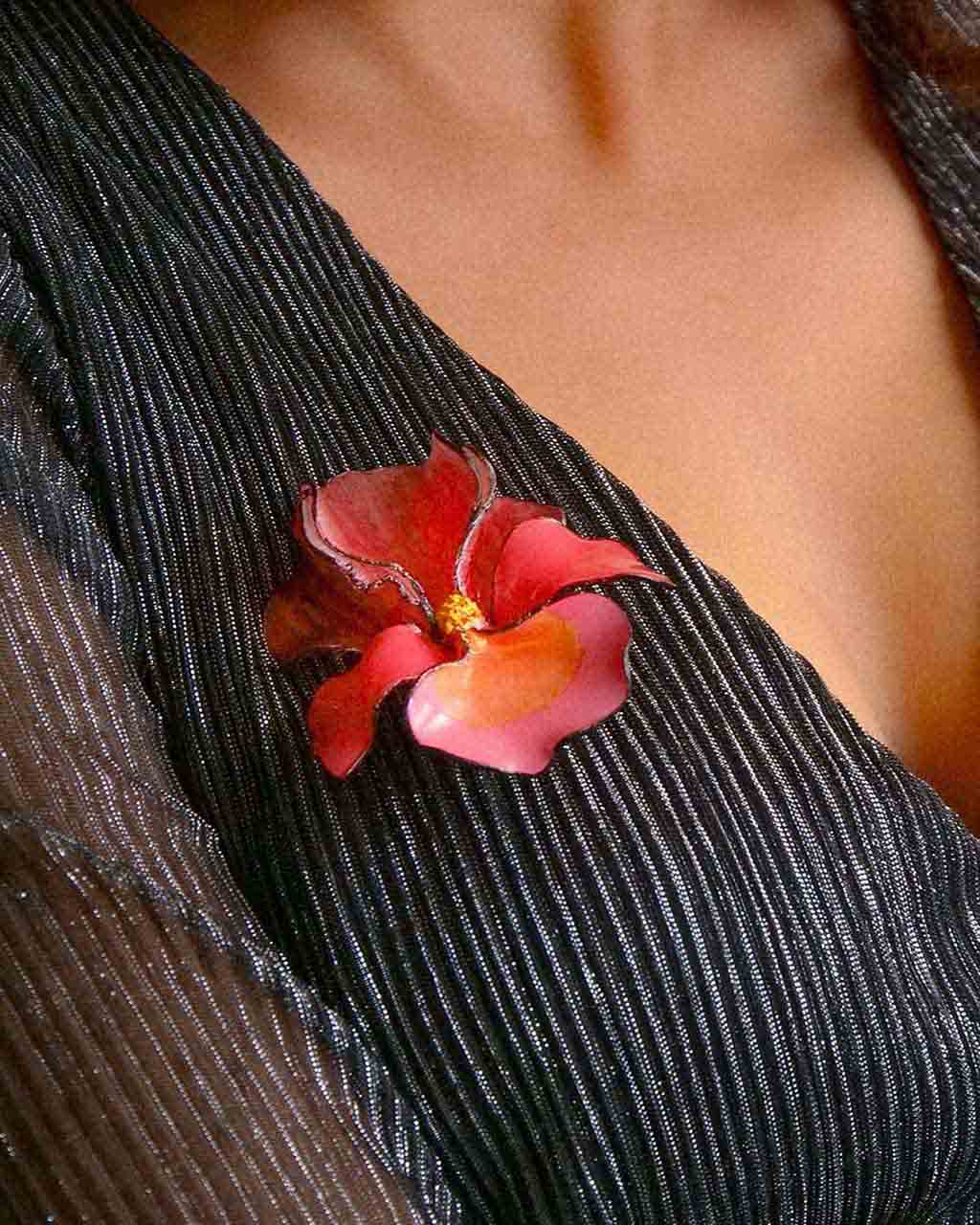
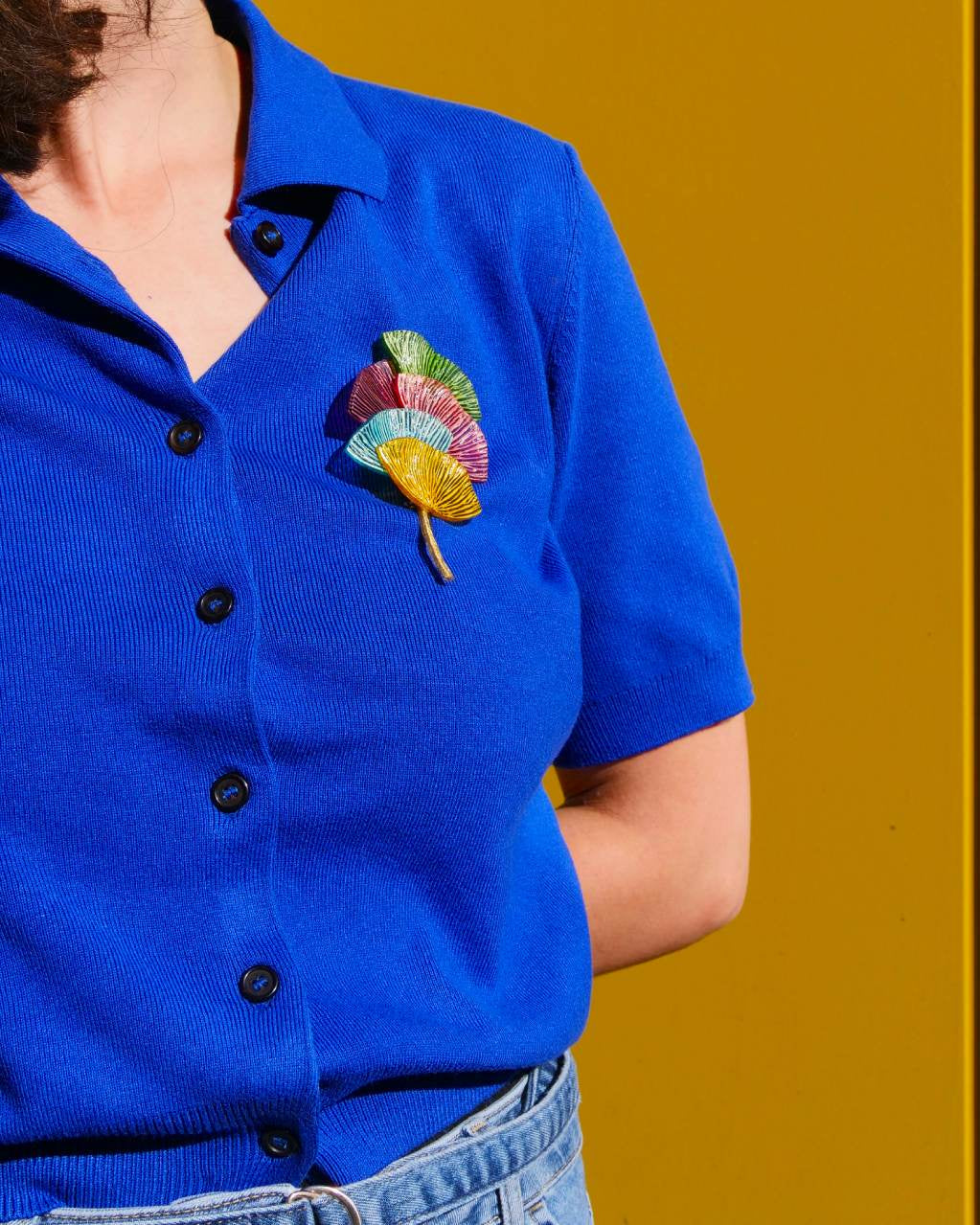
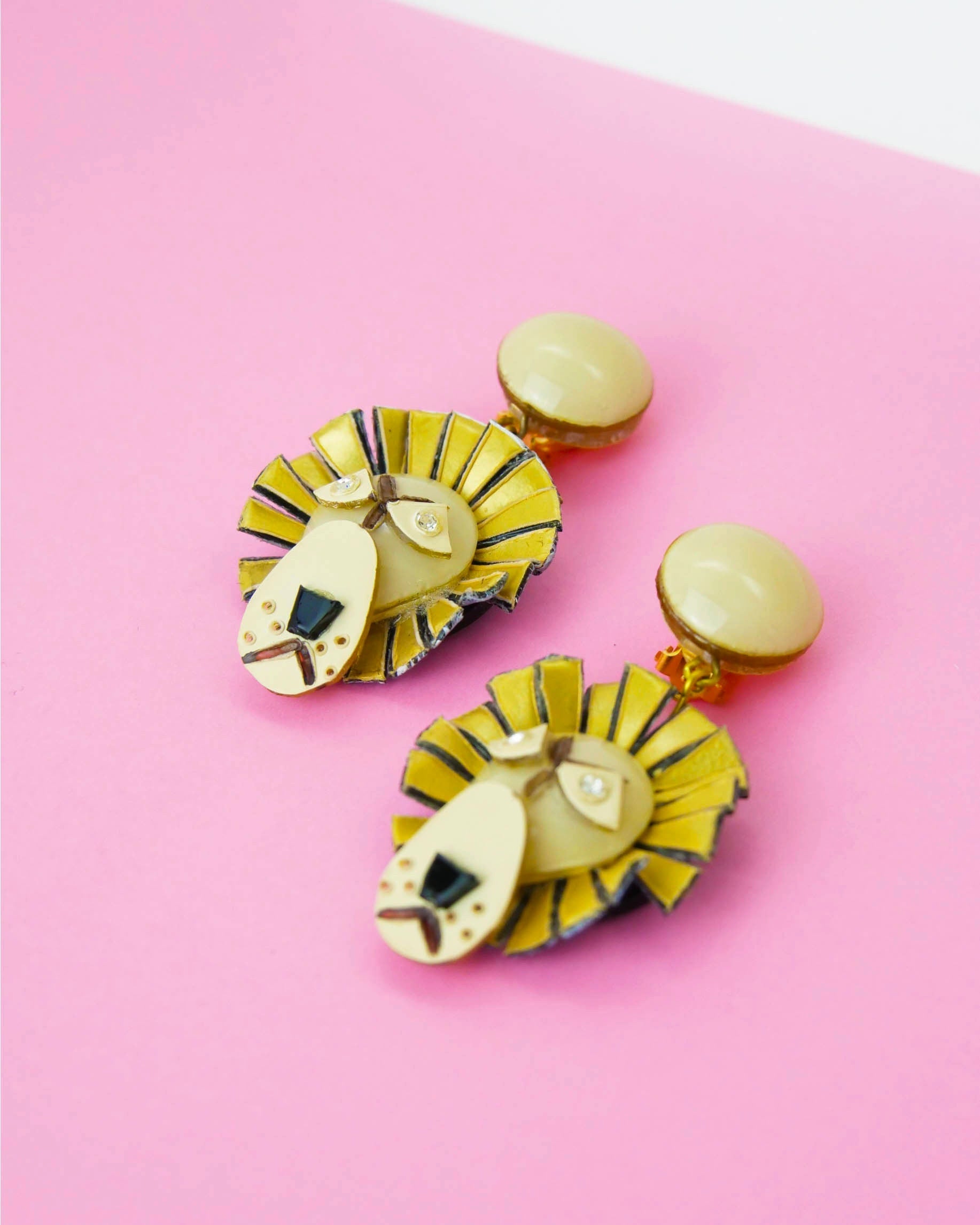
Handle by the structure, not by the fragile part. A dangle earring is held by the clasp, not by the flower. A brooch is handled by the body, not by the clasp.
4. Proper jewelry storage
Separate. A soft fabric pouch or a compartment per piece. This is the only effective protection against scratches, almost all of which come from storage, not wear.
Store in the shade. Direct light alters colors, especially those of resin, but also those of stones and enamels. An opaque box, a drawer, a cupboard.
Keep dry. Humidity oxidizes metals and weakens resins. Away from the bathroom, away from a windowsill.
For necklaces, flat or hanging storage prevents knots, which weaken chains much more than you might think.
5. When to repair rather than clean
A twisted clasp, a worn-out fastener, a chip, a piece that has lost an element... These are not maintenance problems. No amount of cleaning will solve them, and insisting usually makes it worse.
At Ciléa, repairs are free for all our pieces, simple or complete. Even if your pieces are several years old, we repair them regardless of their age. They are handmade in our Rennes workshop and returned there when necessary. Only shipping costs are the customer's responsibility. Write to us with a photo, and we will tell you what is feasible.
For jewelry from another brand, a jeweler will be able to tell you in two minutes if the piece is repairable, and this diagnosis usually costs nothing.
Well-maintained jewelry doesn't take much time. It requires the right action, at the right moment, on the right material.
Ours are made to last and to be repaired. Discover how they are made, or what Emaline is.